
EU Industrial Hydrogen: Key Demand Sectors Driving Market DevelopmentEnergy MarketingUpdated on Sep 23, 2026 View more like this | Visit USK, WA | Contact Market Research Future |
Industrial Hydrogen Opportunities: Clusters, Networks, and Flexible Supply Models
Europe’s industrial hydrogen market is developing through a combination of policy ambition, industrial decarbonization needs, infrastructure investment, and commercial experimentation. Yet the path from announced project to operating facility is rarely straightforward. The next stage of development will depend on how effectively stakeholders solve practical issues involving contracts, networks, integration, regulation, and long term supply reliability.
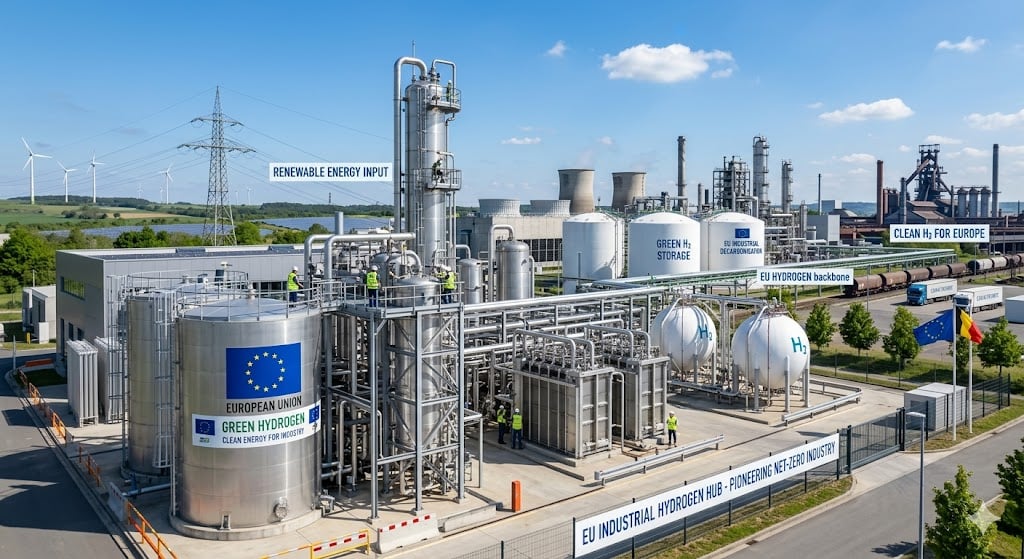
One major opportunity lies in industrial clusters. Concentrating hydrogen production and consumption can reduce transportation challenges and create shared infrastructure. Refineries, chemical producers, fertilizer facilities, steel plants, ports, storage assets, and renewable energy projects may benefit from coordinated development. Cluster models can also encourage common pipelines, storage systems, logistics services, and safety capabilities.
However, clustering does not remove execution challenges. Multiple projects can compete for grid capacity, equipment, land, permits, skilled workers, and infrastructure. If development schedules are not coordinated, one delayed component can affect several connected investments. Cluster planning therefore needs clear sequencing and realistic assumptions about when production and consumption assets will become operational.
Network hydrogen can create long term advantages by connecting multiple suppliers and users. A shared network may increase flexibility and reduce dependence on a single production facility. It can also support market development by allowing industrial customers to access hydrogen without owning all production assets. During the transition, however, facilities may need interim solutions while network infrastructure is constructed.
This creates a significant opportunity for bridge technologies and flexible supply models. Temporary or modular production, compressed hydrogen deliveries, storage, and hybrid systems can help industrial users begin decarbonization before permanent networks are available. The commercial value of these solutions depends on how easily they can be integrated, expanded, or replaced without creating stranded investment.
Standardization could also accelerate development. Common approaches to hydrogen specifications, metering, acceptance testing, safety procedures, and contractual terms can reduce transaction costs. Industrial buyers often need confidence that delivered hydrogen will meet process requirements consistently. Suppliers benefit when technical requirements are transparent and comparable across projects.
Policy clarity remains a foundation for investment. European and national measures can support production, infrastructure, and industrial conversion, but projects need predictable rules to make long term decisions. Changes in definitions, certification, emissions accounting, or support eligibility can affect project economics. Clear compliance pathways can therefore be as important as financial incentives themselves.
The competitive landscape may increasingly favor integrated business models. Energy companies can combine renewable generation with hydrogen production, while industrial gas suppliers can provide delivery and operational expertise. Engineering firms can coordinate brownfield integration, and technology providers can specialize in electrolysis, compression, storage, controls, or monitoring. Partnerships can help distribute capabilities across the value chain.
Mergers, investments, and strategic alliances can also reshape market participation. Companies may seek access to industrial customers, engineering expertise, renewable power, infrastructure, or project pipelines. Strategic transactions can strengthen vertical integration and create broader service offerings. For customers, the practical question is whether a provider can support the project throughout development, commissioning, and operation.
Geographic diversity will remain important. Industrial demand, renewable electricity availability, grid capacity, ports, pipeline development, and regulatory conditions vary across European markets. Countries with established industrial clusters may develop different supply models from regions where new hydrogen infrastructure is being built from scratch. Investors and developers therefore need location specific assessments rather than relying only on regional averages.
The EU Industrial Hydrogen Industry will ultimately be shaped by the interaction between policy, infrastructure, industrial demand, and execution capability. The market is moving beyond simple questions about how much hydrogen could be produced. Increasingly, stakeholders are asking whether hydrogen can reach the right customer, at the required specification, with dependable economics and manageable operational risk.
That transition creates opportunities for producers, infrastructure developers, engineering companies, equipment manufacturers, service providers, investors, and industrial consumers. Organizations that build flexible delivery models, manage interfaces early, and design credible migration pathways can respond more effectively as networks mature.
Over the coming years, the most useful market perspective will combine demand assessment with operational reality. Industrial hydrogen has significant potential, but deployment will depend on contractable demand, infrastructure readiness, reliable technology, skilled execution, and durable policy frameworks. Those foundations can turn Europe’s hydrogen ambitions into practical industrial transformation.
Europe’s industrial hydrogen market is developing through a combination of policy ambition, industrial decarbonization needs, infrastructure investment, and commercial experimentation. Yet the path from announced project to operating facility is rarely straightforward. The next stage of development will depend on how effectively stakeholders solve practical issues involving contracts, networks, integration, regulation, and long term supply reliability.
One major opportunity lies in industrial clusters. Concentrating hydrogen production and consumption can reduce transportation challenges and create shared infrastructure. Refineries, chemical producers, fertilizer facilities, steel plants, ports, storage assets, and renewable energy projects may benefit from coordinated development. Cluster models can also encourage common pipelines, storage systems, logistics services, and safety capabilities.
However, clustering does not remove execution challenges. Multiple projects can compete for grid capacity, equipment, land, permits, skilled workers, and infrastructure. If development schedules are not coordinated, one delayed component can affect several connected investments. Cluster planning therefore needs clear sequencing and realistic assumptions about when production and consumption assets will become operational.
Network hydrogen can create long term advantages by connecting multiple suppliers and users. A shared network may increase flexibility and reduce dependence on a single production facility. It can also support market development by allowing industrial customers to access hydrogen without owning all production assets. During the transition, however, facilities may need interim solutions while network infrastructure is constructed.
This creates a significant opportunity for bridge technologies and flexible supply models. Temporary or modular production, compressed hydrogen deliveries, storage, and hybrid systems can help industrial users begin decarbonization before permanent networks are available. The commercial value of these solutions depends on how easily they can be integrated, expanded, or replaced without creating stranded investment.
Standardization could also accelerate development. Common approaches to hydrogen specifications, metering, acceptance testing, safety procedures, and contractual terms can reduce transaction costs. Industrial buyers often need confidence that delivered hydrogen will meet process requirements consistently. Suppliers benefit when technical requirements are transparent and comparable across projects.
Policy clarity remains a foundation for investment. European and national measures can support production, infrastructure, and industrial conversion, but projects need predictable rules to make long term decisions. Changes in definitions, certification, emissions accounting, or support eligibility can affect project economics. Clear compliance pathways can therefore be as important as financial incentives themselves.
The competitive landscape may increasingly favor integrated business models. Energy companies can combine renewable generation with hydrogen production, while industrial gas suppliers can provide delivery and operational expertise. Engineering firms can coordinate brownfield integration, and technology providers can specialize in electrolysis, compression, storage, controls, or monitoring. Partnerships can help distribute capabilities across the value chain.
Mergers, investments, and strategic alliances can also reshape market participation. Companies may seek access to industrial customers, engineering expertise, renewable power, infrastructure, or project pipelines. Strategic transactions can strengthen vertical integration and create broader service offerings. For customers, the practical question is whether a provider can support the project throughout development, commissioning, and operation.
Geographic diversity will remain important. Industrial demand, renewable electricity availability, grid capacity, ports, pipeline development, and regulatory conditions vary across European markets. Countries with established industrial clusters may develop different supply models from regions where new hydrogen infrastructure is being built from scratch. Investors and developers therefore need location specific assessments rather than relying only on regional averages.
The EU Industrial Hydrogen Industry will ultimately be shaped by the interaction between policy, infrastructure, industrial demand, and execution capability. The market is moving beyond simple questions about how much hydrogen could be produced. Increasingly, stakeholders are asking whether hydrogen can reach the right customer, at the required specification, with dependable economics and manageable operational risk.
That transition creates opportunities for producers, infrastructure developers, engineering companies, equipment manufacturers, service providers, investors, and industrial consumers. Organizations that build flexible delivery models, manage interfaces early, and design credible migration pathways can respond more effectively as networks mature.
Over the coming years, the most useful market perspective will combine demand assessment with operational reality. Industrial hydrogen has significant potential, but deployment will depend on contractable demand, infrastructure readiness, reliable technology, skilled execution, and durable policy frameworks. Those foundations can turn Europe’s hydrogen ambitions into practical industrial transformation.
