
Prestressed Concrete Sleepers Manufacturing Plant DPR & Unit Setup – 2026: Demand Analysis and Project CostManufacturing ProductionUpdated on Apr 6, 2026 View more like this | Visit United States Minor Outlying Islands, UN | Contact IMARC Group |
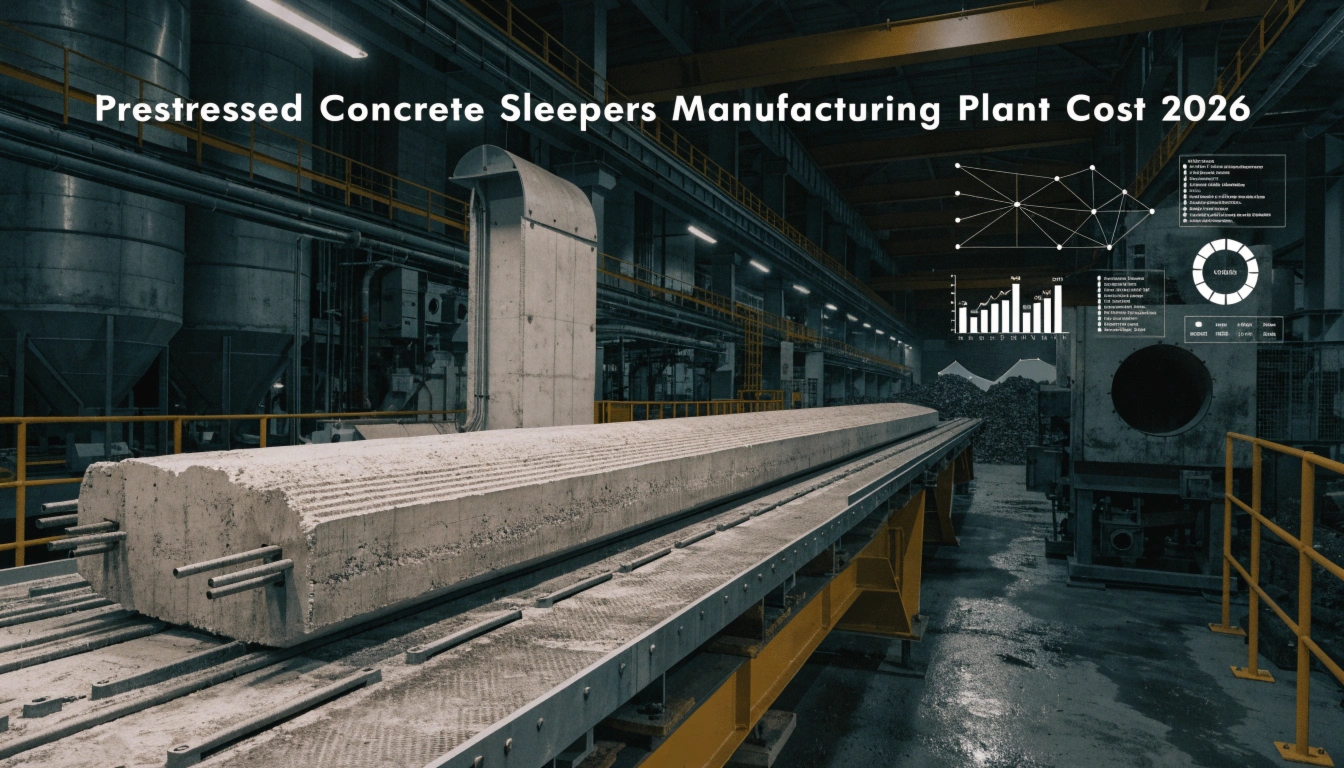
Setting up a prestressed concrete sleepers manufacturing plant positions investors in one of the most strategically important and high-growth segments of the global railway infrastructure value chain, backed by sustained growth driven by rising investments in railway modernization, rapid urban transit expansion, increasing preference for durable low-maintenance track components, and large-scale government-funded rail projects across emerging economies. As nations worldwide accelerate the modernization of freight and passenger rail networks, shift away from traditional wooden sleepers to concrete alternatives, and expand high-speed and metro rail systems, the prestressed concrete sleeper industry continues to present compelling opportunities for manufacturers and entrepreneurs seeking long-term profitability in a high-demand infrastructure sector.
Market Overview and Potential Growth:
The global prestressed concrete sleepers market size was valued at USD 2.79 Billion in 2025. According to IMARC Group estimates, the market is expected to reach USD 4.57 Billion by 2034, exhibiting a CAGR of 5.6% from 2026 to 2034. The market is primarily driven by rising investments in railway infrastructure modernization, increasing adoption of concrete sleepers over timber alternatives, rapid expansion of metro and high-speed rail systems, and large-scale government-funded rail projects in Asia-Pacific, Europe, and the Middle East.
Request Sample: https://www.imarcgroup.com/prestressed-concrete-sleepers-manufacturing-plant-project-report/requestsample
Prestressed concrete sleepers are specialized railway track components manufactured using high-strength concrete in which internal stresses are introduced prior to service loading. This is achieved by tensioning high-tensile steel wires or strands within the concrete mold before it hardens, enabling the sleeper to withstand heavy loads and dynamic forces generated by passing trains. These pre-stressed elements significantly reduce cracking and enhance durability, resulting in superior strength, uniform quality, long service life, and low maintenance requirements. Owing to these advantages, prestressed concrete sleepers have become the preferred alternative to traditional wooden and conventional concrete sleepers in modern railway infrastructure worldwide.
Modern prestressed concrete sleeper technology includes monolithic and double-block designs, each tailored to specific performance needs across intercity railways, high-speed rail corridors, metro systems, heavy-haul freight routes, and industrial sidings. The long-line pre-tensioning process ensures consistent production with precise dimensional accuracy and mechanical strength. These sleepers play a critical role in maintaining track alignment, distributing loads to the ballast, and ensuring safe and stable train operations at higher speeds. For investors and manufacturers, understanding the cost of prestressed concrete sleepers manufacturing plant is essential for evaluating capital investment, production capacity, and overall project feasibility.
The market for prestressed concrete sleepers is witnessing strong growth, driven by the global transition from timber to concrete sleepers in railway modernization initiatives.
Expanding rail infrastructure investments in developing economies are increasing demand for durable and low-maintenance track components. Urbanization and the rapid development of metro rail networks are further boosting demand, while government programs focused on track renewal and speed enhancement continue to strengthen market expansion. For example, Indian Railways has undertaken extensive track upgrades and expansion projects, while China continues to invest heavily in new railway lines. These large-scale developments, along with ongoing electrification and modernization efforts, are reinforcing the long-term growth outlook for the prestressed concrete sleeper industry.
Plant Capacity and Production Scale:
The proposed prestressed concrete sleepers manufacturing facility is designed with an annual production capacity ranging between 200,000 – 1,000,000 sleeper units, enabling economies of scale while maintaining operational flexibility. This capacity range allows producers to serve diverse market segments across mainline railways, metro systems, high-speed rail projects, mining transportation, and industrial rail networks—ensuring steady demand and consistent revenue streams driven by railway modernization programs, urban transit expansion, track renewal requirements, and high-speed rail infrastructure development.
Speak to an Analyst: https://www.imarcgroup.com/request?type=report&id=14911&flag=C
Financial Viability and Profitability Analysis:
The prestressed concrete sleepers manufacturing business demonstrates healthy profitability potential under normal operating conditions. The financial projections reveal:
- Gross Profit Margins: 25-35%
- Net Profit Margins: 12-22%
These margins are supported by stable demand from railway authorities, metro corporations, and infrastructure contractors; value-added production through precision pre-tensioning, batching, and curing processes enabling large-scale manufacturing while maintaining quality; and the critical importance of prestressed concrete sleepers as essential components of all modern rail infrastructure delivering dependable track stability, superior load distribution, and extended service life meeting stringent railway engineering standards. The project demonstrates strong return on investment (ROI) potential with comprehensive financial analysis.
Cost of Setting Up a Prestressed Concrete Sleepers Manufacturing Plant:
Operating Cost Structure:
Understanding the operating expenditure (OpEx) is crucial for effective financial planning. The cost structure includes:
- Raw Materials: 50-60% of total OpEx
- Utilities: 12-18% of OpEx
- Other Expenses: Labor, packaging, transportation, maintenance, depreciation, taxes
Raw materials at 50-60% of operating costs, with cement as the primary binding component, along with aggregates (sand and gravel), high-tensile steel wires or strands, water, and chemical admixtures. Utilities at 12-18% primarily covering electricity for batching plants and curing chambers, and water for concrete mixing and curing. By the fifth year, total operational cost is expected to increase substantially due to inflation, market fluctuations, and potential rises in the cost of steel and cement. Long-term contracts with reliable suppliers help stabilize pricing and ensure a steady supply of key inputs.
Capital Investment Requirements:
Setting up a prestressed concrete sleepers manufacturing plant requires substantial capital investment. Total investment depends on plant capacity, technology level, and location.
Land and Site Development: The location must offer easy access to key raw materials: cement, aggregates (sand and gravel), high-tensile steel wires or strands, and chemical admixtures. Proximity to railway project sites and target markets minimizes distribution costs. Robust infrastructure including reliable road or rail access, utilities, and waste management systems is essential. Compliance with local zoning laws and environmental regulations must be ensured.
Machinery and Equipment: Machinery costs account for the largest portion of capital expenditure. Essential equipment includes:
- Pre-tensioning beds and casting systems
- Tensioning jacks and anchoring systems
- Concrete batching plants
- Steam curing chambers
- Molds and demolding equipment
- Quality testing and inspection systems
Civil Works: Building construction and layout optimization for efficient workflow. Separate areas designated for raw material storage, batching and casting, curing, quality control, finished goods storage, and dispatch.
Buy Report Now: https://www.imarcgroup.com/checkout?id=14911&method=2175
Major Applications and Market Segments:
Prestressed concrete sleepers serve extensive railway and transportation applications:
- Intercity and Mainline Railways: Used in standard gauge and broad-gauge main lines for freight and passenger services, providing stable track support at speeds up to 200+ km/h
- High-Speed Rail: Deployed in high-speed rail corridors requiring precision track geometry, vibration damping, and superior load distribution at speeds exceeding 250 km/h
- Metro and Urban Transit: Utilized in underground metro systems, light rail transit, and suburban commuter rail networks across rapidly urbanizing cities
- Heavy Haul and Mining: Applied in heavy-haul freight corridors and mining rail systems handling ultra-high axle loads and abrasive operating environments
Manufacturing process: Material preparation and batching, mold preparation and positioning, reinforcement wire tensioning, concrete casting and compaction, steam or ambient curing, demolding, quality inspection, and finished product handling and dispatch.
Why Invest in Prestressed Concrete Sleepers Manufacturing?
Compelling investment factors include:
- Essential Rail Infrastructure Component: Prestressed concrete sleepers are fundamental components enabling the operation of all modern railway systems, making them indispensable for national rail networks, urban metro systems, high-speed rail, and industrial transportation
- Alignment with Global Infrastructure Megatrends: Increasing investment in railway modernization, urban transit expansion, high-speed rail development, and sustainable transportation infrastructure creates ongoing demand for high-quality prestressed concrete sleepers
- Supply Chain Localization Advantage: Railway authorities and infrastructure contractors increasingly favor regional sleeper manufacturers to reduce logistics costs, ensure timely supply for project schedules, and minimize risks from international supply chain disruptions
- Supportive Government Policies: Government initiatives promoting railway modernization, track renewal programs, national infrastructure investment plans, and public-private partnerships create favorable conditions for prestressed concrete sleeper manufacturing investments
- Scalable High-Volume Production: Automated pre-tensioning, batching, and curing systems enable large-scale production of standardized sleepers while maintaining precise dimensional tolerances and consistent mechanical properties with competitive manufacturing costs
Manufacturing Process Excellence:
Multi-step production operation:
- Mold preparation and steel wire/strand positioning
- Pre-tensioning of steel wires using hydraulic jacks
- Concrete mixing and quality batching
- Concrete casting into molds with vibration compaction
- Steam curing in controlled curing chambers
- Release of prestressing force and demolding
- Dimensional inspection and quality testing
- Marking, stacking, and dispatch
Comprehensive quality control is maintained throughout production. Testing instruments monitor dimensional accuracy, compressive strength, prestress levels, and long-term durability to meet railway engineering specifications.
Industry Leadership:
Leading manufacturers in the global prestressed concrete sleepers industry include:
- Adbri Masonry Concrete Sleepers
- Alabama company
- Bansal Group
- DAYA ENGINEERING WORKS (POLES) PVT. LTD.
- EHD Concrete Sleepers
- Hybuilt Retaining Systems
- KHEMCHAND GROUP
- Koppers Inc.
- Leonhard Moll Betonwerke GmbH & Co KG
- Outback Sleepers
- Plastwil De Bonte
- Prime Concrete Developments
- Tekmar Group plc
- Top-Werk GmbH
- Wegh Group S.p.A.
All serve end-use sectors such as railways, metro systems, mining transportation, and high-speed rail infrastructure across global markets.
About Us:
IMARC Group is a global management consulting firm that helps the world's most ambitious changemakers to create a lasting impact. The company excels in understanding its client's business priorities and delivering tailored solutions that drive meaningful outcomes. We provide a comprehensive suite of market entry and expansion services. Our offerings include thorough market assessment, feasibility studies, company incorporation assistance, factory setup support, regulatory approvals and licensing navigation, branding, marketing and sales strategies, competitive landscape and benchmarking analyses, pricing and cost research, and procurement research.
Contact Us:
IMARC Group
134 N 4th St. Brooklyn, NY 11249, USA
Email: [email protected]
Tel No: (D) +91 120 433 0800
United States: (+1-201-971-6302)
