
Petrol Pump with EV Charging Facility Business Setup Guide 2026: Investment, Operational Costs, and ProfitabilityManufacturing ProductionUpdated on May 29, 2026 View more like this | Visit United States Minor Outlying Islands, UN | Contact IMARC Group |
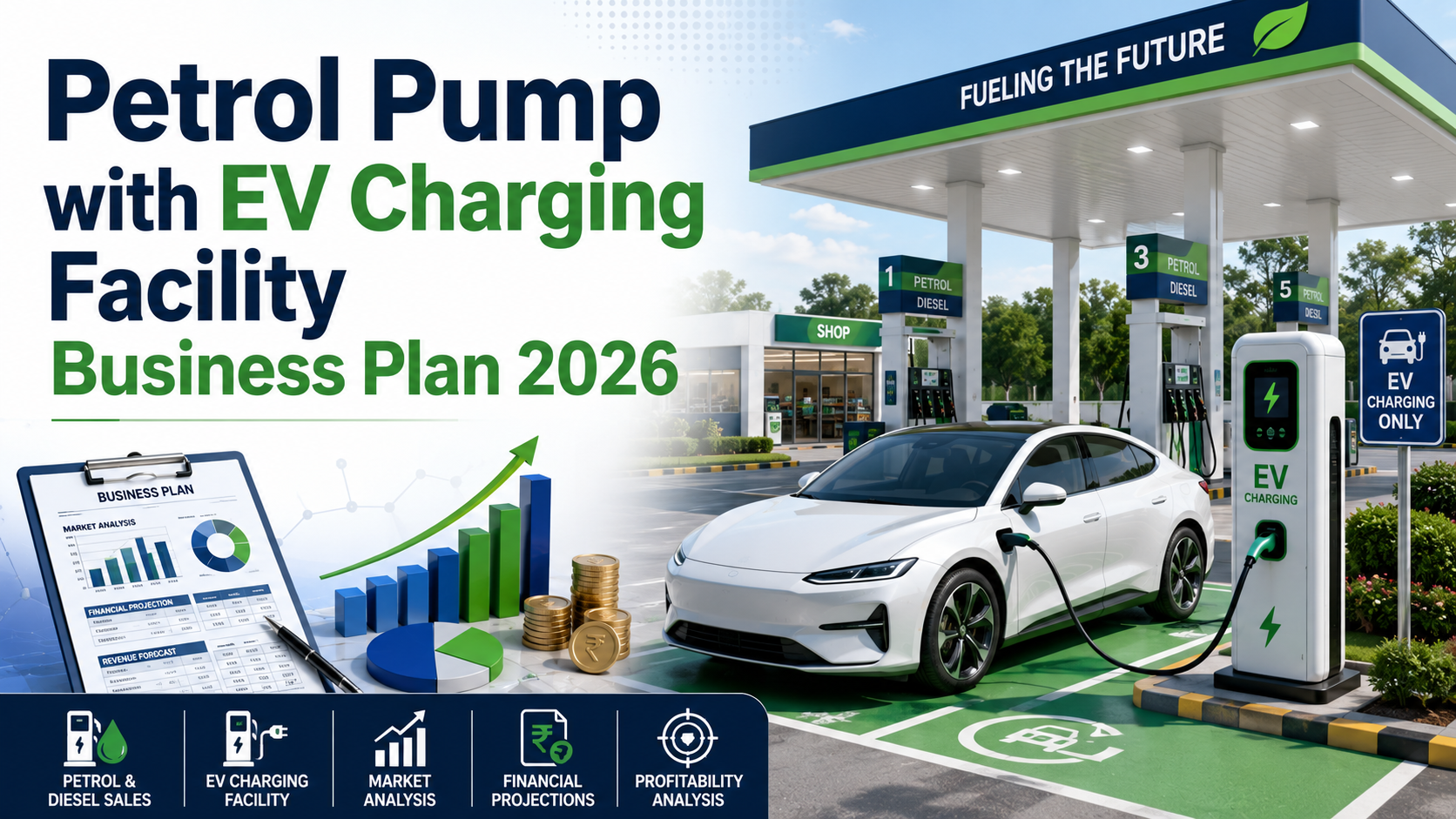
What is a Petrol Pump with EV Charging Facility?
A petrol pump with an EV charging facility is an advanced fueling station designed to cater to both conventional fuel-powered vehicles and electric vehicles. Its core function is to provide automotive fuels such as petrol, diesel, and, in some cases, compressed natural gas (CNG), while simultaneously offering dedicated charging infrastructure for electric vehicles through fast and standard charging systems. This integrated model allows the station to serve a wider customer base as the transportation industry increasingly adopts cleaner and more sustainable mobility solutions.
These modern service stations are typically equipped with multiple fuel dispensing units, automated fuel monitoring systems, and secure digital payment technologies to ensure smooth and efficient operations. The EV charging segment includes specially designated charging bays compatible with different EV models, supported by dependable power systems, advanced safety mechanisms, and user-friendly charging interfaces.
Beyond fueling and charging services, many facilities also provide value-added amenities such as convenience stores, customer waiting lounges, restrooms, and basic vehicle maintenance services. By integrating traditional fuel retailing with EV charging infrastructure, these stations are evolving to meet changing consumer demands while supporting the transition toward future-ready and environmentally sustainable transportation networks.
IMARC Group’s “Petrol Pump with EV Charging Facility Business Plan and Feasibility Report 2026” provides a complete roadmap for petrol pump with ev charging facility business setup. It covers a comprehensive market overview down to micro-level details such as business setup, equipment and technology requirements, manpower needs, business workflows and regulatory considerations. The report provides in-depth insights into project economics, covering capital investments, funding options, operating costs, revenue projections, expected return on investment (ROI), net present value (NPV), profit and loss analysis, and overall financial viability.
Petrol Pump with EV Charging Facility Business Setup Overview
The setup of a petrol pump with an EV charging facility involves developing a modern service station capable of supplying conventional fuels alongside dedicated EV charging services. The business model focuses on selecting strategically located sites with high vehicle movement, installing certified fuel dispensing equipment, and integrating advanced EV charging systems compatible with a broad range of electric vehicles.
Key components of the setup include adherence to environmental, safety, and regulatory standards, establishment of a reliable energy supply system, and implementation of advanced billing, monitoring, and operational management technologies. The facility is generally designed with separate zones for fuel dispensing and EV charging to ensure efficient traffic flow, operational convenience, and customer safety. Additional features such as retail outlets, rest areas, and basic automotive servicing further enhance customer satisfaction and revenue potential.
Market Trends and Growth Drivers
Rapid Expansion of Electric Vehicle Adoption
The accelerating adoption of electric vehicles is encouraging fuel retailers to diversify and modernize their service offerings. Government initiatives promoting electric mobility, combined with continuous improvements in battery technology and charging infrastructure, have significantly increased EV adoption across urban and semi-urban markets. Petrol pumps, due to their strategic locations and established infrastructure, are ideally positioned to incorporate fast and standard EV charging solutions.
By offering accessible and reliable charging facilities alongside traditional fuels, operators can address range anxiety among EV users while ensuring long-term business relevance as the automotive sector moves toward cleaner and low-emission transportation alternatives.
Changing Consumer Preferences and Service Expectations
Today’s consumers increasingly seek convenient, integrated, and time-efficient vehicle service experiences. The inclusion of EV charging stations within petrol pumps aligns with these evolving expectations by allowing customers to recharge their vehicles while utilizing additional amenities such as convenience stores, cafés, rest areas, and vehicle maintenance services.
Modern service stations are also adopting digital technologies, including contactless payment systems, mobile-based charging management, real-time charging updates, and reservation platforms, to improve convenience and customer engagement. The combination of conventional fueling and EV charging services helps operators attract a wider customer base, strengthen customer loyalty, and create additional revenue opportunities through complementary retail and service offerings.
How Do You Set Up a Petrol Pump with EV Charging Facility?
The IMARC report serves as a complete guide for setting up a petrol pump with EV charging facility, covering:
- Industry overview and market performance
- Business workflows and service offerings
- Site selection and equipment requirements
- Cost structure (CapEx & OpEx)
- Revenue generation models
- Risk mitigation strategies
- Licensing and regulatory compliance
- Profitability and investment analysis
Request for a Sample Report: https://www.imarcgroup.com/petrol-pump-with-ev-charging-facility-business-plan-feasibility-report/requestsample
Key Requirements for Setting Up Petrol Pump with EV Charging Services
1. Business Model & Operations Plan:
- Service Overview: Fuel dispensing (petrol, diesel, CNG), fast EV charging bays, convenience store, and vehicle maintenance services
- Service Workflow: Site selection → infrastructure setup → regulatory compliance → operations launch → customer management
- Revenue Model: Fuel sales, EV charging fees, retail ancillaries, loyalty programs, and fleet contracts
- SOPs & Service Standards: Guidelines for fuel handling, EV charging safety, customer experience, and quality assurance
2. Technical Feasibility:
- Site Selection Criteria: High-traffic highways, urban arterials, commercial zones with access for both ICE and electric vehicles
- Space & Costs: Dedicated fuel dispensing zones, EV charging bays, parking, and customer amenity areas
- Equipment & Suppliers: Fuel dispensers, fast and standard EV chargers, power management systems, CCTV, payment terminals
- Interior Setup & Fixtures: Branded forecourt, canopy, signage, convenience store layout, and rest facilities
- Utility Requirements & Costs: High-capacity electricity supply, internet connectivity, water, fire safety systems
- Human Resources & Wages: Station managers, fuel attendants, EV technicians, retail staff, security personnel
3. Financial Feasibility:
Includes:
- Capital Investments & Operating Costs
- Revenue & Expenditure Projections
- Profit & Loss Analysis
- Taxation & Depreciation
- ROI, NPV & Sensitivity Analysis
What Are the Latest Market Trends in Petrol Pump with EV Charging?
The market is expanding due to:
- Rising EV adoption and government e-mobility incentives
- Increased demand for integrated fuel and charging services
- Growth in clean energy infrastructure investment
- Corporate fleet electrification programs
- Expansion of highway and intercity EV charging corridors
- Digital integration — apps, real-time charger availability, cashless payments
Operators increasingly prefer locations that serve both traditional and EV customers, enabling revenue diversification and long-term resilience.
Speak to Analyst for Customized Report: https://www.imarcgroup.com/request?type=report&id=38861&flag=C
Market Analysis & Insights
Industry Overview
The report covers:
- Market drivers & challenges
- Demand patterns and consumer preferences
- Segmentation by fuel type, charging speed, and vehicle category
- Regional distribution and growth forecasts
Competitive Landscape
Profiles of leading petrol pump operators and EV charging network providers offering:
- Service models and technology choices
- Pricing strategies for fuel and EV charging
- Market positioning and geographic presence
- Customer engagement and loyalty programs
Capital & Operational Cost Breakdown
Capital Expenditure (CapEx): Equipment and machinery costs account for the largest portion of total capital expenditure. Facility development — including civil works, canopy, forecourt, and EV charging infrastructure — forms another substantial part of the overall capital investment. This allocation ensures a solid foundation for safe and efficient operations.
Operational Expenditure (OpEx): In the first year of operations, the operating cost is projected to be significant, covering salaries and wages, utilities, fuel procurement, overheads, depreciation, and taxes. By the fifth year, total operational cost is expected to increase substantially due to factors such as inflation, market fluctuations, and potential increases in labour costs.
Profitability Projections
The report outlines a detailed profitability analysis over the first five years of operations, including projections for:
- Total revenue from fuel sales, EV charging fees, and ancillary retail, along with expenditure breakdown, gross profit, and net profit
- Profit margins for each revenue stream and year of operation
- Revenue per customer projections and market penetration growth estimates
These projections offer a clear picture of the expected financial performance and profitability of the business, allowing for better planning and informed decision-making.
FAQs
- Do I need a license to operate a petrol pump with EV charging?
Yes — fuel retail and EV charging operations require multiple licenses including petroleum storage permits, electrical safety clearances, and environmental approvals. Requirements vary by country and state.
- What is the ideal target audience for this business?
Fleet operators, private vehicle owners, EV drivers, highway commuters, and commercial transport companies represent the primary target audience.
- How does a petrol pump with EV charging facility make money?
Through fuel sales margins, per-unit EV charging fees, subscription plans, convenience store retail, and ancillary vehicle services.
- Is a petrol pump with EV charging facility profitable?
Yes — dual revenue streams from both conventional fuel and EV charging, combined with growing EV adoption, make this a highly resilient and profitable business model.
Buy Now: https://www.imarcgroup.com/checkout?id=38861&method=2175
Why This Report Matters
Petrol pumps with EV charging facilities represent the future of energy retail — combining established infrastructure with the fast-growing EV economy. This report equips entrepreneurs, investors, and operators with the insights needed to build a successful, future-ready energy service business, from site planning and regulatory compliance to full profitability forecasting.
About Us:
IMARC Group is a global market research and consulting firm specializing in helping organizations identify opportunities, manage risks, and develop strategic growth plans.
Contact Us:
IMARC Group
134 N 4th St., Brooklyn, NY 11249, USA
Email: [email protected]
Tel No:(D) +91 120 433 0800
United States: (+1-201971-6302)
