
How to Setup an Agarbatti Manufacturing Plant 2026: Cost, CapEx & OpEx Analysis with Profitability ForecastsManufacturing ProductionUpdated on Jun 17, 2026 View more like this | Visit United States Minor Outlying Islands, UN | Contact IMARC Group |
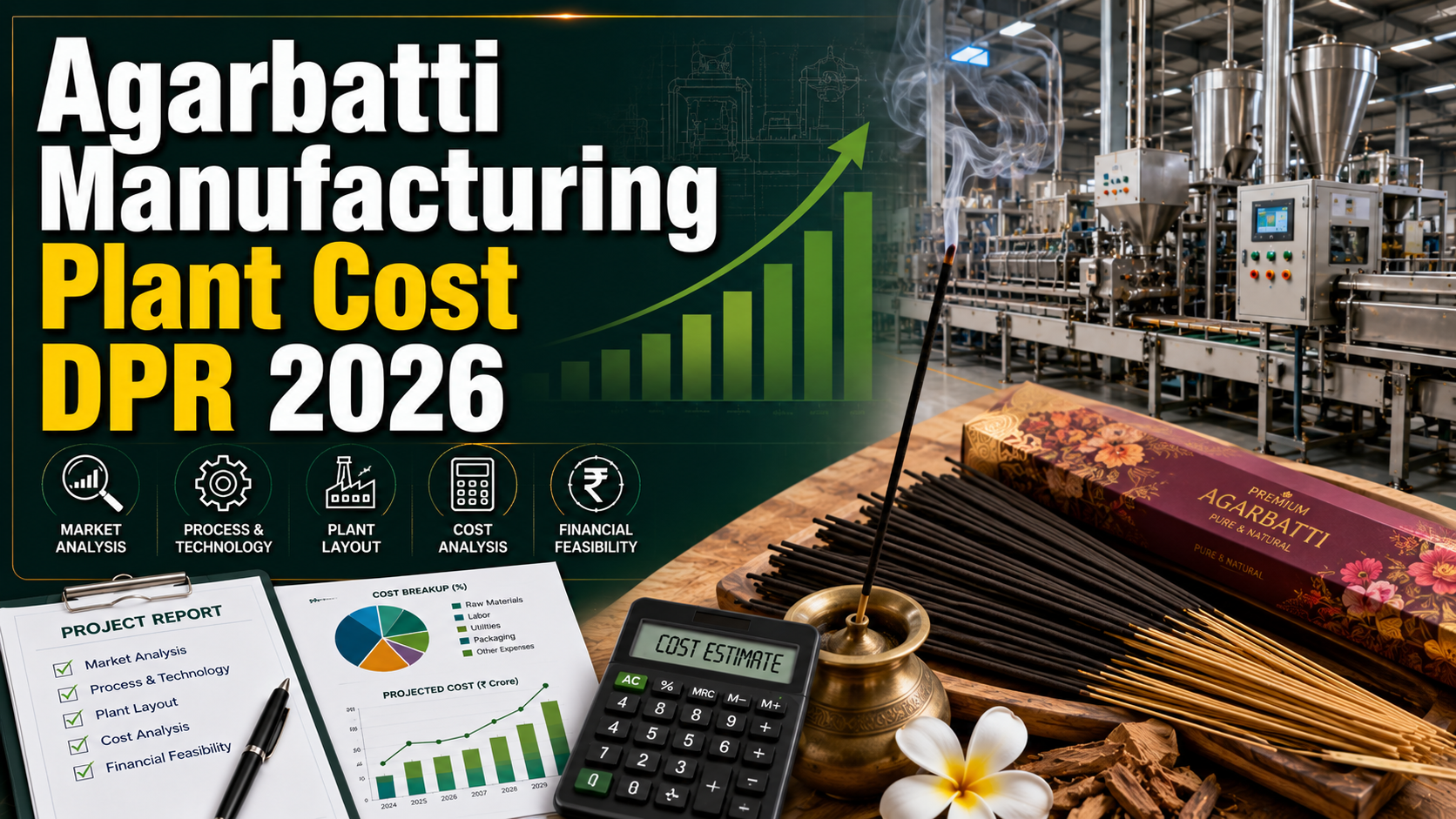
Establishing an agarbatti manufacturing plant involves a sequence of carefully managed production processes, including raw material blending, agarbatti rolling or extrusion, drying, fragrance application, and final packaging. The facility typically requires equipment such as powder mixing machines, automatic or semi-automatic agarbatti making machines, drying chambers or racks, perfuming units, and packaging and sealing systems. As agarbatti is a widely used consumer product for religious, spiritual, and household purposes, maintaining consistent fragrance quality, burn time, ash characteristics, and adherence to applicable product quality and safety standards is essential. Furthermore, preparing a comprehensive agarbatti manufacturing plant DPR is critical for evaluating capital investment, machinery requirements, production capacity, operational efficiency, and long-term profitability.
The India incense sticks (agarbatti & dhoop) market is positioned for robust growth through 2026 and beyond, driven by consistent religious consumption, increasing household usage, and growing popularity of wellness and aromatherapy products. The India incense sticks (agarbatti & dhoop) market size was valued at USD 1.26 Billion in 2025. According to IMARC Group estimates, the market is expected to reach USD 2.01 Billion by 2034, exhibiting a CAGR of 5.3% from 2026 to 2034.
IMARC Group's report, titled "Agarbatti Manufacturing Plant Project Report 2026: Industry Trends, Plant Setup, Machinery, Raw Materials, Investment Opportunities, Cost and Revenue," provides a complete roadmap for setting up an agarbatti manufacturing unit. It covers a comprehensive market overview to micro-level information such as unit operations involved, raw material requirements, utility requirements, infrastructure requirements, machinery and technology requirements, manpower requirements, packaging requirements, transportation requirements, etc.
Request for a Sample Report: https://www.imarcgroup.com/agarbatti-manufacturing-plant-project-report/requestsample
Agarbatti Industry Outlook 2026
The agarbatti industry continues to witness steady growth, supported by consistent demand from religious and cultural practices, increasing household consumption, and the growing popularity of wellness, meditation, and aromatherapy products. Rising urbanization, improving living standards, and higher disposable incomes have also encouraged consumer preference for premium, customized, and value-added fragrance offerings. India remains the world's leading producer and exporter of agarbattis, serving domestic demand as well as international markets across Asia, the Middle East, Europe, and North America. In addition, government initiatives aimed at promoting domestic manufacturing and exports are contributing to the growth of the organized sector.
In December 2025, India strengthened quality standards within the industry through the introduction of IS 19412:2025 by the Bureau of Indian Standards on National Consumer Day. The new standard establishes clear quality benchmarks, limits the use of harmful chemicals, enhances indoor air safety, and promotes sustainable manufacturing practices. This development is expected to improve consumer confidence while reinforcing the global competitiveness of India's agarbatti industry. At the same time, innovations in fragrance formulation, increased automation in rolling and drying operations, and the adoption of eco-friendly packaging solutions are reshaping the industry's future growth trajectory.
Despite favorable market conditions, manufacturers face challenges such as fluctuations in the prices of key raw materials including bamboo sticks, charcoal powder, jigat powder, and essential oils. Additional concerns include labor-intensive production processes, growing competition from unorganized market participants, and evolving environmental and air-quality regulations. These factors may impact operating costs, production efficiency, and strategic investment decisions for new agarbatti manufacturing plant projects.
Key Insights for Setting Up an Agarbatti Manufacturing Plant
Detailed Process Flow
- Product Overview
- Unit Operations Involved
- Mass Balance and Raw Material Requirements
- Quality Assurance Criteria
- Technical Tests
Project Details, Requirements and Costs Involved:
- Land, Location and Site Development
- Plant Layout
- Machinery Requirements and Costs
- Raw Material Requirements and Costs
- Packaging Requirements and Costs
- Transportation Requirements and Costs
- Utility Requirements and Costs
- Human Resource Requirements and Costs
Capital Expenditure (CapEx) and Operational Expenditure (OpEx) Analysis:
Project Economics:
- Capital Investments
- Operating Costs
- Expenditure Projections
- Revenue Projections
- Taxation and Depreciation
- Profit Projections
- Financial Analysis
Profitability Analysis:
- Total Income
- Total Expenditure
- Gross Profit
- Gross Margin
- Net Profit
- Net Margin
Key Cost Components
- Raw Materials: The primary cost driver, including bamboo sticks, charcoal powder, wood powder (jigat/makko), perfumes and essential oils, and binding materials, which together account for approximately 40-50% of total operating expenses.
- Energy Costs: Agarbatti manufacturing requires electricity for mixing, rolling, and extrusion machinery, as well as energy for drying chambers and scenting operations. While not as energy-intensive as heavy industry, consistent power supply is critical for production continuity.
- Machinery and Equipment: Capital investment in bamboo stick cutting machines, powder mixing machines, agarbatti rolling or extrusion machines, drying racks or drying chambers, perfuming drums or spray units, and packaging and sealing machines, along with ongoing maintenance costs.
- Labor: Includes salaries, training, and benefits for skilled and unskilled workers involved in rolling, scenting, quality inspection, packaging, and dispatch. Agarbatti manufacturing is labor-intensive, particularly for hand-rolled varieties, and workforce management is a key cost driver.
- Utilities: Costs for water, electricity, compressed air, and ventilation systems essential for maintaining safe working conditions in fragrance-intensive production environments.
- Packaging and Transportation: Expenses related to retail packaging (boxes, pouches, wrappers), bulk packaging for export, branding materials, and distributing finished agarbattis to domestic distributors and international buyers.
- Depreciation and Financing: Depreciation of fixed assets and interest or repayment obligations for loans or capital investment in plant setup.
- Compliance and Safety: Investment in IS 19412:2025 compliance testing, fragrance safety assessments, indoor air quality monitoring, waste disposal, and any applicable environmental clearances for manufacturing operations.
- Overheads: Administrative costs such as insurance, office operations, licensing, marketing, brand development, export documentation, and general plant management.
Economic Trends Influencing Agarbatti Manufacturing Plant Setup Costs 2026
Raw Material Price Volatility: As bamboo sticks, charcoal powder, wood powder, and essential oils are the primary raw materials for agarbatti manufacturing, fluctuations in forest produce availability, essential oil harvests, and import prices for aromatic compounds directly impact both operating costs and product margins.
Quality Regulation & BIS Standards: India's introduction of IS 19412:2025 by the Bureau of Indian Standards in December 2025 has set enforceable quality and safety benchmarks for incense sticks, restricting harmful chemicals and requiring compliance testing. New plants must budget for testing infrastructure, certification costs, and reformulation of non-compliant blends.
Inflation & Interest Rates: Rising inflation inflates the cost of building materials, civil construction, labor, and machinery, while higher interest rates increase the cost of loans and financing needed for plant construction, equipment procurement, and production ramp-up.
Government Support for MSME and Cottage Industries: Government schemes supporting agarbatti manufacturing as a cottage and MSME sector enterprise, including raw material import restrictions on unrolled agarbattis, production-linked incentives, and rural employment programs, can partially offset plant setup investment and improve margins for domestic producers.
Technological Advancements: Innovations in high-speed automated rolling machines, precision scenting systems, and continuous drying technologies can increase upfront CapEx but deliver significant improvements in production throughput, product consistency, and per-unit cost reduction, enhancing long-term ROI.
Export Market Growth: Rising global demand for Indian agarbattis across Asia, the Middle East, Europe, and North America is creating strong incentives for capacity expansion and quality upgrading. Export-oriented units may access additional fiscal benefits but must meet international fragrance safety and packaging compliance standards.
Labor Market Considerations: Agarbatti manufacturing, particularly hand-rolling operations, is highly labor-intensive and traditionally employs rural and women workers. Increasing minimum wage requirements, workforce formalization, and the transition toward semi-automated production to address labor availability are influencing both setup costs and ongoing OpEx.
Speak to an Analyst for Customized Report: https://www.imarcgroup.com/request?type=report&id=22022&flag=C
Challenges and Considerations for Investors
- Feedstock Price Volatility: Agarbatti manufacturing depends on bamboo, charcoal, wood powder, and essential oils, all of which are subject to seasonal availability and price fluctuations. Disruptions in forest produce supply or import dependencies for aromatic compounds can significantly impact production costs and profit margins.
- High Labor Intensity: Hand-rolling agarbattis is labor-intensive and productivity-dependent. Scaling output while maintaining quality requires either a large trained workforce or investment in semi-automated machinery, both of which introduce operational complexity and cost.
- Quality and Regulatory Compliance: The IS 19412:2025 standard requires manufacturers to restrict harmful chemical ingredients and meet defined burn rate, fragrance, and safety parameters. Non-compliance risks market access restrictions and reputational damage, requiring ongoing investment in quality systems.
- Competition from Unorganized Sector: The agarbatti industry in India has a large unorganized segment operating at very low cost structures. Organized manufacturers face pricing pressure while needing to invest in quality, branding, and compliance that unorganized players often bypass.
- Market Competition and Branding: The global agarbatti market features well-established brands with strong retail and distribution networks. New entrants must differentiate through premium fragrances, herbal or organic variants, eco-friendly packaging, or specialized export market positioning.
- Logistics and Export Compliance: Exporting agarbattis requires compliance with destination country regulations on fragrance safety, chemical restrictions (EU REACH, US IFRA standards), and packaging requirements, which add complexity and cost to export-oriented production strategies.
- Technological Barriers: Maintaining consistent fragrance strength, burn rate, and ash quality across batches requires calibrated blending systems and quality control protocols. Outdated or manually operated equipment leads to product inconsistency and higher rejection rates.
- Policy and Regulatory Risks: Changes in import duties on bamboo sticks, raw material sourcing restrictions, environmental regulations on fragrance emissions, or updates to BIS standards can alter cost structures and compliance requirements, affecting investment planning and profitability.
Capital Expenditure (CapEx) and Operational Expenditure (OpEx) Analysis
Capital Investment (CapEx): Machinery costs account for the largest portion of the total capital expenditure, covering powder mixing machines, rolling or extrusion machines, drying chambers, perfuming drums, and automated packaging and sealing equipment. The cost of land and site development, including factory shed construction, storage areas, and quality control laboratory setup, forms a substantial part of the overall investment. Compliance infrastructure for IS 19412:2025 testing and fragrance safety assessment also represents an upfront capital requirement.
Operating Expenditure (OpEx): In the first year of operations, the operating cost for the agarbatti manufacturing plant is projected to be significant, covering raw materials (bamboo sticks, charcoal powder, wood powder, perfumes, and binding agents), utilities, depreciation, taxes, packing, transportation, and repairs and maintenance. By the fifth year, the total operational cost is expected to increase substantially due to factors such as inflation, rising essential oil prices, labor cost escalation, and expanding export compliance requirements.
Latest Industry Developments
November 2025: Dheepam, the heritage brand from Kaleesuwari, expanded its spiritual wellness portfolio with the launch of premium charcoal-free agarbattis. The new range features multiple fragrances, including five fresh variants, offering cleaner burning, minimal smoke, and long-lasting aroma to enhance daily prayers, meditation, and home ambience.
September 2025: ITC Mangaldeep introduced its new incense range, Mangaldeep Nature, at a trade meet in Chennai attended by over 300 distributors and wholesalers. The charcoal-free agarbatti line features nature-inspired fragrances, including Flower Valley and Green Forest, designed to bring a sense of calm, purity, and mindfulness to everyday prayer and meditation rituals.
May 2025: Mysore Deep Perfumery House (MDPH), one of India's leading incense stick manufacturers, launched its new Gauved product portfolio made using cow dung as a key raw material. The rollout began with Gauved sambrani cups, followed by agarbattis, dhoop, and dhoop cones, marking MDPH's entry into eco-conscious, traditional incense offerings.
About Us:
IMARC Group is a global management consulting firm that helps the world's most ambitious changemakers to create a lasting impact. The company excels in understanding its client's business priorities and delivering tailored solutions that drive meaningful outcomes. We provide a comprehensive suite of market entry and expansion services. Our offerings include thorough market assessment, feasibility studies, company incorporation assistance, factory setup support, regulatory approvals and licensing navigation, branding, marketing and sales strategies, competitive landscape and benchmarking analyses, pricing and cost research, and procurement research.
Contact Us:
IMARC Group
134 N 4th St. Brooklyn, NY 11249, USA
Email: [email protected]
Tel No: (D) +91 120 433 0800
United States: +1-631-791-1145
