
How to Setup a Polylactic Acid Production Plant 2026: Cost, CapEx & OpEx Analysis with Profitability ForecastsManufacturing ProductionUpdated on Apr 16, 2026 View more like this | Visit United States Minor Outlying Islands, UN | Contact IMARC Group |
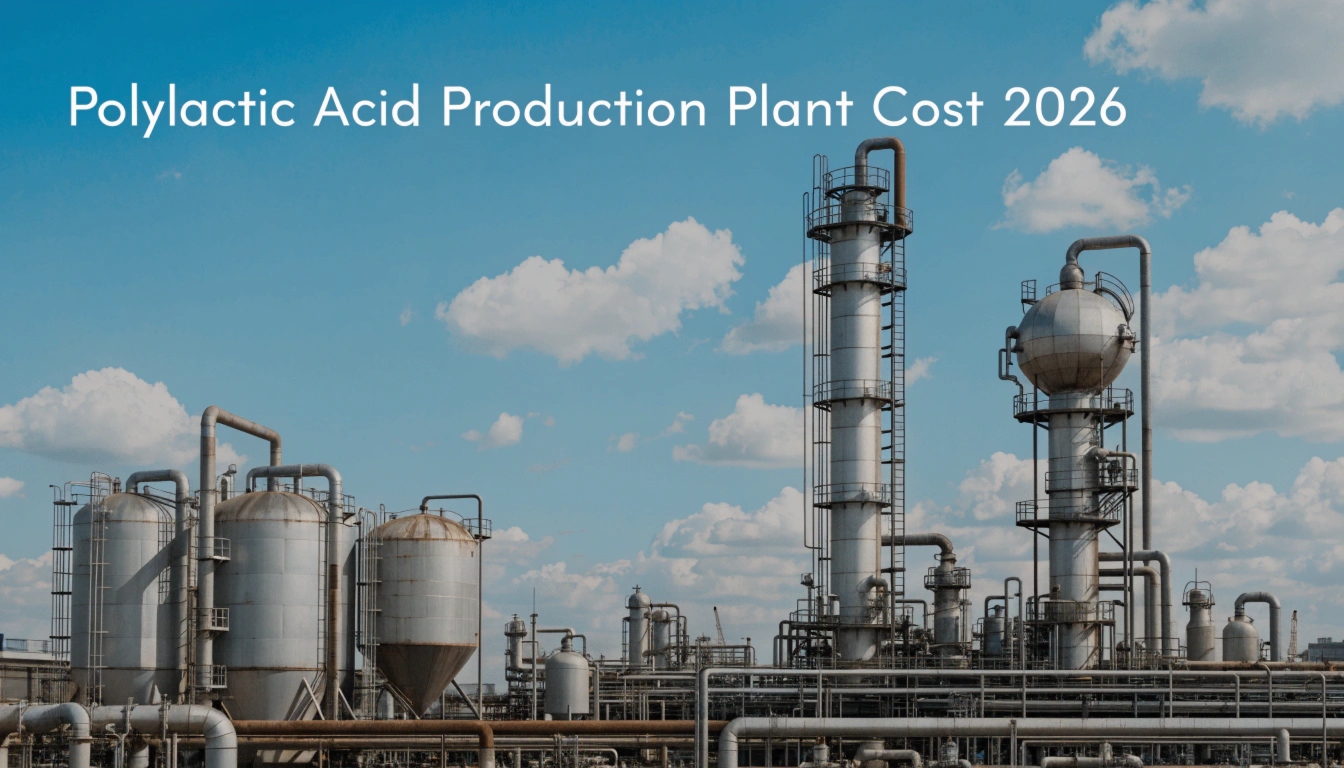
A polylactic acid (PLA) production plant is a specialized industrial facility that manufactures biodegradable plastic made from renewable resources like corn starch, sugarcane, or cassava. The process begins with fermenting plant-based sugars to produce lactic acid, which is then purified and converted into PLA resin through polymerization. The final product is typically available in pellet form and can be used as a sustainable alternative to conventional plastics. Because of its eco-friendly nature and growing demand, setting up a polylactic acid production plant project report is becoming increasingly attractive. However, it is a capital-intensive venture, so a clear understanding of costs and technical requirements is essential before moving forward.
Understanding Polylactic Acid (PLA)
Polylactic acid (PLA) is a biodegradable thermoplastic polymer derived entirely from renewable raw materials. It offers excellent clarity, rigidity, and ease of processing, making it suitable for a wide range of applications. Unlike traditional plastics, PLA has lower toxicity and a smaller carbon footprint, and it can be composted under industrial conditions. Its strength, thermal stability, and sustainable origin make it a preferred choice in packaging, disposable products, textiles, and even certain medical applications.
The global PLA market was valued at USD 1,298.00 million in 2025 and is expected to grow significantly to USD 4,201.09 million by 2034, with a CAGR of 13.9% from 2026 to 2034. This strong growth highlights the increasing importance of PLA production in the global shift toward sustainable materials.
What is Polylactic Acid Used For?
PLA is primarily used across four major application segments, each contributing significantly to industry demand:
- Packaging: Packaging: Used in food containers, cups, trays, films, and compostable packaging solutions that replace conventional single-use plastics.
- Consumer Goods: Consumer Goods: Utilized for disposable cutlery, household items, stationery, and personal care packaging.
- Textiles: Textiles: Employed in nonwoven fabrics, fibers, and eco-friendly apparel components.
- Medical and Biomedical: Medical and Biomedical: Used for sutures, implants, drug delivery systems, and tissue engineering scaffolds where biocompatibility and biodegradability are critical.
Given the breadth of applications and rising regulatory pressure against single-use plastics globally, the total cost of a polylactic acid production plant must be carefully evaluated for any new investment decision.
Request Sample: https://www.imarcgroup.com/polylactic-acid-manufacturing-plant-project-report/requestsample
Key Factors for Polylactic Acid Plant Setup Requirements
Establishing a polylactic acid production plant requires careful consideration of several key factors that directly impact both the initial plant setup cost and long-term profitability.
- Raw Materials and Feedstock Supply: The cost and availability of primary raw materials, particularly lactic acid, catalysts, and purification solvents, are paramount. Lactic acid, the main feedstock, is derived from fermentation of renewable sugars, and a secure, cost-effective supply chain is vital for managing the polylactic acid production cost.
- Manufacturing Technology and Equipment: The selection of fermentation technology, polymerization reactor design (ring-opening polymerization vs. direct condensation), extrusion systems, and pelletization equipment directly influences production efficiency and the overall polylactic acid production plant cost.
- Environmental Compliance and Approvals: Securing environmental clearances and adhering to regulations governing effluent treatment, solvent recovery, and air quality standards is essential. Compliance ensures sustainable operations and helps avoid costly penalties and shutdowns.
- Location and Infrastructure: Proximity to agricultural feedstock sources, access to reliable power and water supply, effluent management infrastructure, and transportation networks significantly impacts operational efficiency and the overall polylactic acid manufacturing cost analysis.
Detailed Process Flow and Quality Control
The manufacturing process for polylactic acid involves a series of precisely controlled biochemical and chemical operations. Initially, plant-derived sugars undergo microbial fermentation to produce lactic acid, which is then purified and concentrated. The purified lactic acid is polymerized—typically via ring-opening polymerization of lactide intermediates—to produce high-molecular-weight PLA resin. The PLA is then extruded and pelletized into the final commercial form. A thorough polylactic acid production plant report would detail each of these critical steps.
- Unit Operations Involved: The process includes key stages such as saccharification, fermentation, lactic acid purification, lactide formation, ring-opening polymerization, extrusion, and pelletization. Each step is carefully controlled to ensure optimal yield and product quality.
- Mass Balance and Raw Material Requirements: A precise mass balance calculation is essential for determining the exact quantity of feedstock, catalysts, solvents, and energy needed per unit of finished PLA resin. This directly influences the total polylactic acid production cost.
- Quality Assurance Criteria: Quality is assessed based on molecular weight distribution, optical purity (L-PLA vs. D-PLA ratio), residual monomer content, and pellet consistency. Technical tests including gel permeation chromatography, melt flow index, and thermal analysis are performed to ensure compliance with application-specific standards.
Cost of Setting Up a Polylactic Acid Production Plant
The cost of establishing a polylactic acid production plant depends on plant capacity, technology selection, location, level of automation, and regulatory compliance obligations. A detailed cost assessment covering both capital and operational expenditure is essential for accurate financial planning. The operating cost structure is primarily driven by raw material consumption, accounting for approximately 60–70% of total OpEx, while utilities represent a further 20–25%.
CapEx and OpEx Analysis for Polylactic Acid Production Cost:
- Raw Material Costs: As the largest component of variable costs, lactic acid feedstock and catalyst pricing are the primary determinants of final product cost. Fluctuations in agricultural commodity markets and energy prices significantly impact production economics.
- Capital Investment: The initial plant setup cost for fermentation tanks, polymerization reactors, extrusion lines, pelletizers, purification units, and associated civil infrastructure constitutes a significant barrier to entry. This capital outlay is amortized over the plant’s operational life.
- Operational Costs: These include fixed costs such as skilled labor, maintenance, and insurance, as well as variable costs such as utilities (electricity, steam, and water), catalyst replacement, solvent recovery systems, and environmental compliance measures.
- Product Grade and Purity: The molecular weight and optical purity of PLA pellets directly affect their suitability for specific applications, such as food packaging versus medical devices. Consistently high-grade output commands premium pricing and supports stronger margins.
- Manufacturing Capacity: The scale of manufacturing significantly influences unit economics through economies of scale. Larger plants operating between 50,000 to 200,000 MT per annum benefit from lower per-unit capital and operational costs, improving the overall polylactic acid production plant cost profile.
- Location and Market Conditions: The geographical location influences transportation costs for agricultural feedstocks and finished PLA pellets, as well as access to skilled biochemical and polymer engineering talent. Proximity to downstream packaging and consumer goods manufacturers further affects logistics costs and market responsiveness.
Speak to an Analyst: https://www.imarcgroup.com/request?type=report&id=8631&flag=C
Leading Polylactic Acid Manufacturers
The global polylactic acid market is served by several major producers who lead the industry in manufacturing capacity, fermentation technology, and product portfolio breadth. These manufacturers set industry benchmarks for PLA quality, purity, and sustainable sourcing.
- NatureWorks LLC
- TotalEnergies Corbion bv
- JIANGSU SUPLA BIOPLASTICS CO., LTD.
- COFCO
- Futerro
- Jiangxi Keyuan Biopharm Co., Ltd.
Timeline to Start the Plant
- Feasibility study and project report preparation
- Land acquisition and site development
- Regulatory approvals and environmental clearances
- Factory licence and fire safety compliance
- Machinery procurement and installation
- Raw material supplier agreements and supply chain setup
- Trial production and quality testing
- Commercial production launch
Licences and Regulatory Requirements
Starting a polylactic acid production unit requires several approvals:
- Business registration (Proprietorship, LLP, or Pvt Ltd)
- Factory Licence under the Factories Act
- Environmental Clearance from State Pollution Control Board
- GST Registration
- Fire Safety NOC
- Effluent Treatment Plant (ETP) operational clearance
- Occupational Health and Safety compliance
- Industry-specific permits for handling fermentation and chemical processing
Frequently Asked Questions
- How much does it cost to set up a polylactic acid production plant?
The total cost depends on plant capacity, technology, and location. It includes land, construction, fermentation and polymerization equipment, extrusion systems, pollution control infrastructure, utilities, and working capital. The setup timeline usually ranges from 18 to 24 months. A detailed feasibility report provides accurate estimates. - Is polylactic acid manufacturing profitable in 2026?
Yes, PLA manufacturing shows strong profitability potential. Gross margins typically range between 30–40%, while net margins fall between 15–25%. Demand from packaging, medical, and consumer goods sectors, along with restrictions on single-use plastics, supports growth. Profitability depends on feedstock costs, energy efficiency, scale, and market pricing. - What machinery is required?
Key equipment includes fermentation tanks, purification systems (filtration, evaporation, ion exchange), lactide reactors, polymerization units, extrusion lines, pelletizers, drying systems, and quality testing instruments like GPC analyzers and melt flow testers. - What licences and approvals are needed?
Typical approvals include business registration, factory licence, environmental clearance, GST registration, fire safety approval, and compliance with safety regulations. Additional permits may be required for chemical and biochemical processing. - What raw materials are required?
The main raw material is lactic acid, produced from renewable sugars. Other inputs include catalysts (like stannous octoate), solvents, and packaging materials for finished PLA pellets. - What are the environmental requirements?
Manufacturers must install effluent treatment and solvent recovery systems, and follow emission and waste disposal regulations. Although PLA is eco-friendly, proper compliance with environmental standards is still necessary. - What is the best location for the plant?
Ideal locations are near agricultural regions producing corn or sugarcane, with access to water, power, strong logistics, and proximity to packaging or consumer goods industries. Availability of skilled technical manpower is also important. - What is the break-even period?
The break-even period typically ranges from 3 to 5 years, depending on plant size, investment, efficiency, and market demand. Larger plants with steady supply chains tend to recover costs faster. - Are there government incentives available?
Yes, many governments support bio-based manufacturing through subsidies, tax benefits, lower utility costs, export incentives, and funding programs aimed at promoting sustainable and circular economy initiatives.
About Us:
IMARC Group is a global management consulting firm that helps the world's most ambitious changemakers to create a lasting impact. The company excels in understanding its client's business priorities and delivering tailored solutions that drive meaningful outcomes. We provide a comprehensive suite of market entry and expansion services. Our offerings include thorough market assessment, feasibility studies, company incorporation assistance, factory setup support, regulatory approvals and licensing navigation, branding, marketing and sales strategies, competitive landscape, and benchmarking analyses, pricing and cost research, and procurement research.
Contact Us:
IMARC Group
134 N 4th St. Brooklyn, NY 11249, USA
Email: [email protected]
Tel No: (D) +91 120 433 0800
United States: (+1-201-971-6302)
