
How to Setup a Catheter Manufacturing Business in India: A Comprehensive AnalysisHome Health Care Equipment & SuppliesUpdated on Jun 17, 2026 View more like this | Visit United States Minor Outlying Islands, UN | Contact IMARC Group |
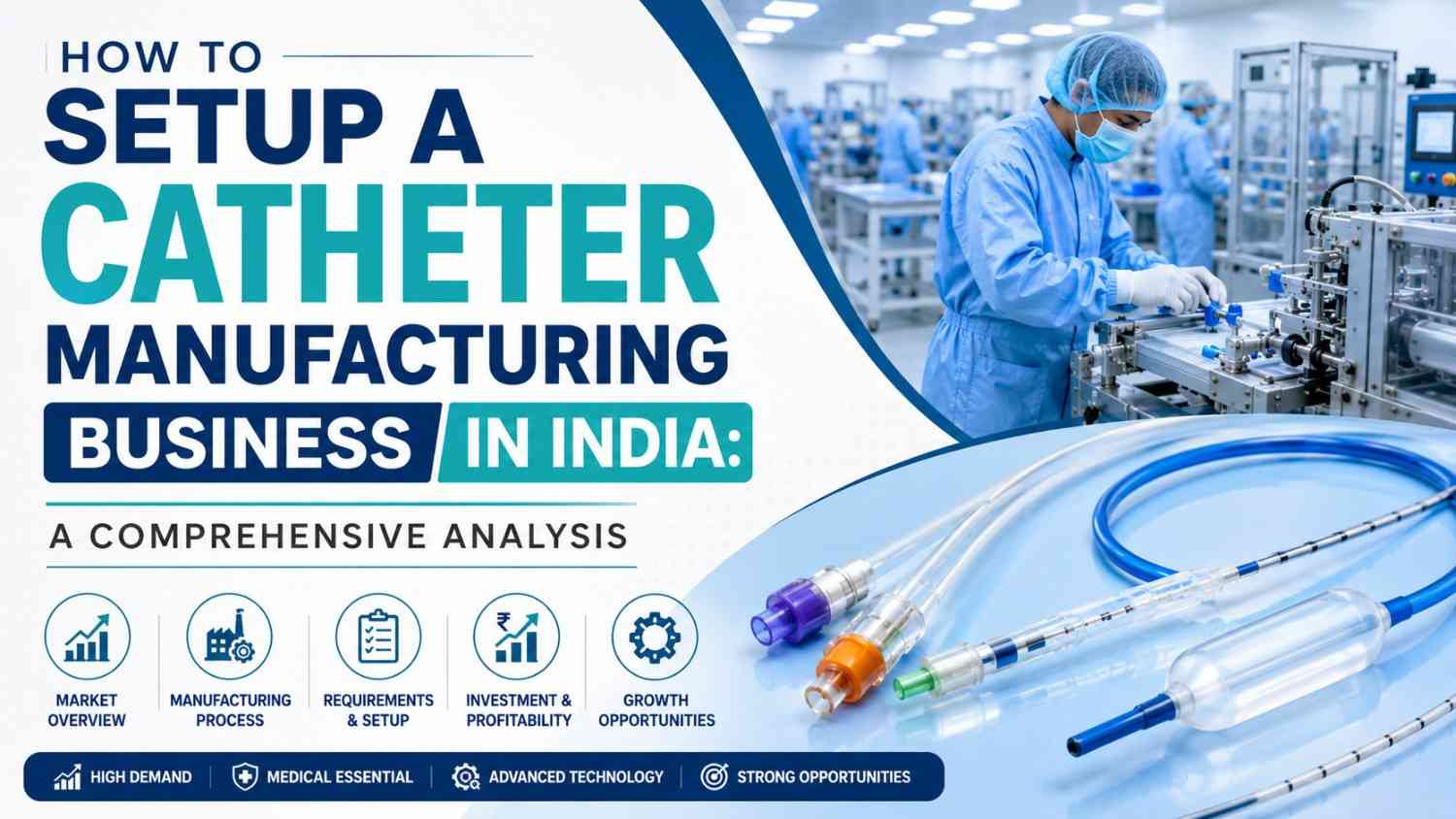
The healthcare sector in India is experiencing a massive shift toward advanced medical technologies and specialized patient care. Driven by a growing aging population, a rising prevalence of chronic conditions, and an increasing preference for minimally invasive surgical procedures, the domestic medical device sector has become one of the most attractive landscapes for long-term industrial investment. At the center of this medical device revolution is the production of advanced consumables-specifically, catheters.
A catheter is a thin, flexible tube inserted directly into the body to treat structural fluid issues, manage urinary conditions, or perform complex diagnostic assessments. These specialized devices are crafted from biocompatible materials-such as medical-grade silicone, polyurethane, and polyvinyl chloride (PVC)-engineered to withstand internal bodily conditions while aggressively preventing localized infection or tissue irritation.
For entrepreneurs and corporate investors looking for a catheter manufacturing business, navigating the entry barriers requires precise technical frameworks, rigorous quality assurance setups, and verified economic data. This definitive, step-by-step guide details the entire operational layout, financial matrix, and regulatory roadmap required to set up a sustainable catheter manufacturing unit in India.
1. Global & Domestic Market Architecture
Before committing capital expenditure to build a medical device cleanroom, an institutional investor must evaluate the macroeconomic trajectory of the target segment. The global demand landscape provides a clear blueprint for localized manufacturing viability.
According to verified industrial data compiled by IMARC Group, the global catheter market reached an impressive value of USD 25.44 Billion in 2025. Driven by rapid clinical advancements, an expanding geriatric demographic, and the globalization of healthcare safety standards, the market is projected to reach a valuation of USD 46.30 Billion by 2034. This robust expansion reflects a steady Compound Annual Growth Rate (CAGR) of 6.9% across the 2026-2034 forecast horizon.
Primary Growth Engines in the Indian Market
The domestic consumption of medical consumables is accelerating due to several intersecting factors:
- Surge in Chronic Disease Pathologies: According to international public health reports, a substantial portion of the population faces at least one chronic disease. The rising incidence of cardiovascular disorders, diabetes, renal failure, and acute urinary track obstructions necessitates long-term or intermittent catheterization protocols.
- Transition to Minimally Invasive Procedures: Modern clinical practice favors diagnostic and therapeutic techniques that reduce hospital stay lengths, lower patient pain indices, and offer faster structural recovery rates. This shift heavily amplifies the utilization of specialized catheter delivery systems.
- Technological Consolidation: Innovations in material science-including advanced antimicrobial coatings, hydrophilic surface modifications, and self-lubricating structures-are enhancing patient outcomes, driving immediate product replacement cycles in hospitals.
Request for a Sample Report: https://www.imarcgroup.com/catheter-manufacturing-plant-project-report/requestsample
2. Strategic Product Segmentation & Capacity Planning
A successful medical device plant configuration depends heavily on matching your hardware lines with your chosen product focus. The catheter segment can be broadly categorized into distinct product lines based on medical application:
Product Classification Matrix
- Urinary Catheters: Designed for managing urinary incontinence, retention, and long-term bladder drainage in acute care, home care, and long-term care facilities.
- Cardiovascular Catheters: High-precision tubes used in diagnostic angiograms, angioplasty balloon deployment, electrophysiological mapping, and stent placements within complex cardiac environments.
- Intravenous (IV) Catheters: High-volume consumables utilized universally across healthcare facilities for the safe delivery of medications, clinical fluids, and nutritional supplements.
- Neurovascular & Surgical Catheters: Ultra-specialized, highly flexible conduits engineered to navigate delicate vascular pathways during complex surgical interventions.
Facility Production Capacity Planning
According to IMARC Group's project feasibility framework, configuring an industrial medical manufacturing facility for long-term viability requires targeting a standardized production volume. The baseline proposed manufacturing facility is designed to deliver an annual production capacity ranging between 10 million and 50 million units.
3. Financial Architecture: Capital Investment & Profitability
Entering the medical device arena requires a clear, data-backed financial model. The feasibility benchmarks detailed below map out the expected investment matrices and profitability parameters for a commercial facility.
Capital Expenditure (CapEx) and Operational Breakdown
The financial projections for a new catheter manufacturing setup must be built upon realistic operational assumptions, including cleanroom classification costs, automation levels, and technical testing capabilities.
- Fixed Capital Investment (CapEx): This covers long-term structural assets, including land development, cleanroom construction (ISO Class 7/Class 8 environments), high-precision extrusion machinery, automatic molding equipment, industrial sterilization units, and specialized laboratory testing equipment.
- Operating Expenses (OpEx) Realities: Operating costs are primarily driven by two structural elements:
- Raw Material Sourcing (40% - 50% of OpEx): Sourcing high-purity, bio-compatible polymers makes up nearly half of the routine running cost of the plant.
- Industrial Utilities (15% - 20% of OpEx): Continuous cleanroom environments require a steady supply of high-load electricity, climate-controlled HVAC ventilation, pure water systems, and medical-grade steam generation.
Profit Margin Projections
Because catheters are high-value, clinically vital devices, the profit potential remains remarkably strong compared to standard consumer plastics:
Gross Profit Margins: Typically range between 55% and 65%, heavily insulated by steady clinical demand and value-added surface applications.
Net Profit Margins: Stabilize between 25% and 30% under normal operating conditions, after accounting for full facility depreciation, corporate taxation, marketing channels, and term loan debt services.
4. Factory Infrastructure & Technical Site Selection
The structural placement and interior engineering layout of a medical manufacturing facility are heavily scrutinized by regulatory bodies like the CDSCO.
Critical Site Selection Benchmarks
- Proximity to Sterile Raw Materials: The production facility must have streamlined logistical access to suppliers of medical-grade PVC, polyurethane, specialized silicone, luer locks, connectors, and medical-grade sterile packaging films. Choosing a well-connected location helps minimize inbound distribution and transport fees.
- Robust Utility Ecosystem: Catheter manufacturing demands zero downtime. The site must offer access to heavy industrial power lines, continuous clean water supplies, and sophisticated industrial waste management systems capable of handling clinical manufacturing effluents.
- Regulatory Zoning Compliance: The production land must be situated in an area fully approved for industrial medical device manufacturing, satisfying local zoning laws and State Pollution Control Board environmental regulations.
Plant Layout Optimization
A medical manufacturing floor plan must prevent cross-contamination at all costs. The architecture should be optimized to enhance workflow efficiency, maximize labor safety, and minimize physical material handling.
[Raw Material Storage] > [ISO Cleanroom Production] > [Sterilization & Packaging]
The layout must establish clearly isolated zones for raw material storage (maintained under strict moisture-free parameters), the central sterile production zone (cleanroom), a specialized quality control testing laboratory, and a separate finished sterile goods warehouse.
Speak to Analyst for Customized Report: https://www.imarcgroup.com/request?type=report&id=16234&flag=C
5. Technical Process Flow & Machinery Requirements
To produce regulatory-compliant medical devices, the plant's production floor must operate a highly synchronized, multi-step unit operation flow.
Step-by-Step Production Sequence
- Raw Material Preparation & Sourcing: High-purity biocompatible polymers (medical-grade PVC or polyurethane) are drawn from secure storage and checked for baseline consistency. Long-term supplier contracts should be negotiated early to stabilize pricing and secure a steady supply.
- Precision Extrusion & Molding: The raw plastic pellets are fed into a high-output medical extruder, where they are melted under exact thermal ranges and forced through a circular die to create the catheter's continuous tube structure. Concurrently, high-pressure injection molding machines produce the required luer locks, connectors, and fluid hubs.
- Tipping, Punching & Assembly: Extruded tubes are cut to precise commercial lengths. The internal tips are thermally rounded to prevent patient vascular trauma, and fluid drainage side-holes (eyes) are precision-punched into the tube body before assembling the luer locks and hubs.
- Advanced Surface Coating: The catheter bodies pass through automated coating machines where specialized functional layers-such as hydrophilic lubricants or antimicrobial films-are applied to minimize friction and patient infection risks.
- Sterile Packaging & Final Sterilization: Assembled catheters are sealed into medical-grade, puncture-resistant sterile packaging. The packed units then pass through industrial sterilization equipment-such as Ethylene Oxide (EtO) chambers or Gamma irradiation lines-to render the product entirely pyrogen-free.
6. Regulatory Framework & Certification Sequence
Because catheters contact internal human tissues, setting up a manufacturing unit in India requires navigating strict national and international legal frameworks. This sequential deployment roadmap must be executed before launching commercial sales:
1.Corporate Structure & MSME Alignment:Phase 1.
Incorporate the commercial enterprise as a Private Limited Company or Limited Liability Partnership (LLP) to establish corporate banking channels. Register the entity under Udyam MSME to access priority bank lending and specialized government developmental subsidies.
2.Industrial Land & Environmental Clearances:Phase 2.
Secure industrial site clearances, including local municipal trade permissions and a formal Factory License. Obtain Consent to Establish (CTE) and Consent to Operate (CTO) from the State Pollution Control Board to verify advanced effluent treatment and cleanroom emissions are safely managed.
3.CDSCO Medical Device Licensing:Phase 3.
Catheters are heavily regulated medical devices under the Central Drugs Standard Control Organization (CDSCO). File formal applications to obtain a Manufacturing License (Form MD-5 / Form MD-9), demonstrating complete alignment with the Medical Device Rules (MDR).
4.Cleanroom Validation & Power Load:Phase 4.
Complete validation protocols for the cleanroom climate-control systems (HVAC filtration testing for particle counts). Secure high-load industrial power grid allocations from the State Electricity Board to support continuous production runs.
5.International Quality System Certification:Phase 5.
Implement an advanced quality management system to achieve ISO 13485 certification (the international standard for medical device quality management). This step is essential for gaining entry into premium corporate hospital groups and positioning the plant for future export opportunities.
7. Quality Assurance Systems & Destructive Testing
To maintain international medical device standards and prevent batch recalls, the plant must implement an unwavering quality control framework. The on-site analytical testing laboratory must verify product safety using several key methods:
- Dimensional Accuracy Verification: Using high-magnification optical comparators to confirm the outer tube diameters, wall thicknesses, and internal lumen dimensions sit perfectly within micrometer-level tolerances.
- Mechanical Integrity Testing: Conducting tensile strength tests to ensure the bond between the flexible tube and the rigid luer lock connector will not separate under high pressure or fluid stress.
- Hydrostatic Pressure & Leak Evaluation: Pressurizing the internal lumens with fluid to verify the catheter body shows zero leakage or wall micro-fractures under high flow conditions.
- Biocompatibility & Sterility Diagnostics: Using specialized analytical instruments to verify the product is free from cytotoxic reactions, systemic toxicity, and bacterial endotoxins, proving it is entirely safe for human clinical use.
8. Strategic Market Execution & B2B Distribution
With a validated cleanroom and a steady volume of finished, sterile catheters, success depends on building an active, multi-layered healthcare B2B distribution channel across India:
- Building Specialized Medical Device Distribution Networks: Partner with regional surgical super-stockists and medical device distributors who supply hospital pharmacies, clinical networks, and medical retail channels.
- Direct Corporate Hospital Empanelment: Secure direct product listings with procurement boards of major corporate hospital groups, private nursing chains, and diagnostic networks to build stable, recurring monthly purchase order volumes.
- Public Sector Institutional Tenders: Register your manufacturing firm on the Government e-Marketplace (GeM) portal. This grants direct eligibility to bid for high-volume central and state public health tenders, supply lines for military hospitals, and public insurance wellness programs.
Why Partner with IMARC Group for Your Project Feasibility?
Launching a regulated medical manufacturing facility requires more than general market assumptions; it demands rock-solid, verifiable business intelligence. IMARC Group stands out as a premier global provider of market research, industrial feasibility analyses, and comprehensive project reports.
- Data Accuracy & Analytical Integrity: IMARC Group's methodologies utilize rigorous data modeling, cross-verified through deep primary field interviews and extensive sector deep dives, giving investors highly accurate financial and operating forecasts.
- End-to-End Operational Guidance: Beyond basic data, IMARC Group provides an actionable business blueprint-covering unit operations, machinery requirements, supply chain risks, raw material matrices, and localized regulatory compliance frameworks.
- Proven Institutional Trust: Trusted globally by thousands of private companies, public institutions, and Fortune 500 groups, IMARC Group delivers bank-ready, highly credible research documents engineered to derisk large capital investments.
