
Cost of Setting Up a Soya Chunks Manufacturing Plant 2026: Demand Analysis and ROIManufacturing ProductionUpdated on Apr 28, 2026 View more like this | Visit United States Minor Outlying Islands, UN | Contact IMARC Group |
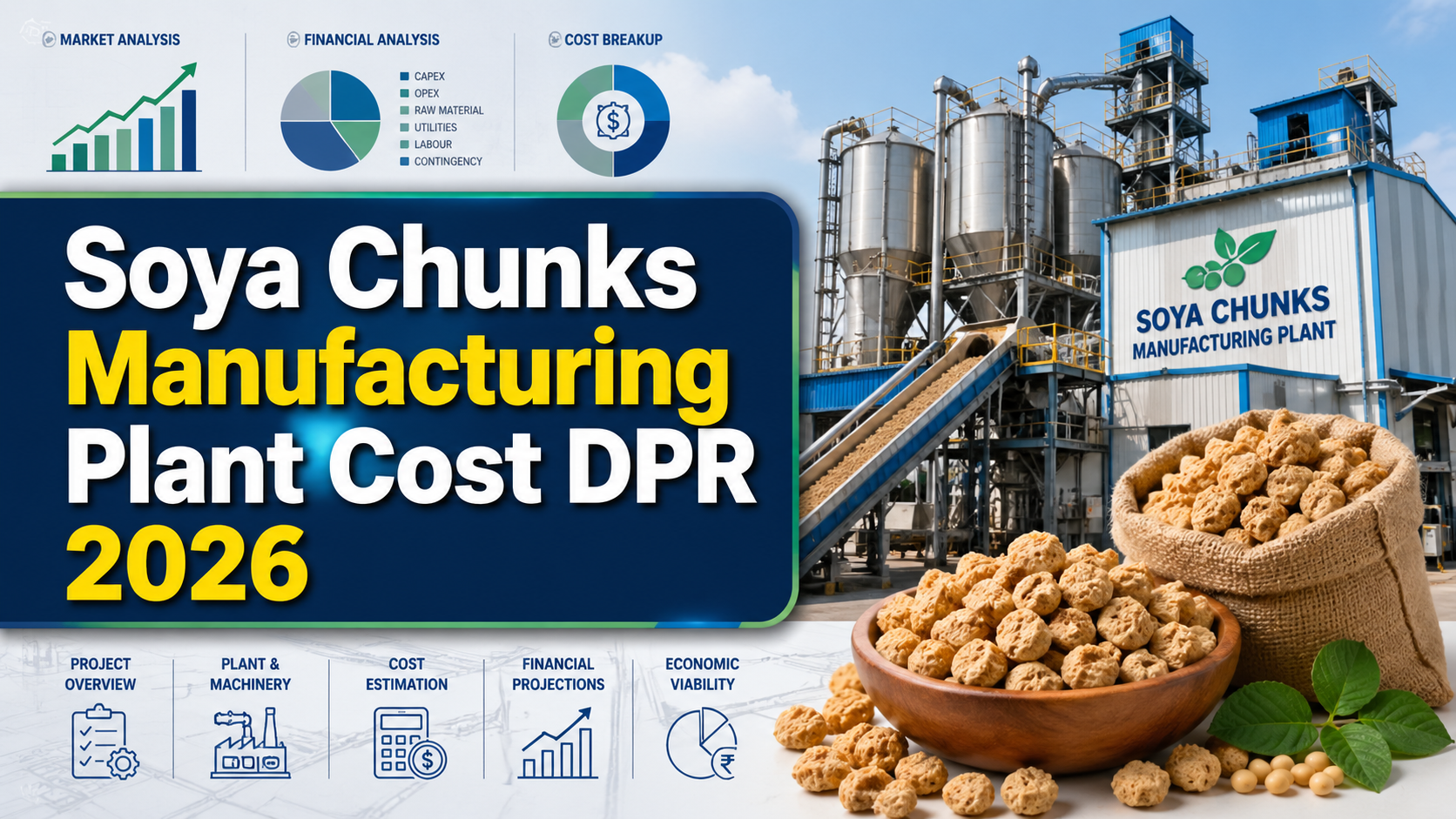
A soya chunks manufacturing plant is an industrial facility designed to produce high-protein textured vegetable protein (TVP) from defatted soybean meal through extrusion, texturization, and drying processes. The production process converts de-oiled soy flour into an expanded, porous, meat-like structure using controlled heat, moisture, and mechanical pressure in an extruder, followed by cutting and drying to create a shelf-stable product. As this is a process-driven and equipment-intensive industry, evaluating the plant cost for soya chunks manufacturing is essential for effective project planning, capital investment decisions, and long-term operational efficiency.
Unveiling the World of Soya Chunks
Soya chunks, also known as textured soy protein (TSP) or textured vegetable protein (TVP), are produced from defatted soy flour containing approximately 50–52% protein on a dry basis. During extrusion, the protein structure is transformed under high temperature and pressure into a fibrous, meat-like texture that rehydrates easily during cooking. Soya chunks provide all essential amino acids along with dietary fiber, calcium, and iron, making them a complete and nutritious protein source. Their affordability, long shelf life, and versatility have made them a staple in vegetarian diets across regions such as South Asia and Africa, while global demand continues to rise due to the increasing popularity of plant-based foods. In this context, understanding the soya chunks manufacturing plant cost is crucial for investors seeking to capitalize on this growing market.
What are Soya Chunks Used For?
Soya chunks are widely used as a meat substitute in both household and industrial food applications. They are commonly added to curries, stir-fries, soups, and rice dishes after rehydration. In the food processing industry, they are incorporated into ready-to-eat meals, frozen foods, and high-protein snack products. The nutraceutical sector uses them in dietary and health formulations, while institutional catering services—such as schools, hospitals, and government nutrition programs—rely on them as an affordable protein source. Additionally, soya chunks are used in animal feed and pet food formulations. Given this broad application spectrum, a detailed evaluation of the plant cost for soya chunks manufacturing is essential to ensure scalability, cost efficiency, and long-term profitability.
Get the Sample Report: https://www.imarcgroup.com/soya-chunks-manufacturing-plant-project-report/requestsample
Key Factors for Soya Chunks Plant Setup Requirements
Establishing a soya chunks manufacturing plant requires careful consideration of several critical factors that influence both initial investment and operational performance:
- Raw Materials and Soy Flour Supply: The availability and pricing of defatted soy flour, the primary raw material, play a key role in determining production costs. A reliable supply chain from soybean processors or oil extraction units is essential for stable operations.
- Manufacturing Technology and Equipment: The selection of extrusion systems (single-screw or twin-screw), drying units, and automated packaging lines directly impacts production efficiency, product consistency, and overall plant cost.
- Food Safety Compliance and Regulatory Approvals: Compliance with food safety standards such as FSSAI, ISO 22000, and HACCP, along with environmental and factory regulations, is essential to ensure safe and legally compliant operations.
- Location and Infrastructure: Proximity to soybean-producing regions, along with access to reliable utilities such as power, water, and transportation networks, significantly enhances operational efficiency and cost management.
Detailed Process Flow and Quality Control
The manufacturing of soya chunks involves a series of precisely controlled steps based on extrusion technology. Defatted soy flour is first conditioned with water and steam to achieve the desired moisture level, then processed in a high-temperature, high-pressure extruder where texturization occurs. The extruded material is cut into uniform shapes and dried to reduce moisture content to around 10–12%, ensuring product stability and shelf life.
- Unit Operations Involved: Key stages include raw material conditioning, pre-mixing, extrusion and texturization, cutting, drying, optional flavoring, and automated packaging. Each step is carefully managed to maintain product quality and protein integrity.
- Mass Balance and Raw Material Requirements: Accurate mass balance calculations determine the required quantities of defatted soy flour, water, and additives per unit of finished product, directly influencing production costs and procurement planning.
- Quality Assurance Criteria: Product quality is evaluated based on protein content (minimum 50% on a dry basis), moisture level, rehydration capacity, texture consistency, and absence of contaminants. Testing includes proximate analysis, microbiological evaluation, and physical inspection to meet food safety and market standards.
A structured approach to these parameters ensures consistent product quality, efficient production, and long-term success in the competitive food processing industry.
Cost of Setting Up a Soya Chunks Manufacturing Plant:
The cost of establishing a soya chunks manufacturing plant depends on plant capacity, technology selection, location, level of automation, and regulatory compliance obligations. A detailed cost assessment covering both capital and operational expenditure is essential for accurate financial planning.
CapEx and OpEx Analysis for Soya Chunks Manufacturing Cost:
- Raw Material Costs: As the largest component of variable costs, the price of defatted soy flour accounts for approximately 70–80% of total operating expenses. Soybean crop cycles, oilseed market dynamics, and global vegetable oil price fluctuations significantly impact profitability and operating margins.
- Capital Investment: The initial plant setup cost for twin-screw extruders, drying systems, cutting machines, material handling equipment, civil works, and land constitutes a significant capital outlay. This one-time expenditure is amortized over the plant's operational life and directly shapes the overall soya chunks manufacturing plant cost.
- Operational Costs: These include fixed costs such as skilled labor, maintenance, and insurance, as well as variable costs including utilities (electricity, steam, and water—accounting for 10–15% of OpEx), packaging materials, and food safety compliance measures.
- Product Quality and Grade: The protein percentage, rehydration ratio, and textural uniformity of the soya chunks affect their suitability for different end-use markets. Consistent quality with standardized physical specifications is essential for food-grade applications and impacts pricing and processing requirements.
- Manufacturing Capacity: The scale of manufacturing significantly influences unit costs through economies of scale. Larger plants benefit from lower per-unit capital and operational costs, affecting the overall soya chunks manufacturing plant cost structure.
- Location and Market Conditions: The geographical location influences transportation costs for raw material procurement and finished product distribution, as well as access to skilled labor. Proximity to soybean-processing belts and institutional buyers such as schools, canteens, and retail distributors affects logistics costs and market access.
Ask An Analyst: https://www.imarcgroup.com/request?type=report&id=9092&flag=C
Leading Soya Chunks Manufacturers
The market for soya chunks is served by a number of integrated food processing companies who lead the industry in manufacturing capacity, distribution reach, and brand recognition. These manufacturers set industry standards for quality, protein content, and supply chain reliability.
- Ruchi Soya Industries Limited
- Nutrela (Patanjali Foods)
- Vippy Industries Ltd.
- Shree Renuka Sugars (Soy Division)
- Sonic Biochem Ltd.
Timeline to Start the Plant
- Feasibility study and project report preparation
- Land acquisition and site development
- Regulatory approvals and food safety clearances
- Factory licence and fire safety compliance
- Machinery procurement and installation
- Raw material supplier agreements and supply chain setup
- Trial production and quality testing
- Commercial production launch
Licences and Regulatory Requirements
Starting a soya chunks manufacturing unit requires several approvals:
- Business registration (Proprietorship, LLP, or Pvt Ltd)
- Factory Licence under the Factories Act
- FSSAI (Food Safety and Standards Authority of India) License
- Environmental Clearance from State Pollution Control Board
- GST Registration
- Fire Safety NOC
- Effluent Treatment Plant (ETP) operational clearance
- Occupational Health and Safety compliance
Frequently Asked Questions:
1. How much does it cost to set up a soya chunks manufacturing plant? |
The total setup cost varies depending on plant capacity, technology, and location. It typically includes expenses for land, civil construction, extrusion machinery, drying systems, packaging lines, food safety infrastructure, utilities, and working capital. A detailed feasibility report provides accurate, project-specific cost estimates. |
2. Is soya chunks manufacturing profitable in 2026? |
Yes. Soya chunks manufacturing offers strong profitability potential, driven by robust and growing demand from food service, retail, institutional catering, and the health food sector. Gross profit margins typically range between 25–35%, with net profit margins of 10–15%. Profitability depends on raw material sourcing efficiency, energy costs, operational scale, and target market pricing. |
3. What machinery is required for a soya chunks manufacturing plant? |
Key equipment includes high-speed mixers, twin-screw extruders, pre-conditioners, cutting machines, industrial drying ovens, flavor-coating systems, automated packaging lines, quality inspection instruments, and material handling conveyors. Cooling and dust control systems are also required for hygienic and efficient operations. |
4. What licences and approvals are required to start a soya chunks manufacturing plant? |
Typical requirements include business registration, factory licence, FSSAI food safety license, environmental clearance, GST registration, fire safety approval, and compliance with occupational health and safety regulations. Additional certifications such as ISO 22000 or HACCP may be required depending on target markets and buyer specifications. |
5. What raw materials are needed for soya chunks manufacturing? |
The primary raw material is defatted soy flour (full-fat soy flour is used in select formulations). Water and steam are used in the conditioning and extrusion stages. Optional additives include natural colorants, flavoring agents, and anti-caking agents depending on the product variant and target application. |
6. What are the environmental compliance requirements for a soya chunks manufacturing plant? |
Manufacturers must obtain environmental approvals, install effluent treatment systems for process wastewater, comply with dust and emission norms from drying operations, and manage solid waste responsibly. Compliance with local food safety and hygiene standards is also mandatory throughout the manufacturing process. |
7. What is the best location to set up a soya chunks manufacturing plant? |
Ideal locations are those with easy access to defatted soy flour from nearby oilseed crushing units or soybean-processing belts (such as Madhya Pradesh, Maharashtra, and Rajasthan in India), reliable power and water supply, strong logistics and cold-chain infrastructure, and proximity to institutional and retail buyers. |
8. What is the break-even period for this type of plant? |
The break-even period generally ranges from 3 to 6 years, depending on plant scale, capital investment, operating efficiency, raw material cost management, and market demand. Plants serving institutional buyers or securing long-term supply contracts typically achieve break-even on the shorter end of this range. |
9. What government incentives are available for soya chunks manufacturers? |
Governments may offer incentives such as capital subsidies under the PMFME (Pradhan Mantri Formalisation of Micro Food Processing Enterprises) scheme, tax benefits for food processing units, reduced utility tariffs in designated food parks, export incentives for processed soy products, and interest subsidies under MSME and industrial development promotion schemes. |
