
Areca Nut Leaf Plate Manufacturing Plant Detailed Project Report (DPR) 2026: Financial Modeling and Business Viability AssessmenManufacturing ProductionUpdated on Jul 30, 2026 View more like this | Visit United States Minor Outlying Islands, UN | Contact IMARC Group |
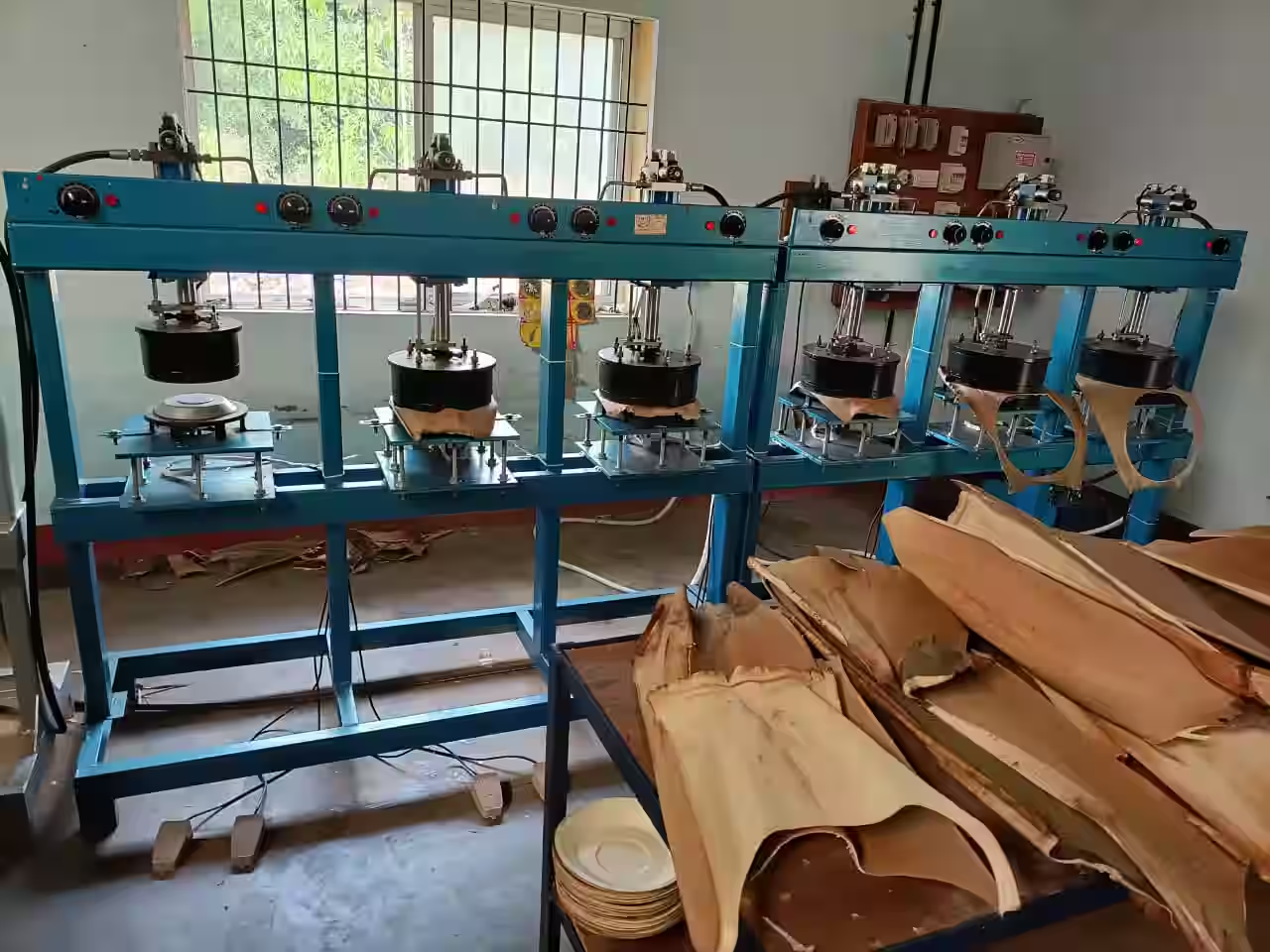
Setting up an areca nut leaf plate manufacturing plant positions investors in a fast-growing segment of the sustainable packaging and disposable tableware value chain, backed by rising demand from foodservice, catering, and export-oriented eco-product markets. As single-use plastic restrictions tighten and eco-conscious dining gains momentum across hospitality, events, and retail channels, the global areca nut leaf plate industry continues to present promising opportunities for manufacturers and entrepreneurs seeking to enter the natural, biodegradable tableware space.
IMARC Group's Detailed Project Report (DPR) provides a complete roadmap for establishing an areca nut leaf plate manufacturing plant project report - covering market outlook, plant setup, machinery, raw materials, cost structure, and investment opportunities.
Global Market Outlook and Investment Opportunity:
The global areca nut leaf plate market is expanding steadily, propelled by tightening restrictions on single-use plastics, growing adoption of compostable foodservice disposables, and the expansion of eco-conscious catering and event management. North America currently leads the market, accounting for over 40% of the global share. This momentum is reinforced by rising export-oriented demand for natural tableware and increasing corporate sustainability commitments among hotels, institutional caterers, and quick-service food operators.
Areca nut leaf plates are disposable tableware products made from the naturally shed leaf sheaths of the Areca catechu palm. The sheaths are collected, cleaned, dried, and heat-pressed into plates, bowls, and trays, typically without cutting trees or adding chemicals. These products are prized for their rigid structure, heat tolerance for hot foods, and compostability, with quality controls centered on washing efficacy, microbial reduction, uniform pressing, and hygienic packaging.
Key Investment Highlights:
- Process Used: Collection and sorting, washing, drying, hydraulic heat-press molding with dies, trimming/edge finishing, sterilization, inspection, and packaging.
- End-use Industries: Foodservice and HoReCa, catering and events, quick-service restaurants, institutional dining, retail/e-commerce disposable tableware, and export packaging and eco-product distribution.
- Applications: Serving plates for meals and snacks, disposable tableware for events, take-away packaging, and outdoor dining.
Plant Capacity and Production Scale:
The proposed areca nut leaf plate manufacturing facility is designed with an annual production capacity ranging between 10-50 million pieces, enabling economies of scale while maintaining operational flexibility. This capacity allows manufacturers to serve foodservice, catering, retail, and export channels - ensuring steady demand across multiple end-use segments.
Request for a Sample Report: https://www.imarcgroup.com/areca-nut-leaf-plate-manufacturing-plant-project-report/requestsample
Factors Affecting Areca Nut Leaf Plate Manufacturing Plant Cost:
The operating cost structure of an areca nut leaf plate manufacturing plant is primarily driven by raw material consumption, particularly areca leaf sheaths, which accounts for approximately 40-50% of total operating expenses (OpEx), followed by utilities at 20-25% of OpEx. The remainder comprises transportation, packaging, salaries and wages, depreciation, taxes, and other expenses. As with any manufacturing project, the precise investment quantum varies by plant location, capacity, technology, and material sourcing strategy.
- Raw Materials: 40-50% of OpEx
- Utilities: 20-25% of OpEx
Capital investment for the plant is led by machinery costs, which account for the largest portion of total capital expenditure, followed by land and site development costs covering land registration, boundary development, and related expenses. Exact CapEx figures (Land and Site Development Costs, Civil Works Costs, Machinery Costs, and Other Capital Costs) and detailed OpEx line items are Transportation, Packaging, Salaries and Wages, Depreciation, Taxes, Other Expenses.
Plant Setup Considerations: Step-by-Step Execution Plan:
- Site Selection: The location must offer easy access to key raw materials such as areca leaf sheaths, binding agents, and pressing molds. Proximity to target markets helps minimize distribution costs, and the site must have robust infrastructure, including reliable transportation, utilities, and waste management systems, along with compliance with local zoning laws and environmental regulations.
- Plant Layout Optimization: The layout should be optimized to enhance workflow efficiency, safety, and minimize material handling, with separate areas designated for raw material storage, production, quality control, and finished goods storage, plus space for future expansion.
- Equipment Selection: High-quality, corrosion-resistant machinery tailored for areca nut leaf plate manufacturing must be selected, including sorting conveyors, high-pressure washing units, drying systems, hydraulic heat-press molding machines, trimming equipment, and shrink-wrapping/sealing lines, all compliant with industry safety and efficiency standards.
- Raw Material Sourcing: Reliable suppliers must be secured for raw materials like areca leaf sheaths, binding agents, and pressing molds to ensure consistent production quality, minimize transportation costs, and stabilize pricing through long-term contracts.
- Safety and Environmental Compliance: Safety protocols must be implemented throughout the production process, with advanced monitoring systems to detect leaks or deviations, and effluent treatment systems to minimize environmental impact and ensure compliance with emission standards.
- Quality Assurance Systems: A comprehensive quality management system should be implemented across all stages of operations, with appropriate testing, monitoring, validation, SOPs, documentation, traceability, and regular audits to support continuous improvement.
Machinery, Equipment, and Production Line Planning:
Key machinery for an areca nut leaf plate manufacturing plant includes sorting conveyors for raw material preparation, high-pressure washing units for cleaning, drying systems for moisture removal, hydraulic heat-press molding machines for shaping plates, trimming equipment for edge finishing, and shrink-wrapping/sealing lines for finished product handling.
Raw Material Sourcing and Supply Chain Strategy:
Naturally fallen areca leaf sheaths serve as the primary raw material for areca nut leaf plate production, along with binding agents and pressing molds required for the heat-press molding process. Establishing long-term contracts with reliable suppliers of areca leaf sheaths helps mitigate price volatility and ensures consistent raw material supply, given that raw materials alone account for the largest share of total operating expenditure.
Regulatory Compliance and Quality Standards:
Setting up an areca nut leaf plate manufacturing plant typically requires business registration, environmental clearances, factory licenses, fire safety certifications, and industry-specific permits, with local, state, and national regulations applying depending on the location. Compliance with food-contact and export-quality specifications creates entry barriers that favor efficient and experienced producers.
ROI and Profitability Analysis:
The areca nut leaf plate manufacturing business demonstrates healthy profitability potential under normal operating conditions, supported by stable demand and value-added applications:
- Gross Profit Margins: 30-40%
- Net Profit Margins: 12-20%
Break-even in an areca nut leaf plate manufacturing business typically ranges from 3 to 6 years, depending on production scale, regulatory compliance costs, raw material pricing, and market demand. Efficient manufacturing and export opportunities can help accelerate returns.
How IMARC Group Supports Areca Nut Leaf Plate Manufacturing Projects:
IMARC Group provides customized Detailed Project Reports (DPRs), feasibility studies, and end-to-end project execution support to help investors, packaging companies, and manufacturers plan, budget, and execute areca nut leaf plate manufacturing projects across global markets - including market assessment, machinery selection guidance, regulatory navigation, and cost modeling tailored to specific plant locations and capacities.
Speak to Analyst for a Customized Report: https://www.imarcgroup.com/request?type=report&id=13511&flag=C
Who Should Read This Report:
- First-time investors evaluating diversification into sustainable packaging and disposable tableware
- Foodservice, HoReCa, and catering companies exploring backward or forward integration
- Retail, e-commerce, and export distributors seeking a dependable natural tableware supply chain
- Entrepreneurs and investors evaluating entry into the eco-friendly disposable tableware sector
Industry Leadership:
The global areca nut leaf plate industry is led by established players including Leef Blattwerk GmbH, Magnus Eco Concepts Private Limited, Vegware Ltd., Papstar GmbH, Deepam Ecogreen, Solia USA, and Prakritii International Private Limited - serving foodservice, catering and events, quick-service restaurants, institutional dining, retail/e-commerce, and export packaging sectors worldwide.
Recent Industry Developments:
- June 2025: A researcher from Karnataka, India, developed a food-grade antimicrobial paper lining for areca leaf plates to address safety concerns raised by a U.S. Food and Drug Administration ban on untreated areca nut leaf dinnerware over toxin migration. The innovation creates a heat-resistant, certified barrier between food and the plate, aiming to meet international standards, reduce health risks, and support India's areca plate industry.
Frequently Asked Questions:
1. What is the annual production capacity of the proposed plant?
The proposed facility is designed for an annual capacity of 10-50 million pieces.
2. What are the expected profit margins?
Gross profit margins typically range from 30-40%, with net profit margins of 12-20%, subject to plant-specific cost structures.
3. What is the biggest cost driver in areca nut leaf plate manufacturing?
Raw materials - primarily areca leaf sheaths - account for 40-50% of total operating expenditure, with utilities accounting for a further 20-25%, making supplier relationships and price contracts a critical planning priority.
4. What raw materials are required for areca nut leaf plate manufacturing?
Areca nut leaf plate manufacturing requires naturally fallen sheaths from areca palm trees, which are cleaned, sun-dried, and then molded into plates using heat and pressure, along with binding agents and pressing molds as needed.
Buy Now: https://www.imarcgroup.com/checkout?id=13511&method=2175
About Us:
IMARC Group is a global management consulting firm that helps the world's most ambitious changemakers create a lasting impact. The company excels in understanding its clients' business priorities and delivering tailored solutions that drive meaningful outcomes. IMARC Group provides a comprehensive suite of market entry and expansion services, including market assessment, feasibility studies, company incorporation assistance, factory setup support, regulatory approvals and licensing navigation, branding, marketing and sales strategies, competitive landscape and benchmarking analyses, pricing and cost research, and procurement research.
Contact Us:
IMARC Group
134 N 4th St. Brooklyn, NY 11249, USA
Email: [email protected]
Tel No: (D) +91 120 433 0800
United States: (+1-201-971-6302)
