
Web Development tips to create a Perfect Pagee-Commerce Websites & PlatformsUpdated on Aug 19, 2019 View more like this | Visit Ukraine, UN | Contact Thomas Ervin |
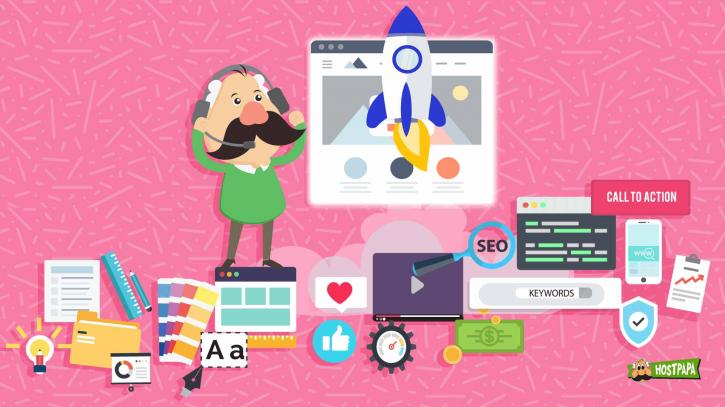
Starting the web development of a new page from scratch is not an easy task. There are many things to keep in mind when thinking about how to make a website; what type of website do you need, what CMS are you going to choose and, most importantly, how to find a professional programmer to work with.
Having an expert in web design and development to help you and guide you when looking for the best solutions for your needs, will always mean great benefits for your business or brand on the Internet.
Types of web pages
It seems obvious, but one of the first things you should think about is how you want your website to be among all the types that exist.
Normally, we begin to consider design, colors, or even details such as typography, long before defining what we need.
If we think about the web development of a page we find different classifications depending on its construction, its technology and the use we are going to give it. Keep all of them in mind when defining what is best for your project.
According to its construction
Although a priori it may seem to you that this is an aspect that directly concerns the programmer, in reality, it is something you will have to think about before getting to work on web development. Think that it is you who must be clear about the utilities of the web and what you expect from it.
Depending on the construction of the site this can be:
Static: Static websites are those that serve primarily as an information point. Users cannot interact with the page beyond consulting their pages, since they are a unidirectional means of communication that brands use to release their information, without listening to users. They are not the best option in terms of positioning, but they can be a good first contact.
Dynamic: Dynamic websites are those that allow you to interact with users, who evolve and adapt to each moment, for example, an eCommerce where users can select the products they want to buy or a website with downloadable or commenting spaces, participate by uploading photos, videos, etc.
According to your technology
The type of code used and the applications or CMS that are chosen in the development, are key when determining the web development of your page.
HTML: It is the most popular programming language, and they are quite easy to modify. Its construction can be automated with tools such as FrontPage or Dreamweaver.
CMS: Pages created through content managers such as WordPress or Joomla. Its strong point is the ease of handling content, updates and modifications.
PHP: The websites developed in this programming language are very complete. They allow to include databases and shopping carts staying agile, efficient and dynamic. However, they are difficult to modify and require maintenance by programmers.
This classification can be somewhat more complex, so you will need professional programming and web development to help you see which the best option for your project is.
According to its use
Surely you are very clear what you want, but think that in the face of web development you need to define it very well. Both the programmer and the rest of the professionals who work on your project should know what exactly you need visit this website hireukrainiandevelopers.com
Depending on the characteristics of the page and the use you are going to give it, they can be:
Informative: Websites that provide information about the brand, the company behind it, its products or services, etc.
Services: They do not sell any products, but offer online services. They range from food delivery websites, to download websites.
Online stores: Pages oriented to the online sale of all types of products.
Landing page: Sites aimed at converting users into customers. They are usually part of online marketing strategies and coexist with other sites of the brand. It is necessary to design a landing page correctly to achieve objectives.
Portfolio: Webs of presentation of companies or freelancers in which previous works are shown.
Blog: Pages that are updated regularly aimed at disseminating interesting content for users, and promoting bidirectional communication.
Forum: The web goes to the background to give all the prominence to the users. These are meeting places where people can talk, present their doubts, find solutions, etc.
Having an expert in web design and development to help you and guide you when looking for the best solutions for your needs, will always mean great benefits for your business or brand on the Internet.
Types of web pages
It seems obvious, but one of the first things you should think about is how you want your website to be among all the types that exist.
Normally, we begin to consider design, colors, or even details such as typography, long before defining what we need.
If we think about the web development of a page we find different classifications depending on its construction, its technology and the use we are going to give it. Keep all of them in mind when defining what is best for your project.
According to its construction
Although a priori it may seem to you that this is an aspect that directly concerns the programmer, in reality, it is something you will have to think about before getting to work on web development. Think that it is you who must be clear about the utilities of the web and what you expect from it.
Depending on the construction of the site this can be:
Static: Static websites are those that serve primarily as an information point. Users cannot interact with the page beyond consulting their pages, since they are a unidirectional means of communication that brands use to release their information, without listening to users. They are not the best option in terms of positioning, but they can be a good first contact.
Dynamic: Dynamic websites are those that allow you to interact with users, who evolve and adapt to each moment, for example, an eCommerce where users can select the products they want to buy or a website with downloadable or commenting spaces, participate by uploading photos, videos, etc.
According to your technology
The type of code used and the applications or CMS that are chosen in the development, are key when determining the web development of your page.
HTML: It is the most popular programming language, and they are quite easy to modify. Its construction can be automated with tools such as FrontPage or Dreamweaver.
CMS: Pages created through content managers such as WordPress or Joomla. Its strong point is the ease of handling content, updates and modifications.
PHP: The websites developed in this programming language are very complete. They allow to include databases and shopping carts staying agile, efficient and dynamic. However, they are difficult to modify and require maintenance by programmers.
This classification can be somewhat more complex, so you will need professional programming and web development to help you see which the best option for your project is.
According to its use
Surely you are very clear what you want, but think that in the face of web development you need to define it very well. Both the programmer and the rest of the professionals who work on your project should know what exactly you need visit this website hireukrainiandevelopers.com
Depending on the characteristics of the page and the use you are going to give it, they can be:
Informative: Websites that provide information about the brand, the company behind it, its products or services, etc.
Services: They do not sell any products, but offer online services. They range from food delivery websites, to download websites.
Online stores: Pages oriented to the online sale of all types of products.
Landing page: Sites aimed at converting users into customers. They are usually part of online marketing strategies and coexist with other sites of the brand. It is necessary to design a landing page correctly to achieve objectives.
Portfolio: Webs of presentation of companies or freelancers in which previous works are shown.
Blog: Pages that are updated regularly aimed at disseminating interesting content for users, and promoting bidirectional communication.
Forum: The web goes to the background to give all the prominence to the users. These are meeting places where people can talk, present their doubts, find solutions, etc.
