
Fluorescent labelingPharmaceutical InformationUpdated on Jul 30, 2019 View more like this | Visit SHIRLEY, NY | Contact BOCSCI INC |
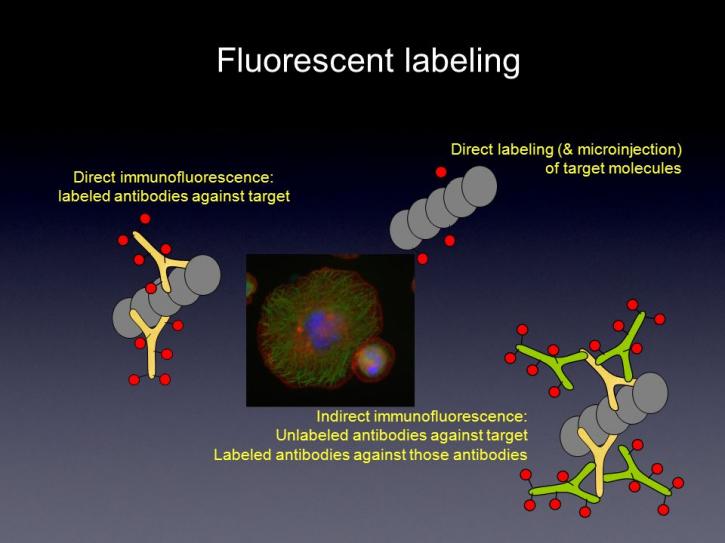
Protein, antibodies, peptides, nucleic acids, ligands, synthetic oligonucleotides and other biomolecules, labeling with fluorescent molecules that allows the sensing and visualizing of protein dynamics, localization, and protein-protein interactions, is an invaluable technique to understand protein functions and networks in living cells.
Various labeling techniques are developed in BOC Sciences such as enzymatic labeling, protein labeling, genetic labeling and quantum dot are widely utilized to meet our customers’ need.
Fluorescent labeling of proteins
Please find our labeling methods for tracking biomolecules as below:
1. Enzymatic labeling
Incorporate functionalities into proteins at specific sites via enzymatic reactions is one of the most important approaches for protein labeling. The incorporated tags then enable reactions that are chemoselective, whose functional groups not only are inert in biological media, but also do not occur natively in proteins or other macromolecules.
2. Chemical labeling
Chemical labeling or the use of chemical tags could offer a wider range of colors and photo chemical properties. Also, chemical tags are preferred over fluorescent proteins due to the architectural and size limitations of the fluorescent protein's characteristic b-barrel.
3. Protein labeling
A short tag is used to minimize disruption of protein folding and function in protein labeling. Sometimes, transition metals are also used to link specific residues in the tags to site-specific targets such as the N, C-termini, or internal sites within the protein.
4. Genetic labeling
Genetic labeling, also known as chromosome painting, is a genetic labeling technique utilizes probes that are specific for chromosomal sites along the length of a chromosome. This technique allows abnormalities such as deletions and duplications to be revealed.
5. Quantum dot labeling
The tunable absorption spectrum and high extinction coefficients of quantum dots have made them attractive for light harvesting technologies such as labeling.
Various labeling techniques are developed in BOC Sciences such as enzymatic labeling, protein labeling, genetic labeling and quantum dot are widely utilized to meet our customers’ need.
Fluorescent labeling of proteins
Please find our labeling methods for tracking biomolecules as below:
1. Enzymatic labeling
Incorporate functionalities into proteins at specific sites via enzymatic reactions is one of the most important approaches for protein labeling. The incorporated tags then enable reactions that are chemoselective, whose functional groups not only are inert in biological media, but also do not occur natively in proteins or other macromolecules.
2. Chemical labeling
Chemical labeling or the use of chemical tags could offer a wider range of colors and photo chemical properties. Also, chemical tags are preferred over fluorescent proteins due to the architectural and size limitations of the fluorescent protein's characteristic b-barrel.
3. Protein labeling
A short tag is used to minimize disruption of protein folding and function in protein labeling. Sometimes, transition metals are also used to link specific residues in the tags to site-specific targets such as the N, C-termini, or internal sites within the protein.
4. Genetic labeling
Genetic labeling, also known as chromosome painting, is a genetic labeling technique utilizes probes that are specific for chromosomal sites along the length of a chromosome. This technique allows abnormalities such as deletions and duplications to be revealed.
5. Quantum dot labeling
The tunable absorption spectrum and high extinction coefficients of quantum dots have made them attractive for light harvesting technologies such as labeling.
