
Condom Manufacturing Plant Setup in Saudi Arabia 2026: Project Economics and RequirementsManufacturing ProductionUpdated on Feb 25, 2026 View more like this | Visit Saudi Arabia, UN | Contact IMARC Group |
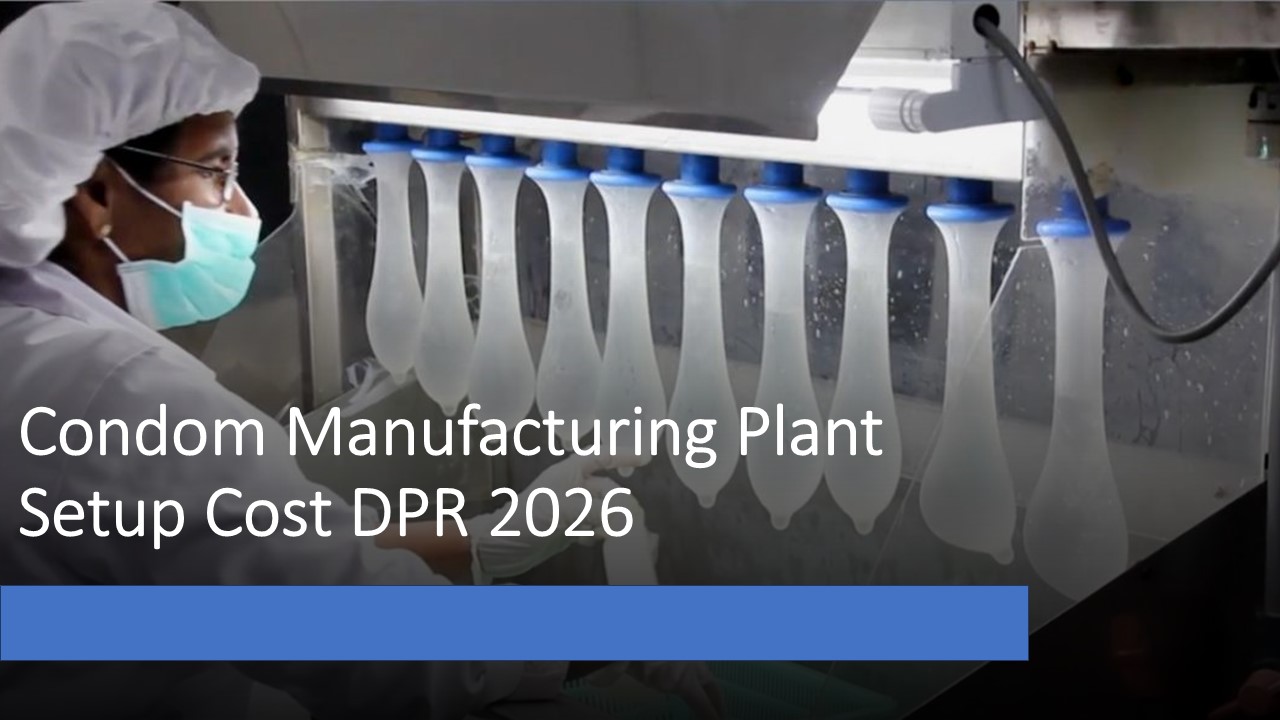
Setting up a condom manufacturing plant in Saudi Arabia presents a compelling investment opportunity as global awareness around sexual health, reproductive rights, and family planning continues to rise. With governments, NGOs, and public health bodies worldwide scaling procurement and distribution programs, and the global condom market valued at USD 13.32 billion in 2025 and projected to reach USD 25.34 billion by 2034 at a CAGR of 7.4%, the sector offers structurally robust demand, resilient revenue, and high-margin production economics for investors seeking long-term growth in the healthcare and wellness value chain.
"Rising sexual health awareness, strong government-backed distribution programs, expanding youth demographics, and high-volume automated production economics create a structurally sound investment case for condom manufacturing — with gross margins of 50–60% and net profit margins of 25–30%."
What is a Condom Manufacturing Plant?
A condom manufacturing plant is a specialized industrial facility designed to produce barrier contraceptive devices at high volume using automated latex processing, dipping, and quality inspection lines. These plants process raw materials — primarily natural rubber latex or synthetic alternatives such as polyisoprene and polyurethane — through a series of precision-controlled production stages including latex compounding, mandrel dipping, vulcanization, electronic testing, lubrication, and packaging.
The finished products serve a broad and diversified end-use base spanning public health distribution programs, retail pharmacy chains, e-commerce health and wellness platforms, institutional healthcare facilities, and NGO-led family planning initiatives — all of which are experiencing sustained demand growth as reproductive health awareness expands globally.
Cost of Setting Up a Condom Manufacturing Plant
The total cost of establishing a condom manufacturing plant in Saudi Arabia is influenced by production capacity, level of automation, technology selection (latex vs. non-latex), site location, and local regulatory compliance. Below is a detailed breakdown of the major cost components.
1. Capital Expenditure (CapEx)
Land and Site Development
Industrial land requirements for a condom manufacturing plant depend on production capacity, local zoning regulations, and proximity to key raw material suppliers and distribution networks. Pre-developed industrial zones or special economic zones (SEZs) are often the most cost-effective option, offering pre-built utilities, streamlined regulatory approvals, and access to skilled labor. Site development cost include land acquisition or lease, boundary development, road access, site leveling, drainage systems, and registration charges. Proximity to ports and transportation corridors reduces inbound raw material and outbound distribution cost.
Request Sample: https://www.imarcgroup.com/condom-manufacturing-plant-project-report/requestsample
Civil Works and Construction
Civil construction covers the main production hall, raw material storage, finished goods warehouse, quality control laboratory, utility rooms, administrative offices, canteen, and sanitation facilities. Condom manufacturing requires strictly controlled production environments with regulated temperature and humidity to ensure consistent latex film quality. Reinforced flooring, chemical-resistant drainage systems, and ventilation infrastructure to manage chemical fumes from latex compounding and vulcanization add to the civil construction cost compared to conventional light manufacturing plants.
Machinery and Equipment
Machinery represents the largest single component of capital expenditure. A fully operational condom manufacturing plant requires the following core equipment:
- Latex Compounding Tanks and Mixing Systems — for blending natural rubber latex with vulcanizing agents, stabilizers, and chemical additives
- Mandrel Dipping Lines — multi-stage automated dipping conveyors with glass or ceramic mandrels for forming the latex film
- Vulcanization Ovens — for heat-curing the latex film to impart strength, elasticity, and durability
- Washing and Leaching Lines — for removing residual chemicals and surface proteins from the latex film
- Electronic Testing Systems (EHT) — for conducting 100% electronic pinhole detection on every unit produced
- Air Inflation Testing Units — for verifying burst pressure and volume performance of finished condoms
- Lubrication Units — for applying silicone oil or other lubricants to finished condom surfaces
- Foil Sealing and Packaging Machines — for individual sachet sealing, box packaging, and carton assembly
- Nitrogen or Vacuum Packaging Systems — for inert gas flushing to extend shelf life
Machinery can be sourced from suppliers in Malaysia, China, Germany, and Taiwan depending on automation level, budget, and technology requirements. Import duties, freight, and installation charges must be incorporated into total machinery cost estimates.
Other Capital Costs
Additional capital expenditure items include plant commissioning, cleanroom or controlled environment infrastructure, laboratory testing instruments, ERP and inventory management systems, fire suppression systems, effluent treatment infrastructure, environmental compliance installations, and pre-operative expenses such as regulatory approvals and certification cost.
2. Operational Expenditure (OpEx)
Raw Material Cost: 50–60% of Total OpEx
Raw materials form the dominant share of ongoing operating cost. Key input materials include:
- Natural Rubber Latex (NRL) — the primary raw material, sourced from rubber plantations; price linked to global rubber commodity markets
- Synthetic Alternatives (Polyisoprene, Polyurethane) — for non-latex product lines serving allergy-sensitive consumers
- Vulcanizing Agents (Sulfur, Accelerators) — for crosslinking the latex polymer network during heat curing
- Stabilizers and Emulsifiers — for maintaining latex compound stability during processing
- Silicone Oil Lubricant — for coating finished condoms to improve tactile performance
- Aluminum Foil Laminate — for individual sachet packaging
- Printed Cartons and Outer Packaging — for retail and institutional presentation
Natural rubber latex prices are subject to volatility driven by global weather patterns, plantation output in Southeast Asia (Thailand, Indonesia, Malaysia), and broader commodity market cycles. Strategic supplier contracts and raw material hedging strategies are essential for managing cost volatility.
Utility Cost: 15–20% of Total OpEx
Utilities include electricity for powering dipping lines, vulcanization ovens, compressors, HVAC systems, and testing equipment. Condom production requires consistent power supply for continuous dipping line operations, steam for vulcanization, and temperature-controlled water systems for washing and leaching. Access to stable, cost-competitive industrial power — particularly from renewable sources — offers meaningful operating cost advantages.
Other Operating Costs
The remaining operational budget covers:
- Salaries and wages for production workers, quality control technicians, laboratory staff, and administrative personnel
- Packaging materials for finished products (foil sachets, boxes, cartons, display units)
- Inbound and outbound transportation and logistics
- Routine maintenance and spare parts for dipping lines and testing equipment
- Depreciation on plant, machinery, and infrastructure
- ISO 4074 and WHO/UNFPA quality certification and compliance cost
- Shelf-life and warranty reserves for product quality assurance
- General and administrative overhead
3. Plant Capacity
A standard condom manufacturing plant is designed with an annual production capacity ranging between 500 million to 1 billion units. This scale enables efficient cost absorption through economies of scale and serves a diverse client base spanning public health bulk procurement, branded retail channels, and private-label export markets. Modern facilities are designed with flexible dipping line configurations to accommodate multiple product formats (standard, ultra-thin, extra-large, flavored, non-latex) and packaging variants to serve diverse market segments and geographies.
4. Profit Margins and Financial Projections
- Gross Profit Margin: 50–60%
- Net Profit Margin: 25–30%
- Break-Even Period: Dependent on capacity utilization, pricing strategy, raw material cost management, and market penetration speed
A comprehensive financial plan must include capital cost analysis, operating cost projections, income and expenditure forecasts, payback period, Net Present Value (NPV), and Internal Rate of Return (IRR) to assess full financial viability. Profitability improves significantly with scale, vertical integration into latex compounding, and strategic positioning in premium branded or government tender markets.
Why Condom Manufacturing is a Strategic Investment
Rising Sexual Health Awareness — Public health campaigns, school health education programs, and digital media are driving unprecedented awareness of STI prevention and family planning globally. This structural shift in consumer behavior is translating into sustained volume growth across all market segments.
Government Support and Bulk Procurement Programs — Governments in developing and developed nations actively procure and distribute condoms through public health programs. The WHO, UNFPA, USAID, and national health ministries collectively procure billions of units annually, providing manufacturers with reliable, high-volume institutional demand that reduces commercial market dependency.
Expanding Youth and Urban Populations — Population growth in Africa, South Asia, and Southeast Asia, combined with rapid urbanization and rising disposable incomes, is expanding the addressable market for retail condom products. Changing social attitudes toward contraception among younger demographics are further accelerating adoption.
Strong Product Differentiation Opportunities — The condom market supports robust product differentiation through innovation in ultra-thin technology, extended pleasure formats, non-latex materials, flavored variants, and female condoms — each commanding premium retail price points and superior gross margins compared to commodity standard products.
High-Volume Automated Production Economics — Modern automated dipping and testing lines enable extremely high throughput (tens of millions of units per line per day) at low per-unit cost, creating highly favorable production economics at scale. The combination of high margin and high volume makes condom manufacturing one of the most financially attractive light manufacturing sectors in the healthcare space.
Speak to an Analyst: https://www.imarcgroup.com/request?type=report&id=7431&flag=C
Manufacturing Process – Step by Step
The condom production process in a modern manufacturing plant follows a structured and highly automated sequence:
- Latex Compounding — Natural rubber latex is blended with vulcanizing agents, accelerators, stabilizers, and emulsifiers in precise proportions to create a homogeneous compound with optimized mechanical and chemical properties
- Mandrel Preparation and Cleaning — Glass or ceramic mandrels are cleaned, inspected, and coated with a coagulant solution to promote uniform latex adhesion during dipping
- Dipping and Film Formation — Mandrels pass through multiple latex dipping baths on an automated conveyor line, building up the required film thickness (typically 0.06–0.08 mm for standard products) through successive dipping and drying cycles
- Vulcanization — Coated mandrels pass through heated vulcanization ovens where the latex film is heat-cured to crosslink the rubber polymer network, imparting strength, elasticity, and heat resistance
- Washing and Leaching — Vulcanized condoms undergo multiple water wash cycles to remove residual chemicals, latex proteins, and processing aids, reducing allergen content and ensuring product safety
- Stripping and Rolling — Finished condoms are stripped from mandrels and rolled from the open end to create the characteristic rolled-rim format for ease of application
- Electronic Testing (EHT) — Every condom is subjected to 100% electronic pinhole detection using high-voltage spark testing to identify any film defects or micro-perforations before packaging
- Air Inflation Testing — Statistical sampling of finished condoms undergoes air burst testing to verify minimum burst pressure and volume performance per ISO 4074 specifications
- Lubrication — Condoms are coated with a measured quantity of silicone oil lubricant on automated lubrication conveyors
- Foil Sealing and Packaging — Individual condoms are loaded into foil pouches, nitrogen-flushed for freshness, heat-sealed, and boxed into retail or institutional packaging configurations
- Quality Inspection and Release — Finished batches undergo final quality verification including visual inspection, freedom from holes testing, and documentation review before commercial release
Key End-Use Applications
Public Health Programs: Governments and international organizations (WHO, UNFPA, USAID) procure bulk condom supplies for free or subsidized distribution through public clinics, pharmacies, and community health workers, representing a large, stable institutional demand channel for manufacturers.
Retail and Pharmacy: Branded and private-label condoms are sold through pharmacy chains, supermarkets, convenience stores, and health and beauty retailers globally, with premium and differentiated product formats commanding superior price points.
E-commerce Platforms: The shift toward discreet online purchasing of sexual health products has created a rapidly expanding distribution channel, particularly in Asia-Pacific and emerging markets where social stigma around in-store purchases remains a barrier.
Institutional Healthcare: Hospitals, reproductive health clinics, family planning centers, and university health services maintain ongoing procurement for clinical and patient-facing distribution.
NGO and Humanitarian Distribution: Non-governmental organizations operating in developing markets and humanitarian settings procure condoms for free distribution in underserved communities, offering manufacturers another high-volume, relationship-based procurement channel.
Corporate and Hospitality: Hotels, corporate wellness programs, and hospitality operators distribute condoms as part of health and wellness amenity programs, representing a growing premium segment for branded products.
Timeline to Commission the Plant
Setting up a condom manufacturing plant typically requires 18 to 24 months from project initiation to commercial production. Key phases include:
- Business registration and industrial licensing application
- Site selection, land acquisition or lease, and industrial zoning approvals
- Environmental impact assessment and regulatory clearances
- Civil construction, utility connections, and infrastructure development
- Machinery procurement, shipping, customs clearance, and installation
- Utility commissioning including steam, compressed air, HVAC, and effluent treatment
- Staff recruitment, technical training, and standard operating procedure development
- Trial production runs, dipping line calibration, and quality validation
- ISO 4074, WHO/UNFPA, and market-specific quality certification
- Commercial launch, client onboarding, and distribution channel development
Licenses and Regulatory Requirements
Establishing a condom manufacturing plant requires compliance with the following regulatory requirements (specific requirements vary by jurisdiction):
- Business/Commercial Registration with the relevant ministry of commerce or trade
- Industrial Manufacturing License from the relevant ministry of industry or health
- Environmental Permit/Clearance from the national environmental protection or regulatory authority
- Building and Construction Permits for plant facilities
- Fire Safety and Civil Defense Approval for suppression and emergency systems
- ISO 4074 Certification — the primary international standard for natural rubber latex male condoms covering requirements and test methods
- WHO/UNFPA Prequalification — required for access to United Nations and international donor procurement tenders
- CE Marking under EU Medical Device Regulation (MDR) — for access to European markets
- FDA 510(k) Clearance — for market access in the United States
- BIS Certification (IS 3543) — for the Indian domestic market
- Medical Device Registration — country-specific device authorization required in most regulated markets
- Tax and Customs Registration with the relevant national tax authority
Key Challenges to Consider
Concentrated Global Manufacturing: Global condom manufacturing is heavily concentrated in Malaysia, China, and Thailand, with a small number of large-scale producers (Karex, Ansell, Okamoto) controlling significant market share. New entrants must identify clear differentiation strategies through technology, niche segments, or government-backed incentive programs.
Natural Latex Price Volatility: Natural rubber latex prices fluctuate significantly based on weather conditions affecting Southeast Asian rubber plantations, global commodity cycles, and speculative trading — directly impacting raw material cost and compressing margins during price spike periods.
Stringent Quality and Certification Requirements: ISO 4074, WHO/UNFPA prequalification, and medical device registration processes are technically demanding and time-consuming (6–12 months per certification), requiring significant upfront investment in testing infrastructure, quality systems, and regulatory expertise.
Social and Cultural Market Barriers: Despite global progress, significant social stigma around condom purchase and use persists in parts of Africa, South Asia, and the Middle East, requiring carefully calibrated market entry strategies, local partner relationships, and culturally sensitive brand positioning.
Skilled Technical Workforce Requirements: Operating automated dipping lines, precision electronic testing systems, and controlled latex compounding environments requires trained chemical engineers and process technicians who may need to be recruited internationally or developed through specialized training programs.
Product Liability and Shelf-Life Management: As a medical device with life and health implications, condoms carry inherent product liability exposure and require careful shelf-life management (typically 5 years), lot traceability, and robust recall protocols — all adding to compliance and operational cost.
Trade Policy and Procurement Dynamics: International donor procurement (UNFPA, USAID) is subject to supplier prequalification requirements, competitive tender processes, and program funding cycles, which can create lumpy demand patterns that require careful supply chain and inventory planning.
Frequently Asked Questions
The following questions are answered in the report:
- How much does it cost to set up a condom manufacturing plant?
- Is condom manufacturing profitable in 2026?
- What machinery is required for a condom manufacturing plant?
- What licenses and certifications are required to manufacture condoms?
- How long does it take to commission a condom manufacturing plant?
- What is the best location for a condom manufacturing plant?
- What government incentives apply to condom manufacturers?
- What is the break-even period for a condom manufacturing plant?
- What are the key quality and safety standards for condoms?
Key Takeaways for Investors
The condom manufacturing sector presents a structurally attractive investment opportunity backed by rising global sexual health awareness, strong government-led distribution and procurement programs, expanding youth populations across high-growth emerging markets, and significant product innovation scope in premium and non-latex segments. With raw material cost manageable through strategic supplier contracting, production efficiencies scaling favorably with volume, and gross profit margins of 50–60% with net margins of 25–30%, the economics of condom manufacturing are among the most compelling in the medical device and healthcare consumables space. Investors who secure robust quality certification frameworks — particularly ISO 4074 and WHO/UNFPA prequalification — establish reliable natural latex supply chains, and target both institutional procurement and retail brand-building strategies are well-positioned to capture significant long-term value in this resilient and growing global market.
About Us
IMARC Group is a global management consulting firm that helps the world's most ambitious changemakers to create a lasting impact. The company excels in understanding its client's business priorities and delivering tailored solutions that drive meaningful outcomes. We provide a comprehensive suite of market entry and expansion services. Our offerings include thorough market assessment, feasibility studies, company incorporation assistance, factory setup support, regulatory approvals and licensing navigation, branding, marketing and sales strategies, competitive landscape, and benchmarking analyses, pricing and cost research, and procurement research.
Contact Us
IMARC Group
134 N 4th St. Brooklyn, NY 11249, USA
Email: [email protected]
Tel No: (D) +91 120 433 0800
United States: (+1-201-971-6302)
