
Carrier Screening Industry Analysis, Development and Growth Forecast to 2030Business Planning Consulting ServicesUpdated on Oct 11, 2023 View more like this | Visit NYACK, NY | Contact Global Trends |
The rising incidence of genetic diseases is one of the biggest factors responsible for the surge in the adoption of carrier screening processes across the world. The risk and severity of most of the genetic diseases depend on the patient’s ancestors and carrier status. The American College of Obstetricians and Gynecologists recommends the testing of all pregnant women and those considering motherhood in future in order to detect early the risk of various diseases such as fragile X syndrome, spinal muscular atrophy (SMA), and cystic fibrosis.
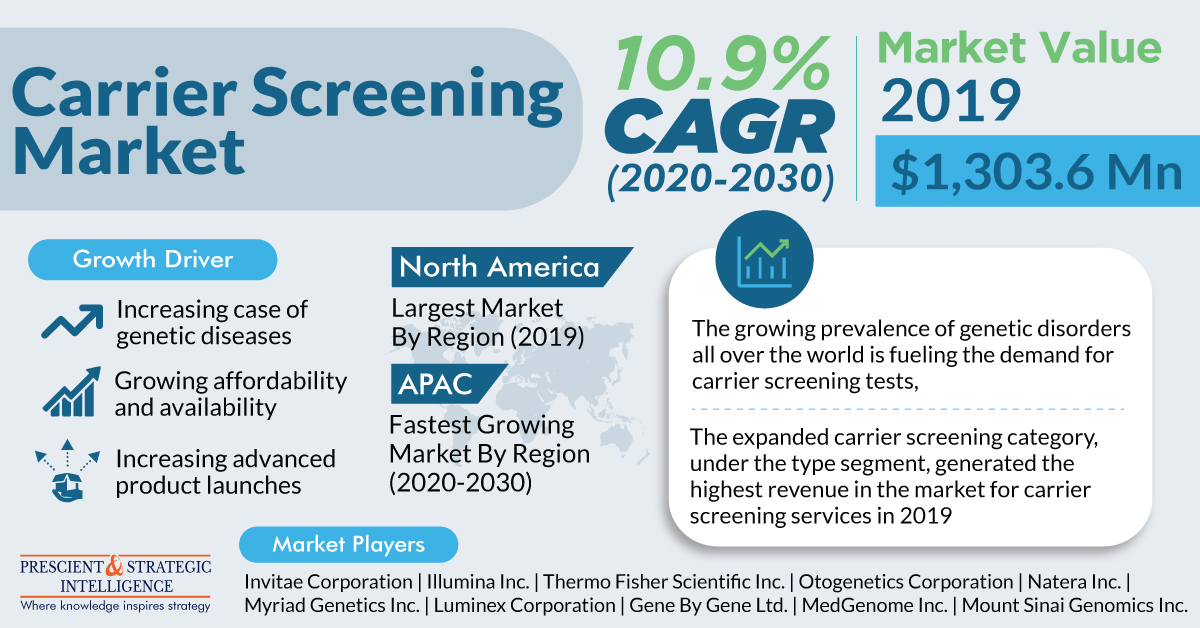
Due to the above-mentioned factors, the global carrier screening industry attained a valuation of $1,303.6 million in 2019 and is expected to exhibit a CAGR of 10.9% during the forecast period (2020–2030). There are mainly two types of carrier screening methods used for detecting genetic diseases — expanded carrier screening and targeted carrier screening. Of these, the expanded carrier screening method recorded higher utilization in 2019. This is ascribed to the fact that this method of carrier screening makes it possible to test for multiple diseases at the same time.
Carrier screening is being widely adopted in hospitals, laboratories, and clinics. Amongst these, the hospitals are expected to register the fastest growth in the adoption of carrier screening methods during the forecast period. This is primarily attributed to the increasing usage of genetic disease testing kits by experienced medical practitioners in hospitals. In addition to this, there has been a huge rise in the number of insurance firms offering reimbursements for genetic disease tests conducted in hospitals, which is massively boosting the adoption of carrier screening methods in these healthcare settings.
Request for sample pages of this report: https://www.psmarketresearch.com/market-analysis/carrier-screening-market/report-sample
One of the major trends currently being witnessed in the carrier screening market is the increasing acquisition of smaller organizations providing solutions for carrier screening tests by the larger biotechnology companies. For instance, Quest Diagnostics Inc. announced its acquisition of a specialist genetic testing solutions company called Blueprint Genetics in January 2020, in order to attain expertise in pharmaceutical drug research and development (R&D), rare genetic diseases, and in the various methods of improving patient care.
Globally the Asia-Pacific region is expected to observe the fastest growth in the utilization of carrier screening methods during the forecast period. This is mainly credited to the soaring awareness amongst the masses about genetic screening tests in China, Australia, and India and the rising concerns amongst the people about the health and well-being of their future children. In addition to this, the high occurrence rate of genetic diseases in the various densely populated countries of APAC such as China and India will further propel the demand for carrier screening procedures in the region in future.
Thus, the demand for carrier screening procedures will grow exponentially across the world, especially in the APAC region, in the coming years, on account of the rising prevalence of genetic diseases and increasing awareness amongst the people about genetic screening tests.
About P&S Intelligence
P&S Intelligence provides market research and consulting services to a vast array of industries across the world. As an enterprising research and consulting company, P&S believes in providing thorough insights on the ever-changing market scenario, to empower companies to make informed decisions and base their business strategies with astuteness. P&S keeps the interest of its clients at heart, which is why the insights we provide are both honest and accurate. Our long list of satisfied clients includes entry-level firms as well as multi-million-dollar businesses and government agencies.
