
Startup Guide: Reverse Engineering Services Business Plan and Feasibility StudyBusiness Planning Consulting ServicesUpdated on Feb 6, 2026 View more like this | Visit NEW YORK, NY | Contact IMARC Group |
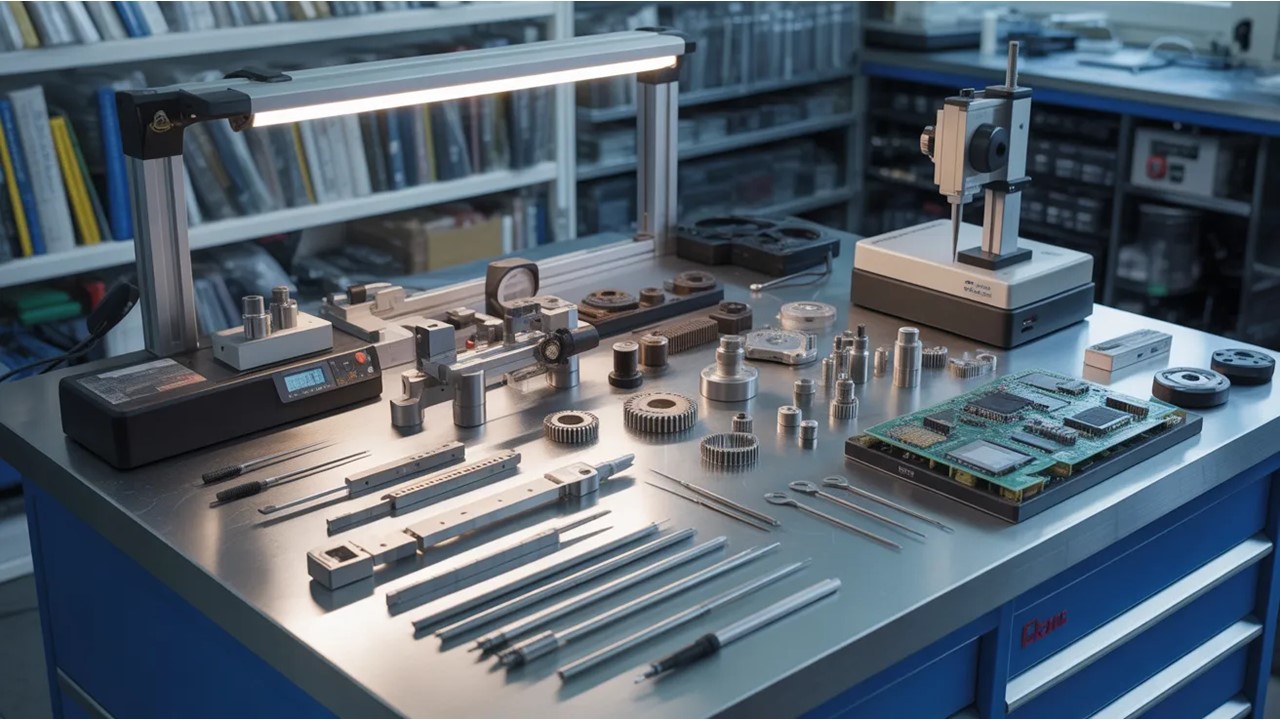
IMARC Group's "Reverse Engineering Services Business Plan and Project Report 2026" provides a detailed and practical roadmap for launching and managing a successful reverse engineering services venture. The report highlights market dynamics, demand trends, technology selection, investment requirements, and profitability forecasts. It serves as a vital resource for entrepreneurs, engineering professionals, manufacturing specialists, and innovation-driven businesses. It also offers step-by-step guidance on reverse engineering business setup, equipment planning, regulatory requirements, and operational execution.
What is a Reverse Engineering Services Business?
Reverse engineering services are professional technical facilities where businesses, manufacturers, and organizations can analyze, replicate, and improve existing products, components, and systems through systematic deconstruction and measurement. These services provide access to 3D scanning, CAD modeling, material analysis, and product replication capabilities on flexible terms. Reverse engineering facilities deliver product analysis, legacy component reproduction, design optimization, and competitive benchmarking solutions. They enhance product development efficiency, reduce redesign costs for clients, and offer scalable engineering solutions for businesses of all sizes.
How Do You Set Up a Reverse Engineering Services Business?
The IMARC report serves as a complete guide for setting up a reverse engineering services business, covering:
- Industry overview and market performance
- Technology selection and workflow optimization
- Location selection and infrastructure requirements
- Cost structure (CapEx & OpEx)
- Revenue generation models
- Risk mitigation strategies
- Equipment procurement and regulatory compliance
- Profitability and investment analysis
Request for a Sample Report: https://www.imarcgroup.com/reverse-engineering-services-business-plan-project-report/requestsample
Key Requirements for Setting Up Reverse Engineering Services
Business Model & Operations Plan
Service Overview: Product scanning and digitization, CAD model creation, legacy component replication, quality inspection and metrology, material analysis and testing, design optimization, patent analysis, competitive benchmarking, technical documentation, prototype development
Service Workflow: Customer inquiry → project evaluation → NDA execution → component acquisition → 3D scanning → measurement verification → CAD modeling → material analysis → design documentation → client review → iteration → final delivery → technical support
Revenue Model: Project-based pricing, hourly engineering rates, 3D scanning services, CAD modeling fees, material testing charges, technical consulting, rush project premiums, subscription packages for ongoing support
SOPs & Service Standards: Guidelines for scanning accuracy, CAD modeling standards, measurement protocols, material testing procedures, quality assurance processes, and intellectual property protection
Technical Feasibility
Site Selection Criteria: Industrial parks near manufacturing clusters, urban business districts with engineering firms, suburban industrial space, proximity to aerospace/automotive industries, areas with stable power and controlled environment
Space & Costs: Scanning laboratory with controlled environment, CAD modeling workstations, material testing area, metrology room, secure storage for client parts, meeting rooms, reception area, server room for data management
Equipment & Suppliers: 3D laser scanners, coordinate measuring machines (CMM), optical measurement systems, CAD software suites, material testing equipment, metrology tools, high-performance workstations, data storage systems, quality control instruments
Interior Setup & Fixtures: Professional branding, climate control systems, vibration-isolated platforms, ergonomic engineering workstations, secure cabinets, lighting systems, dust control, sample display area
Utility Requirements & Costs: Electricity with backup power, high-speed internet with redundancy, water supply, waste management, precision HVAC systems, compressed air systems
Human Resources & Wages: Mechanical engineers, CAD specialists, metrology technicians, materials scientists, scanning operators, quality inspectors, project managers, business development representatives
Financial Feasibility
Includes:
- Capital Investments & Operating Costs
- Revenue & Expenditure Projections
- Profit & Loss Analysis
- Taxation & Depreciation
- ROI, NPV & Sensitivity Analysis
What Are the Latest Market Trends in Reverse Engineering Services?
The market is expanding due to:
- Growing need for legacy component reproduction in aerospace and defense
- Advanced scanning technologies enabling higher accuracy
- Demand for competitive intelligence and product benchmarking
- Quality control and inspection applications expansion
- Medical device replication and customization
- Automotive aftermarket parts development
- Integration of AI for automated CAD generation
- Portable scanning solutions becoming more accessible
Customers increasingly prefer high accuracy measurements, fast turnaround times, comprehensive documentation, competitive pricing, and guaranteed confidentiality with technical expertise.
Speak to Analyst for Customized Report: https://www.imarcgroup.com/request?type=report&id=44416&flag=C
Market Analysis & Insights
Industry Overview
The report covers:
- Market drivers & challenges
- Demand patterns across industries
- Customer demographics and application preferences
- Segmentation by technology type, application, and industry
Competitive Landscape
Profiles of leading reverse engineering service operators offering:
- Technology capabilities
- Pricing strategies
- Market positioning
- Value-added services and quality certifications
Capital & Operational Cost Breakdown
Capital Expenditure (CapEx): 3D scanning equipment, metrology instruments, CAD software licenses, high-performance workstations, testing equipment, facility improvements, furniture, initial tooling inventory, branding
Operational Expenditure (OpEx): Rent/lease payments, staffing, software subscriptions, utilities, equipment maintenance and calibration, consumables, marketing, insurance, professional certifications
Projections account for utilization rates, project complexity, pricing competition, and technology factors.
Profitability Outlook
Includes projections for:
- Total income, expenditure, gross profit, net profit
- Profit margins and break-even analysis for the first five years
FAQs
Do I need licenses to operate a reverse engineering services business? Yes—business registration, commercial permits, ISO certifications for quality management, and potentially industry-specific accreditations depending on target markets (aerospace AS9100, automotive IATF 16949).
What is the ideal target audience for reverse engineering services? Aerospace and defense contractors, automotive manufacturers, medical device companies, industrial equipment producers, product development firms, patent attorneys, quality control departments, and businesses needing legacy component reproduction or competitive analysis.
How do reverse engineering services make money? Through project-based pricing, hourly engineering rates, 3D scanning services, CAD modeling fees, material testing charges, technical consulting, rush project premiums, and subscription packages for ongoing support.
Are reverse engineering services profitable? Yes—with high-value projects, specialized expertise, and industry certifications, reverse engineering services offer strong profitability potential.
Conclusion: Why This Report Matters
Reverse engineering services address the evolving needs of modern manufacturing by combining precision measurement, advanced CAD capabilities, and comprehensive technical analysis. This report equips entrepreneurs with the insights needed to build a successful and scalable reverse engineering business from equipment selection and facility design to financial planning and operational excellence.
About Us:
IMARC Group is a global market research and consulting firm specializing in helping organizations identify opportunities, manage risks, and develop strategic growth plans.
Contact Us:
IMARC Group
134 N 4th St., Brooklyn, NY 11249, USA
Email: [email protected]
Tel No:(D) +91 120 433 0800
United States: (+1-201971-6302)
