
Global Sodium Lauroyl Sarcosinate Price Trends 2026: Supply Chain Shifts, Demand & ForecastChemicals ResearchUpdated on Jul 3, 2026 View more like this | Visit NEW YORK, NY | Contact Chem Analyst |
The Sodium Lauroyl Sarcosinate Price has become an important market indicator for manufacturers across the personal care, cosmetics, and specialty chemical industries in 2026. As demand for sulfate-free surfactants continues to rise globally, Sodium Lauroyl Sarcosinate remains a key ingredient in shampoos, face cleansers, toothpaste, and premium skincare formulations.
According to ChemAnalyst Sodium Lauroyl Sarcosinate Price: - https://www.chemanalyst.com/Pricing-data/sodium-lauroyl-sarcosinate-2302
Sodium Lauroyl Sarcosinate is a mild anionic surfactant derived from sarcosine and lauric acid. Its popularity has increased due to growing consumer preference for gentle, skin-friendly, and eco-conscious formulations. This rising demand has directly influenced procurement patterns, supply chain dynamics, and regional pricing structures.
During Q1 2026, the global Sodium Lauroyl Sarcosinate market experienced moderate price increases across major regions. Feedstock inflation, changing trade flows, shipping costs, and demand recovery in the personal care sector contributed significantly to price movement.
Global Sodium Lauroyl Sarcosinate Market Overview
The global surfactants industry continues to expand due to robust consumption in household care and beauty products. Sodium Lauroyl Sarcosinate occupies a premium segment because of its superior foaming properties, biodegradability, and compatibility with sensitive skin formulations.
Several macroeconomic factors shaped the market during Q1 2026:
- Rising feedstock costs, particularly lauric acid and sarcosine
- Stable but selective procurement from personal care manufacturers
- Improved export demand from Asia
- Higher freight costs in some shipping corridors
- Increased preference for sulfate-free cosmetic ingredients
These factors contributed to a generally bullish sentiment in global Sodium Lauroyl Sarcosinate pricing.
Key Factors Influencing Sodium Lauroyl Sarcosinate Price
- Feedstock Cost Volatility
The primary raw materials for Sodium Lauroyl Sarcosinate include:
- Lauric acid
- Sarcosine
- Caustic soda
- Chemical intermediates for surfactant synthesis
Price fluctuations in palm kernel oil and coconut oil markets significantly influence lauric acid costs. Since lauric acid represents a major cost component, upstream volatility often translates directly into finished product pricing.
In Q1 2026, rising feedstock inflation in Asia pushed production costs upward, especially in China.
- Personal Care Industry Demand
The personal care industry remains the largest consumer of Sodium Lauroyl Sarcosinate. Growth in premium skincare and sulfate-free haircare products has sustained market demand.
Manufacturers increasingly prefer mild surfactants to meet clean-label and dermatologically safe formulation requirements.
Demand remained particularly strong in:
- Sulfate-free shampoos
- Facial cleansers
- Toothpaste formulations
- Baby care products
This consistent consumption helped maintain firm pricing globally.
- Import-Export Dynamics
Cross-border trade strongly affects regional price trends. Supply disruptions, container shortages, or import delays can tighten availability and lift prices.
North America and Europe remain dependent on Asian supply for a portion of their requirements, making international trade costs critical for regional pricing.
- Energy and Manufacturing Costs
Chemical manufacturing remains energy-intensive. Rising electricity, natural gas, and industrial utility costs elevated production expenses in Europe and parts of Asia during early 2026.
Sodium Lauroyl Sarcosinate Price Trend in North America
Stable-to-Firm Market Conditions
In North America, the Sodium Lauroyl Sarcosinate Price Index displayed a moderately firm trend during Q1 2026. Market activity was supported by steady manufacturing demand from personal care producers and limited spot availability from import channels.
Domestic suppliers maintained balanced inventories, preventing extreme volatility. However, imported material remained relatively expensive due to freight-related pricing pressure and parity-linked costs from Asia and Europe.
Key regional observations included:
- Stable domestic production rates
- Controlled inventories among distributors
- Steady procurement from personal care manufacturers
- Limited spot availability for imported cargo
As a result, the average Sodium Lauroyl Sarcosinate price remained stable to slightly higher across the quarter.
North America Price Drivers
Major factors supporting price firmness included:
- Healthy cosmetic manufacturing output
- Stable consumer demand for personal care products
- Import cost inflation
- Balanced domestic supply
Procurement activity remained strategic, with buyers avoiding excessive stockpiling while ensuring supply continuity.
Sodium Lauroyl Sarcosinate Price Trend in APAC
China Leads Global Price Increase
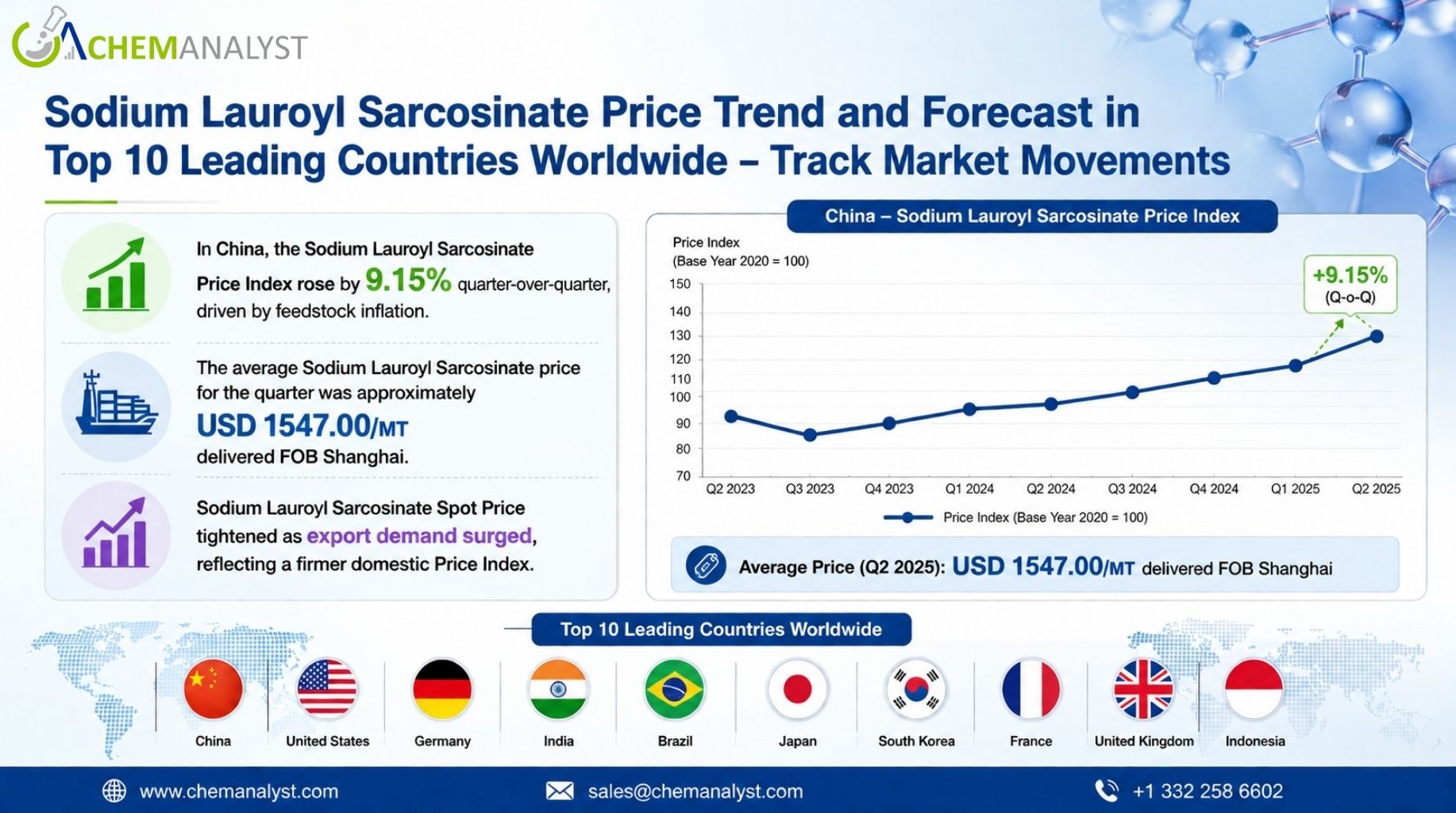
The Asia-Pacific region saw the most notable price movement during Q1 2026. In China, the Sodium Lauroyl Sarcosinate Price Index increased by 9.15% quarter-over-quarter, making APAC the strongest-performing regional market.
The average Sodium Lauroyl Sarcosinate Price reached approximately USD 1547.00 per metric ton FOB Shanghai.
China remains a major production and export hub for surfactants. Therefore, pricing developments in the country often influence global benchmarks.
Why Prices Increased in China
Several factors drove the strong price rise:
Feedstock Inflation
Rising raw material costs significantly increased production expenses. Lauric acid and related surfactant intermediates recorded notable cost escalation.
Manufacturing Cost Pressure
Energy prices and labor expenses increased operating costs for producers.
Export Demand Recovery
International buyers increased procurement volumes to secure supply amid expectations of further price increases.
Tight Supply
Selective supply tightness from producers contributed to stronger bargaining power.
Together, these factors pushed the Chinese market upward throughout the quarter.
Read the LinkedIn Article: - https://www.linkedin.com/pulse/sodium-lauroyl-sarcosinate-price-2026-regional-insights-kishan-singh-fspmc/
APAC Demand Outlook
Demand across Asia remained robust due to:
- Expanding cosmetics manufacturing
- Rising middle-class consumption
- Growth in premium personal care products
- Increasing exports to Western markets
This suggests continued support for firm pricing in the near term.
Sodium Lauroyl Sarcosinate Price Trend in Europe
Moderate Price Growth Across Europe
In Europe, the Sodium Lauroyl Sarcosinate Price Index showed a moderate upward trend during Q1 2026.
The market benefited from consistent demand from personal care and cosmetics manufacturers, particularly in Germany, France, Italy, and the Netherlands.
European buyers maintained steady procurement volumes amid balanced supply conditions.
Key regional trends included:
- Stable import arrivals
- Healthy demand from cosmetics formulators
- Moderate freight cost pressure
- Balanced inventory levels
As a result, the average Sodium Lauroyl Sarcosinate Price Index remained firm throughout the quarter.
Key European Market Drivers
Premium Beauty Market Expansion
Europe’s premium cosmetics segment continues to grow, supporting consumption of high-performance mild surfactants.
Stable Formulation Demand
Manufacturers continued to prioritize sulfate-free formulations due to changing consumer preferences.
Supply Chain Efficiency
Compared with previous years, logistics improved, reducing severe supply disruptions.
However, elevated energy costs continued to pressure production economics.
Supply Chain Analysis for Sodium Lauroyl Sarcosinate
The Sodium Lauroyl Sarcosinate supply chain spans raw material sourcing, chemical processing, formulation, and distribution.
Upstream
Key upstream inputs include:
- Coconut oil derivatives
- Palm kernel oil derivatives
- Sarcosine
- Industrial alkalis
Supply disruptions in agricultural feedstocks can influence raw material pricing.
Midstream
Chemical producers convert feedstocks into surfactant-grade Sodium Lauroyl Sarcosinate through synthesis and purification.
Manufacturing costs depend on:
- Energy
- Labor
- Compliance costs
- Equipment utilization
Downstream
Major downstream consumers include:
- Cosmetic companies
- Personal care brands
- Oral care manufacturers
- Contract formulators
Demand growth from downstream industries continues to support the market.
Global Demand Outlook
The long-term demand outlook for Sodium Lauroyl Sarcosinate remains positive.
Several structural trends support future growth:
Rising Sulfate-Free Product Demand
Consumers increasingly avoid harsh sulfates such as SLS and SLES, preferring gentler cleansing agents.
Clean Beauty Movement
The clean beauty trend continues to reshape ingredient selection worldwide.
Premiumization of Personal Care
Consumers are spending more on premium and specialized skincare products.
Sustainability Focus
Biodegradable surfactants are gaining preference among environmentally conscious brands.
These trends should continue driving market expansion over the next several years.
Sodium Lauroyl Sarcosinate Price Forecast 2026
Looking ahead to the remainder of 2026, market analysts expect Sodium Lauroyl Sarcosinate prices to remain moderately bullish with region-specific fluctuations.
Bullish Factors
Potential upside risks include:
- Continued feedstock inflation
- Strong personal care demand
- Freight cost increases
- Export-driven supply tightening
Bearish Factors
Potential downside risks include:
- Improved raw material supply
- Lower shipping costs
- Reduced industrial inflation
- Increased manufacturing capacity
Forecast by Region
North America
Prices are expected to remain stable-to-firm with occasional upward movement tied to import costs.
APAC
China may continue showing price strength if feedstock inflation persists.
Europe
Moderate price increases remain possible due to energy-related cost pressure.
Overall, analysts expect global prices to stay elevated relative to 2025 averages.
Conclusion
The Sodium Lauroyl Sarcosinate Price trend in Q1 2026 reflects a market shaped by rising raw material costs, stable-to-strong demand, and evolving consumer preferences toward sulfate-free products.
North America maintained moderately firm pricing supported by balanced supply and steady demand. Europe saw stable upward movement due to consistent cosmetics sector demand. APAC, led by China, recorded the strongest gains, driven primarily by feedstock inflation and export demand.
With the global personal care sector continuing to expand, Sodium Lauroyl Sarcosinate is expected to remain strategically important in surfactant markets. Unless significant supply relief emerges, prices are likely to stay firm through the rest of 2026, making market monitoring essential for buyers, suppliers, and manufacturers.
Frequently Asked Questions About Sodium Lauroyl Sarcosinate Price
What is the current Sodium Lauroyl Sarcosinate Price?
As of Q1 2026, prices vary by region. In China, average pricing reached approximately USD 1547/MT FOB Shanghai, while North America and Europe maintained firm pricing trends.
Why is Sodium Lauroyl Sarcosinate becoming more expensive?
Prices are increasing due to feedstock inflation, rising manufacturing costs, and strong demand from personal care industries.
Which region saw the biggest price increase in 2026?
China recorded the strongest increase, with prices rising 9.15% quarter-over-quarter.
What industries use Sodium Lauroyl Sarcosinate?
Major industries include:
- Personal care
- Cosmetics
- Oral care
- Specialty chemical formulations
Contact -
Address:
420 Lexington Avenue, Suite 300
New York, NY 10170
United States
Phone: +1 332 258 6602
Website: www.chemanalyst.com
LinkedIn: https://www.linkedin.com/company/chemanalyst/
X (Twitter): https://x.com/chemanalysts
Facebook: https://www.facebook.com/ChemAnalysts/
