
4 Best Ways to Fix Gaps Between TeethDental ClinicsUpdated on Oct 11, 2023 View more like this | Visit NEW YORK, NY | Contact Amelia Grant |
Have you been thinking of fixing the gaps between your teeth? There are many options that could give you a more confident smile. Here are the top four ways to correct gapped teeth.
Veneers
Dental veneers (also known as porcelain veneers or dental porcelain laminates) are wafer-thin, custom-made shells of tooth-colored materials that cover the front surface of teeth to improve appearance. These shells are bonded to the front of the teeth and can change the color, shape, size, or length of the teeth.
Porcelain or resin composite materials can be used to make dental veneers. Porcelain veneers are more stain-resistant than resin veneers. They also more closely resemble the light-reflecting properties of natural teeth. You should consult with your dentist about the best veneer material for you.
To prepare a tooth for a veneer, your dentist will reshape the tooth surface to a depth that is nearly equal to the thickness of the veneer to be applied. You and your dentist will decide whether the area should be numbed before the enamel is removed. Your dentist will then create a model, or impression, of your tooth. This model is then sent to a dental laboratory, where your veneer is created. The veneers are usually returned from the laboratory in 2-4 weeks. In the meantime, temporary dental veneers can be used.
The cost of your veneers will vary depending on where you live and how much work you want done. In general, the cost per tooth ranges between $1,000 and $2,000 USD. Insurance usually does not cover the cost. Check with your dental insurance provider to be sure.
Dental Bonding
Another cosmetic procedure that can close minor gaps between teeth is dental bonding. Dental bonding, also known as cosmetic bonding, is a quick and simple dental procedure that can close minor gaps in otherwise healthy teeth.
Your dentist will apply a tooth-colored material to your tooth, shape or mold it, and then harden the material with the help of a light source.
Braces
Orthodontic treatments are recommended for more severe cases of gapped teeth. Braces apply a calculated force to each tooth, allowing it to reposition in the proper direction and location. Most tooth alignment issues, according to the American Association of Orthodontists, can be treated with braces.
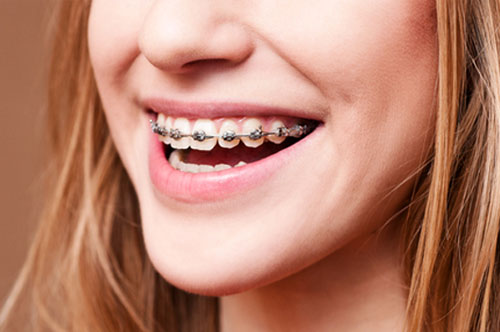
Traditional braces are made up of metal brackets that are attached to the teeth and have a wire threaded through them. Ceramic braces, which have tooth-colored brackets, are a good option if you want something less noticeable.
Invisible Aligners
Invisible aligners are a great option for people with smaller gaps. The clear plastic trays gradually move the teeth into the proper position. The best part is those invisible aligners are both unnoticeable and removable.
When you decide on aligners, your professional provider will send you a dental impression kit first. You might also be able to get a dental scan in person.
Following that, dental professionals will design an alignment program for you and send you your first set of invisible aligners. Before moving on to the next set of aligners, you may need to wear each set for at least 22 hours per day for 1-2 weeks.
The total number of aligners you will need will vary depending on your specific needs and treatment goals. Your teeth will have moved into their proper positions by the end of your program, and you will have a better smile.
