
Schneider Electric : Patent Application Titled "Frequency Measurement Device, Frequency Measurement Method and under Frequency Load Shedding Device" Published OnlineElectrical Contractors - Residential & CommercialUpdated on Sep 22, 2017 View more like this | Visit India, UN | Contact Rakesh Kumar |
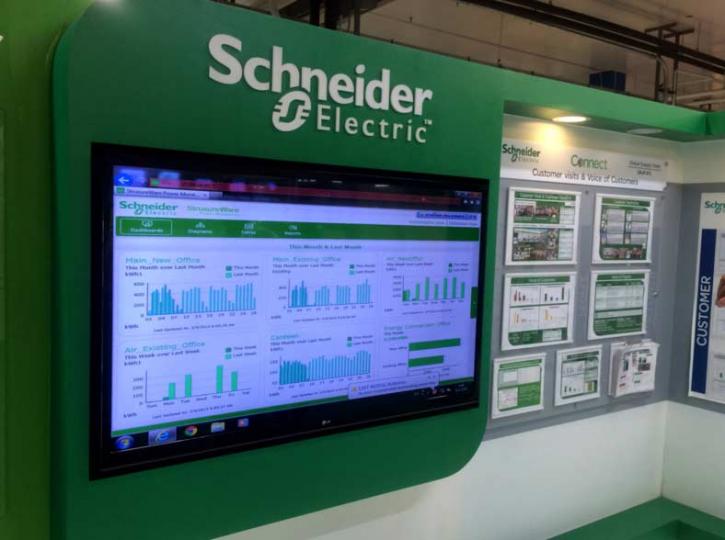
Patent Application Titled "Frequency Measurement Device, Frequency Measurement Method and under Frequency Load Shedding Device" Published Online (USPTO 20170254840)
By a News Reporter-Staff News Editor at Politics & Government Week -- According to news reporting originating from Washington, D.C., by VerticalNews journalists, a patent application by the inventor XING, Jinlei (Shanghai, CN), filed on February 16, 2017, was made available online on September 14, 2017.
The assignee for this patent application is Schneider Electric Industries SAS.
Reporters obtained the following quote from the background information supplied by the inventors: "Automatic devices of a power system, e.g. a relay protection device and a stability control device, need to measure a frequency of the power system accurately. An accuracy and speed of the frequency measurement is critical to reliability of the automatic device such as a under frequency load shedding device. In the past, the automatic device issues false action demands sometimes because the frequency measurement is not accurate, which results in unnecessary economic loss.
"Conventional frequency measurement technologies mainly include a zero-crossing detection technique and a phase lock technique based on Discrete Fourier Transform (DFT). The accuracy of the zero-crossing technique is readily affected by transient process of the power system such as noises, harmonic waves and so on.
"FIG. 1 is a circuit diagram of a frequency measurement device in prior art.
"From FIG. 1, it can be known that this technique adopts the phase lock technique based on Discrete Fourier Transform DFT in the frequency measurement, which can filter noises and integral harmonic wave interference in some degree, but such a method adopts the single cycle DFT, which can not filter non-integral harmonic waves (e.g. fractional frequency harmonic interference), drastic change of voltage amplitudes and abrupt change of phase angles effectively. Although a filtering function of some degree can be achieved by using multi-cycle DFT simply, thereby reducing disturbance amplitudes, an overall lasting time of the disturbance is longer than that of the single-cycle DFT instead. Thus, a reliability of the frequency measurement can not be improved efficiently.
"Furthermore, it can be known from FIG. 1 that a same control factor G is used in a sampling frequency operation and in a frequency measurement in a discrete phase lock loop for tracking frequencies. The control factor G, such as a proportion control factor for stabilizing time and overshoot, is used to adjust response characteristics. If the control factor G is equal to 1, a frequency stability error will be decreased, but a frequency response will be changed dramatically. If the control factor G is less than 1, i.e. under compensation, the frequency stability error will be increased, but the frequency response will be smooth. Because a sampling frequency and the frequency measurement will be both affected by the same control factor, it is difficult to satisfy both the accuracy of the frequency measurement and the smooth frequency response of the sampling frequency at the same time.
"Therefore, in the past, when disturbance occurs in the power system, resulting that voltage amplitudes are fluctuated and phase angles are abruptly changed, or when there is fractional frequency harmonic interference, the frequency measurement value is always not accurate.
"Therefore, there is need to develop a new frequency measurement technique which can improve the accuracy of the frequency measurement as much as possible in a case where disturbance occurs in the power system while the requirement for the frequency response speed is satisfied."
In addition to obtaining background information on this patent application, VerticalNews editors also obtained the inventor's summary information for this patent application: "The embodiments of the disclosure is made in light of above problems, the purpose of which is to provide a frequency measurement device, a frequency measurement method and an under frequency load shedding device which can improve the accuracy of the frequency measurement as possible in a case where disturbance occurs in the power system while the requirement for the frequency response speed is satisfied.
"A frequency measurement device of an embodiment of the disclosure comprises:
"a sampling module unit that outputs a voltage sampling value in accordance with a voltage to be sampled and a sampling frequency input thereto;
"an angle shift computation unit based on single-cycle Discrete Fourier Transform DFT that computes and outputs a first angle shift based on the single-cycle DFT, in accordance with the voltage sampling value input from the sampling module unit;
"an angle shift computation unit based on multi-cycle DFT that computes and outputs a second angle shift based on the multi-cycle DFT, in accordance with the voltage sampling value input from the sampling module unit;
"an angle shift selection unit that selects and outputs one of the first angle shift and second angle shift a absolute value of which is smaller as a selected angle offset, in accordance with the first angle shift and second angle shift input thereto;
"a sampling frequency computation and outputting unit that computes a sampling frequency in accordance with the selected angle offset input thereto, and outputs the sampling frequency to the sampling module unit as a new sampling frequency; and
"a frequency measurement value computation and outputting unit that computes and outputs a frequency measurement value in accordance with the selected angle offset input thereto.
"A frequency measurement method of an embodiment of the disclosure comprises:
"a sampling step of inputting a voltage to be sampled and a sampling frequency to a sampling module and outputting a voltage sampling value;
"an angle shift computing step based on single-cycle Discrete Fourier Transform DFT of computing and outputting a first angle shift based on the single-cycle DFT, in accordance with the voltage sampling value input from the sampling step;
"an angle shift computing step based on multi-cycle DFT of computing and outputting a second angle shift based on the multi-cycle DFT, in accordance with the voltage sampling value input from the sampling step;
"an angle shift selecting step of selecting and outputting one of the first angle shift and the second angle shift a absolute value of which is smaller as a selected angle offset, in accordance with the first and second angle shifts;
"a sampling frequency computing and outputting step of computing a new sampling frequency in accordance with the selected angle offset inputted, and outputting the sampling frequency to the sampling module as a new sampling frequency; and
"a frequency measurement value computing and outputting step of computing and outputting a frequency measurement value in accordance with the selected angle offset inputted.
"The technical solutions of the embodiments of the disclosure improve the frequency measurement technique based on DFT. It takes advantages of a manner of combining single-cycle DFT and multi-cycle DFT so as to compute frequency shift values by single-cycle DFT and multi-cycle DFT respectively at the same time and select one of the frequency shift values a absolute value of which is smaller as a basis for computing the frequency shift. In addition, it also adopts an 'under compensation' manner to adjust the sampling frequency.
"The technical solutions of the embodiments of the disclosure take advantages of filtering function of multi-cycle DFT and accelerate the frequency response process, thereby effectively improving the accuracy and the speed of the frequency measurement in a case of voltage disturbances. Therefore, the embodiments of the disclosure can facilitate increasing the reliability of the power automatic device, e.g. the under frequency load shedding device and reducing a probability of false action occurred."
Keywords for this news article include: Schneider Electric Industries SAS.
Our reports deliver fact-based news of research and discoveries from around the world. Copyright 2017, NewsRx LLC
About Schneider Electric
Schneider Electric is the worldwide expert in energy administration and automation. With incomes of ~€25 billion in FY2016, our 144,000 representatives serve clients in more than 100 nations, Schneider Electric helping them to deal with their energy and process in ways that are protected, dependable, productive and practical. From the least difficult of changes to complex operational frameworks, Schneider Electric innovation, programming and administrations enhance the way our clients oversee and computerize their operations. Schneider Electric associated advancements reshape businesses, change urban communities and advance lives. At Schneider Electric, we call this Life Is On.
By a News Reporter-Staff News Editor at Politics & Government Week -- According to news reporting originating from Washington, D.C., by VerticalNews journalists, a patent application by the inventor XING, Jinlei (Shanghai, CN), filed on February 16, 2017, was made available online on September 14, 2017.
The assignee for this patent application is Schneider Electric Industries SAS.
Reporters obtained the following quote from the background information supplied by the inventors: "Automatic devices of a power system, e.g. a relay protection device and a stability control device, need to measure a frequency of the power system accurately. An accuracy and speed of the frequency measurement is critical to reliability of the automatic device such as a under frequency load shedding device. In the past, the automatic device issues false action demands sometimes because the frequency measurement is not accurate, which results in unnecessary economic loss.
"Conventional frequency measurement technologies mainly include a zero-crossing detection technique and a phase lock technique based on Discrete Fourier Transform (DFT). The accuracy of the zero-crossing technique is readily affected by transient process of the power system such as noises, harmonic waves and so on.
"FIG. 1 is a circuit diagram of a frequency measurement device in prior art.
"From FIG. 1, it can be known that this technique adopts the phase lock technique based on Discrete Fourier Transform DFT in the frequency measurement, which can filter noises and integral harmonic wave interference in some degree, but such a method adopts the single cycle DFT, which can not filter non-integral harmonic waves (e.g. fractional frequency harmonic interference), drastic change of voltage amplitudes and abrupt change of phase angles effectively. Although a filtering function of some degree can be achieved by using multi-cycle DFT simply, thereby reducing disturbance amplitudes, an overall lasting time of the disturbance is longer than that of the single-cycle DFT instead. Thus, a reliability of the frequency measurement can not be improved efficiently.
"Furthermore, it can be known from FIG. 1 that a same control factor G is used in a sampling frequency operation and in a frequency measurement in a discrete phase lock loop for tracking frequencies. The control factor G, such as a proportion control factor for stabilizing time and overshoot, is used to adjust response characteristics. If the control factor G is equal to 1, a frequency stability error will be decreased, but a frequency response will be changed dramatically. If the control factor G is less than 1, i.e. under compensation, the frequency stability error will be increased, but the frequency response will be smooth. Because a sampling frequency and the frequency measurement will be both affected by the same control factor, it is difficult to satisfy both the accuracy of the frequency measurement and the smooth frequency response of the sampling frequency at the same time.
"Therefore, in the past, when disturbance occurs in the power system, resulting that voltage amplitudes are fluctuated and phase angles are abruptly changed, or when there is fractional frequency harmonic interference, the frequency measurement value is always not accurate.
"Therefore, there is need to develop a new frequency measurement technique which can improve the accuracy of the frequency measurement as much as possible in a case where disturbance occurs in the power system while the requirement for the frequency response speed is satisfied."
In addition to obtaining background information on this patent application, VerticalNews editors also obtained the inventor's summary information for this patent application: "The embodiments of the disclosure is made in light of above problems, the purpose of which is to provide a frequency measurement device, a frequency measurement method and an under frequency load shedding device which can improve the accuracy of the frequency measurement as possible in a case where disturbance occurs in the power system while the requirement for the frequency response speed is satisfied.
"A frequency measurement device of an embodiment of the disclosure comprises:
"a sampling module unit that outputs a voltage sampling value in accordance with a voltage to be sampled and a sampling frequency input thereto;
"an angle shift computation unit based on single-cycle Discrete Fourier Transform DFT that computes and outputs a first angle shift based on the single-cycle DFT, in accordance with the voltage sampling value input from the sampling module unit;
"an angle shift computation unit based on multi-cycle DFT that computes and outputs a second angle shift based on the multi-cycle DFT, in accordance with the voltage sampling value input from the sampling module unit;
"an angle shift selection unit that selects and outputs one of the first angle shift and second angle shift a absolute value of which is smaller as a selected angle offset, in accordance with the first angle shift and second angle shift input thereto;
"a sampling frequency computation and outputting unit that computes a sampling frequency in accordance with the selected angle offset input thereto, and outputs the sampling frequency to the sampling module unit as a new sampling frequency; and
"a frequency measurement value computation and outputting unit that computes and outputs a frequency measurement value in accordance with the selected angle offset input thereto.
"A frequency measurement method of an embodiment of the disclosure comprises:
"a sampling step of inputting a voltage to be sampled and a sampling frequency to a sampling module and outputting a voltage sampling value;
"an angle shift computing step based on single-cycle Discrete Fourier Transform DFT of computing and outputting a first angle shift based on the single-cycle DFT, in accordance with the voltage sampling value input from the sampling step;
"an angle shift computing step based on multi-cycle DFT of computing and outputting a second angle shift based on the multi-cycle DFT, in accordance with the voltage sampling value input from the sampling step;
"an angle shift selecting step of selecting and outputting one of the first angle shift and the second angle shift a absolute value of which is smaller as a selected angle offset, in accordance with the first and second angle shifts;
"a sampling frequency computing and outputting step of computing a new sampling frequency in accordance with the selected angle offset inputted, and outputting the sampling frequency to the sampling module as a new sampling frequency; and
"a frequency measurement value computing and outputting step of computing and outputting a frequency measurement value in accordance with the selected angle offset inputted.
"The technical solutions of the embodiments of the disclosure improve the frequency measurement technique based on DFT. It takes advantages of a manner of combining single-cycle DFT and multi-cycle DFT so as to compute frequency shift values by single-cycle DFT and multi-cycle DFT respectively at the same time and select one of the frequency shift values a absolute value of which is smaller as a basis for computing the frequency shift. In addition, it also adopts an 'under compensation' manner to adjust the sampling frequency.
"The technical solutions of the embodiments of the disclosure take advantages of filtering function of multi-cycle DFT and accelerate the frequency response process, thereby effectively improving the accuracy and the speed of the frequency measurement in a case of voltage disturbances. Therefore, the embodiments of the disclosure can facilitate increasing the reliability of the power automatic device, e.g. the under frequency load shedding device and reducing a probability of false action occurred."
Keywords for this news article include: Schneider Electric Industries SAS.
Our reports deliver fact-based news of research and discoveries from around the world. Copyright 2017, NewsRx LLC
About Schneider Electric
Schneider Electric is the worldwide expert in energy administration and automation. With incomes of ~€25 billion in FY2016, our 144,000 representatives serve clients in more than 100 nations, Schneider Electric helping them to deal with their energy and process in ways that are protected, dependable, productive and practical. From the least difficult of changes to complex operational frameworks, Schneider Electric innovation, programming and administrations enhance the way our clients oversee and computerize their operations. Schneider Electric associated advancements reshape businesses, change urban communities and advance lives. At Schneider Electric, we call this Life Is On.
