
Masterbatch Manufacturing Plant Cost Cost Project Report 2025: Unit Setup and Raw MaterialsChemicals ResearchUpdated on Dec 12, 2025 View more like this | Visit India, UN | Contact IMARC Group |
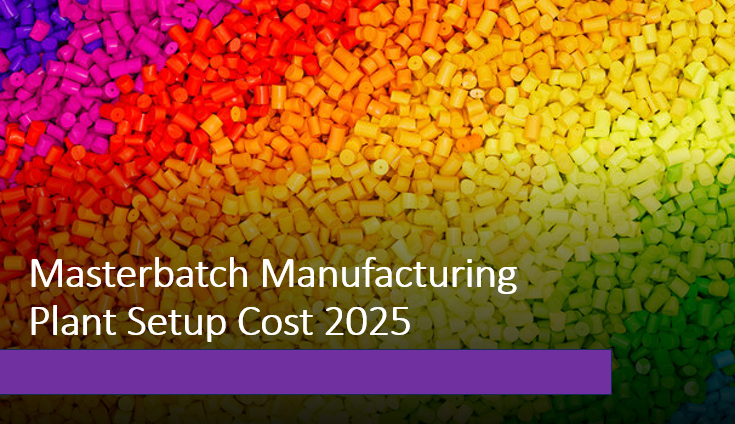
The Masterbatch Manufacturing Plant Cost
A masterbatch manufacturing plant refers to an industrial facility specializing in the production of high-performance masterbatch concentrates by dispersion of pigments, additives, or fillers into a carrier resin. This activity is performed by heating, mixing, and extruding the components together to achieve a homogeneous and complete dispersion into the carrier. The mixed materials are then extruded into a pellet or granule form to ease mixing the masterbatch with its base polymer for use in plastic production. High capital investment is required when establishing a masterbatch production facility, which is likely to be a key consideration.
Unveiling the World of Masterbatch
Masterbatch is a solid or liquid mixture of pigments, additives, or functional additives within a carrier resin, used for the coloring (or functionalization) of plastics. Masterbatch sees massive use in modern polymer processing so masterbatch manufacturing plants are key processing units in the world of plastics and polymer processing.
What is Masterbatch Used For?
Masterbatch is used in various industries such as packaging, where it is used for coloring and UV stabilizing films and containers, and automotive, where it is used to color automotive interior and exterior parts for durability and weatherability. Other applications include textiles for dyeing synthetic fibres, construction for pipes and profiles, agriculture for greenhouse films, rubber for automotive tires, and consumer products such as appliances and toys. Due to the wide variety of potential applications, the cost of building a masterbatch plant must be examined.
See the Data First: Download Your Sample Report: https://www.imarcgroup.com/masterbatch-manufacturing-plant-project-report/requestsample
Key Factors for Masterbatch Plant Setup Requirements
Establishing a masterbatch plant requires careful evaluation of several critical factors that directly impact both the initial plant setup cost and long-term operational efficiency.
- Raw Materials and Polymer Supply: The cost and availability of carrier resins (such as polyethylene, polypropylene, or polystyrene) and colorants or additives are fundamental. A reliable and cost-effective supply chain is essential for managing the masterbatch production cost.
- Production Technology and Equipment: The selection of twin-screw or single-screw extruders, along with mixing systems, dosing equipment, and pelletizing machines, directly influences production efficiency and the final masterbatch manufacturing plant cost.
- Environmental Compliance and Approvals: Obtaining environmental clearances and complying with local regulations for emissions, waste management, and worker safety is mandatory. This ensures sustainable operations and prevents costly regulatory penalties.
- Location and Infrastructure: Proximity to polymer suppliers and end-user markets, combined with access to reliable electrical power, water supply, and logistics networks, significantly impacts operational efficiency and overall masterbatch production cost analysis.
Detailed Process Flow and Quality Control
The manufacturing process for masterbatch involves a series of precisely controlled operations. Initially, the carrier resin is fed into the extruder along with carefully measured quantities of pigments or additives. The materials are heated, melted, and intensively mixed to ensure uniform dispersion. The homogeneous melt is then extruded through a die, cooled, and pelletized into uniform granules. A comprehensive masterbatch manufacturing plant report would detail each of these critical steps.
- Unit Operations Involved: The process encompasses key stages such as raw material dosing and feeding, compounding and mixing in extruders, melt filtration, strand extrusion, cooling, and pelletizing. Each phase is meticulously controlled to ensure consistent product quality and optimal dispersion.
- Mass Balance and Raw Material Requirements: Accurate mass balance calculations are essential for determining the precise quantities of carrier resin, pigments, and additives required per unit of finished masterbatch. This directly influences the total masterbatch manufacturing plant cost.
- Quality Assurance Criteria: Quality is evaluated based on color consistency, dispersion quality, melt flow index, and physical properties. Technical tests, including spectrophotometry for color matching, microscopic analysis for pigment dispersion, and rheological measurements, are conducted to meet rigorous industry standards.
Buy Report Now: https://www.imarcgroup.com/checkout?id=8691&method=1911
Factors Influencing Masterbatch Production Costs
The overall masterbatch manufacturing plant cost represents a complex interaction of multiple variables. A detailed masterbatch production cost analysis is essential for ensuring a profitable operation.
CapEx and OpEx Analysis for Masterbatch Manufacturing Plant Cost:
- Raw Material Costs: Representing the largest component of variable expenses, the prices of carrier resins and pigments or additives are major determinants of the final product cost. Market fluctuations in polymer and colorant prices can significantly impact profitability margins.
- Capital Investment: The initial plant setup cost encompassing machinery, land acquisition, building construction, and installation constitutes a substantial barrier to entry. This capital expenditure is typically amortized over the operational lifetime of the facility.
- Operational Costs: These encompass fixed expenses such as labor, equipment maintenance, insurance, and facility overhead, as well as variable costs including utilities (electricity, cooling water), quality control, and waste management.
- Grade and Formulation Complexity: The specific application of the masterbatch determines the required formulation complexity and quality specifications. High-performance grades for automotive or medical applications require premium ingredients and stringent quality control, which increases the masterbatch manufacturing plant cost.
- Concentration Levels: The pigment or additive concentration in the masterbatch affects raw material usage and processing parameters. Higher concentration products may offer better economics but require more sophisticated dispersion technology, directly influencing the masterbatch production cost.
- Location and Market Conditions: Geographical location influences transportation expenses for raw materials and finished products. Additionally, regional market dynamics, competitive landscape, and demand patterns affect pricing strategies and revenue potential.
Speak to an Analyst: https://www.imarcgroup.com/request?type=report&id=8691&flag=C
Conclusion:
An effective masterbatch strategy requires a detailed knowledge of the value chain, the cost of building and running the plant, the plant's market positioning, and its ability to satisfy customer demand. Key drivers in the market include green technology initiatives, custom formulations, and advances in polymer processing technologies. The procurement of raw materials, production efficiency, quality control, and market adaptability are some of the main attributes of every successful masterbatch manufacturing business. This masterbatch manufacturing plant project report is for any company or individual who wants to set up a new masterbatch manufacturing plant or expand an existing business in this growing manufacturing sector.
