
India Solar Energy Industry Analysis: A Staggering $5,38,913.68 Million Megatrend Rewiring the National GridSolar Energy Systems & Equipment Wholesale & ManufacturersUpdated on Apr 21, 2026 View more like this | Visit India, UN | Contact IMARC Group |
According to IMARC Group's report titled "India Solar Energy Market Size, Share, Trends and Forecast by Deployment, Application, and Region, 2026-2034", The report offers a comprehensive analysis of the industry, including market share, market forecast, growth, and regional insights.
The India solar energy market size was valued at USD 30,032.78 Million in 2025 and estimates the market to reach USD 5,38,913.68 Million by 2034, exhibiting a CAGR of 37.82% during 2026-2034.
Driven by aggressive national decarbonization targets and an explosive surge in corporate sustainability mandates, the India Solar Energy Industry Analysis: A Staggering $538 Billion Megatrend Rewiring the National Grid highlights a monumental pivot in South Asia's energy infrastructure. This hyper-growth ecosystem is rapidly transitioning India from fossil-fuel reliance to a centralized hub for renewable power generation and module manufacturing.
- Market Valuation & Growth Trajectory: The India solar energy market, valued at a formidable USD 30.03 billion in 2025, is projected to scale exponentially to USD 538.91 billion by 2034.
- Unprecedented Expansion Rate: The sector boasts a massive Compound Annual Growth Rate (CAGR) of 37.82% from 2026 to 2034, making it one of the most lucrative renewable infrastructure opportunities globally.
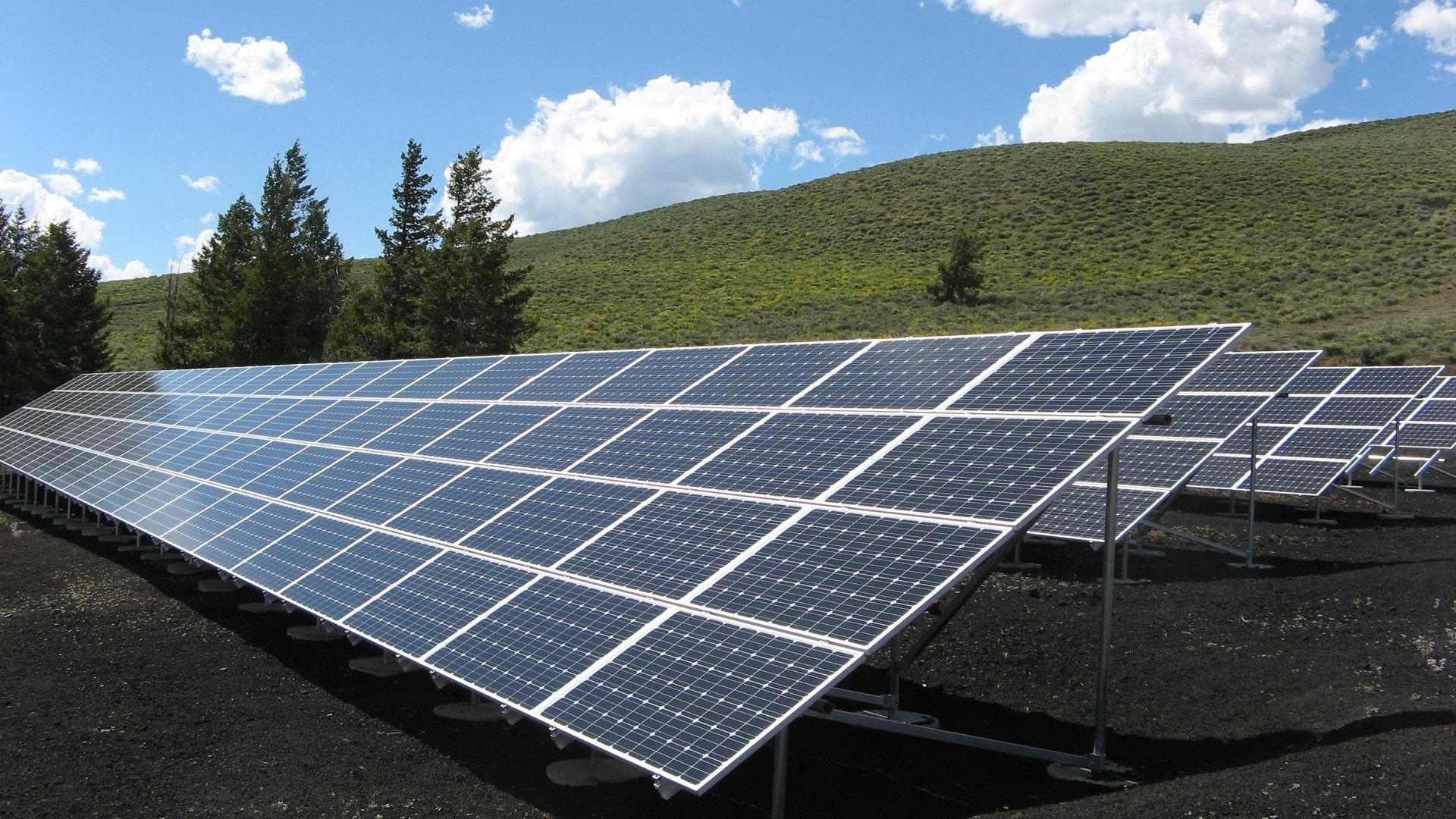
- Dominance of Ground-Mounted Utility-Scale Projects: Accounting for 58.05% of total deployments in 2025, vast land availability in states like Rajasthan and Gujarat has unlocked multi-gigawatt solar parks and mega-installations.
- C&I Sector Driving Adoption: The Commercial and Industrial (C&I) segment controls 36.1% of the market, actively securing long-term Power Purchase Agreements (PPAs) to achieve net-zero commitments and bypass rising grid tariffs.
Request Sample Report - Evaluate Core Statistics Driving Your Industry Trends
India's Strategic Vision for the Solar Energy Market
- Grid Modernization and Energy Independence: The government's macroeconomic blueprint relies heavily on solar infrastructure to decouple economic growth from imported fossil fuels. This strategic pivot aims to establish permanent energy security and stabilize domestic industrial power supply against global crude volatility.
- Domestic Module Manufacturing & PLI Integration: Through ambitious Production Linked Incentive (PLI) schemes, policymakers are fiercely driving localized solar module and cell manufacturing. The recent launch of gigafactories (such as the 5.4 GW facility by Waaree Energies in 2025) underscores the mission to eradicate supply chain dependencies on imported photovoltaic components.
- Democratization via Rooftop Solar: Federal subsidy programs like PM Surya Ghar: Muft Bijli Yojana are decentralizing grid power by financially enabling millions of households and small enterprises to transition to rooftop solar, fundamentally shifting consumer roles from energy buyers to independent prosumers.
Why Invest in the India Solar Energy Market Key Growth Drivers & ROI
- Massive Consumption Base & Rising Tariffs: India's aggressive industrialization and expanding commercial footprints guarantee insatiable baseload energy demand. For B2B investors, the rising cost of conventional grid tariffs heavily incentivizes long-term Corporate PPAs, guaranteeing reliable, high-volume off-take and predictable baseline revenue for solar developers.
- Policy Support, Subsidies & Favorable FDI: The regulatory environment is heavily de-risked by federal subsidies, renewable purchase obligations (RPOs), and net-metering policies. Accelerated depreciation benefits and streamlined foreign direct investment (FDI) approvals ensure rapid break-even points, delivering superior ROI for institutional infrastructure funds.
- Premiumization via Hybrid Tech Upgrades: Early adopters are premiumizing their assets by integrating Battery Energy Storage Systems (BESS) to solve intermittency challenges. Providing firm, 24/7 dispatchable green power allows utility-scale developers to command highly lucrative premium tariffs in government auctions and private commercial contracts.
- Supply Chain Efficiencies & Mega-Park Infrastructure: Government-backed solar parks provide pre-built evacuation infrastructure, land clearances, and transmission connectivity. This drastically slashes project gestation periods and localized logistics overhead, allowing Engineering, Procurement, and Construction (EPC) firms to optimize margins across utility-scale operations.
India Solar Energy Market Market Trends & Future Outlook
- Ascendance of Round-the-Clock (RTC) Hybrid Power: The future B2B trajectory relies entirely on storage. Pure solar PV will rapidly give way to RTC renewable models integrating solar, wind, and utility-scale BESS to guarantee 100% grid stability for power-intensive manufacturing and data centers.
- Mainstreaming of Agrivoltaics and Floating Solar: As prime land acquisition faces bottlenecks, future utility capital will aggressively pivot toward dual-use agrivoltaics and floating solar installations on reservoirs. These high-density deployment models will maximize spatial yield and minimize water evaporation.
- Consolidation of the EPC Landscape: The hyper-competitive market will trigger fierce M&A activity. Large energy conglomerates will systematically acquire regional distributed generation firms and localized manufacturing assets to vertically integrate supply chains and achieve absolute cost-leadership.
- Peer-to-Peer Energy Trading on Blockchain: As grid modernization matures, the commercial sector will witness the rapid deployment of localized microgrids and smart metering. Regulatory shifts will eventually enable blockchain-verified, peer-to-peer (P2P) solar trading, unlocking entirely new post-installation monetization avenues for C&I off-takers.
Request Full Brochure - Discover the Complete TOC and Data Coverage
Market Segmentation Breakdown and Share Analysis:
Analysis by Deployment:
- Ground-mounted (Dominant Segment due to utility-scale parks)
- Rooftop
Ground-mounted systems dominate the market, accounting for 58.05% of the total share in 2025. This leadership is supported by ample land availability in rural regions, strong utility-scale project economics, and supportive regulatory frameworks. Additionally, higher operational efficiency and scalability make ground-mounted installations particularly well-suited for large, grid-connected solar projects.
Analysis by Application:
- Commercial and Industrial (Largest share driven by cost savings)
- Utility-scale
- Residential
The commercial and industrial segment leads with a 36.1% market share in 2025, driven by growing corporate sustainability initiatives, attractive returns on investment, and significant reductions in electricity operating costs. Favorable net-metering policies across the country further encourage businesses to adopt solar solutions as part of their long-term energy strategies.
Regional Insights:
- West India: Leading region driven by Gujarat and Maharashtra’s progressive policies and industrial demand.
- North India: Significant growth led by Rajasthan's vast solar parks.
- South India: Strong contribution from Tamil Nadu, Karnataka, and Telangana.
- East India: Emerging market with increasing government focus.
By the IMARC Group, the Top Competitive Landscape & their Positioning:
Covering an in-depth analysis of the competitive landscape, market structure, key player positioning, competitive dashboards, top winning strategies, and detailed profiles of all major industry participants you will gain access to all these exclusive insights within the full research report.
Recent News & Developments
- Massive Capacity Expansion by Industry Leaders: Adani Green Energy and Tata Power Solar are aggressively expanding utility-scale solar capacity and strengthening their renewable portfolios across India.
- Government Boost to Rooftop Solar Adoption: The Government of India launched initiatives like rooftop subsidy schemes to accelerate residential solar installations and promote decentralized energy generation.
- PLI Scheme Driving Domestic Manufacturing: Companies like Waaree Energies are investing in large-scale solar module manufacturing facilities, reducing import dependency and strengthening India’s solar supply chain.
Note: If you need specific information that is not currently within the scope of the report, we can provide it to you as a part of the customization.
Request Customization - Align the Report Insights with Your Strategic Goals
Frequently Asked Questions (FAQs):
Q1. What is the projected growth of the India solar energy market?
The India solar energy market is expected to grow from USD 30,032.78 million in 2025 to USD 538,913.68 million by 2034, registering a remarkable CAGR of 37.82% during 2026–2034.
Q2. What are the key drivers of the India solar energy market?
Key drivers include strong government support, rising electricity demand, corporate sustainability goals, favorable policies like net metering, and declining solar installation costs.
Q3. Which deployment segment dominates the market?
Ground-mounted solar projects lead the market, accounting for over 58% share, driven by large-scale solar parks and utility-scale installations.
Q4. Which sector is leading solar adoption in India?
The Commercial and Industrial (C&I) sector dominates adoption, driven by cost savings, long-term PPAs, and corporate net-zero commitments.
Q5. What are the major trends shaping the market?
Key trends include hybrid solar + storage systems, rooftop solar expansion, floating solar projects, and increasing domestic solar module manufacturing.
Strategic Insight & Verdict
Having analyzed the convergence of aggressive decarbonization targets, large-scale infrastructure investments, and rapid corporate adoption of renewable energy, we at IMARC Group observe that the India solar energy market is evolving into a cornerstone of the nation’s long-term energy security and industrial competitiveness. The projected surge from USD 30.03 Billion in 2025 to USD 538.91 Billion by 2034 reflects a structurally transformative shift driven by policy-backed solar expansion, PLI-led domestic manufacturing, and rising C&I demand for cost-efficient green power. Stakeholders who align with hybrid renewable models, battery storage integration, and localized manufacturing ecosystems will secure dominant positioning in this hyper-growth, capital-intensive energy landscape.
Tarang, Digital Insights Specialist at IMARC Group: https://www.linkedin.com/in/tarang-chauhan-31a82b265/
Verified Data Source: IMARC Group
Contact Us:
IMARC Group
134 N 4th St. Brooklyn, NY 11249, USA
Email: [email protected]
Tel No:(D) +91 120 433 0800
United States: +1-202071-6302
