
Plumbing System Basics To Keep In MindPlumbing & Heating ContractorsUpdated on Oct 2, 2018 View more like this | Visit GILBERT, AZ | Contact Harington’s Plumbing |
This is an essential guide to plumbing systems used in most domestic and commercial households. In most households, the essential purpose of plumbing is to allow water to pass to different locations in the buildings and at the same time allow waste products to move out which getting stuck so that there is a free flow of wastes to the public drainage system.
Potable Water System
Here the water is supplied to a structure from the main water reservoir or a community water main. There are valves in the water main which can close the water supply to each area that it supplies water with. From the main water storage, a single pipe reaches the structure and then gets divided to reach different fixtures. Fixtures are a meeting point of the water and drainage system even though both have different principles on which they work. There are meters at every structure which keeps track of the amount of water entering different structures.
Sanitary Drainage System
This removes water and waste from the buildings. This system consists of pipes which take out the human waste matter and fecal matter as well as wastewater from cooking and laundry. The entire sanitary drainage system is connected to a vertical pipe going up to the rooftop which allows air to pass so that the drainage occurs at an atmospheric level. The drainage waste water is finally passed to the community sewer system.
Storm Water Drainage System
This system directs storm or rain water away from the building tops to be taken to the community sewer system. Most sanitary drainage systems do the same job by allowing the accumulated water to pass through. But, some modern buildings have a separate drainage system for carrying water to the sewer. Gutters are part of the sewage system for storm water drainage visible outside every building.
How Does Water Flow?
Apart from these traditional type of water supply systems, there are different methods through which water is passed from the underground reservoir which is filled by community main water and then is pumped to an overhead tank from which water is supplied due to gravity to the different faucets and fixtures. There are those systems which do not require an additional tank and water is passed to the different parts of the house from the underground reservoir. In such cases, one needs pumps which can provide a continuous supply of water with the right pressure. Such pumps are known as hydro-pneumatic systems.
While we never really appreciate the intricacies of plumbing system we do feel helpless when there is no proper supply of water, thus having the basic knowledge allows us to identify problems faster leading to faster reforms.
Potable Water System
Here the water is supplied to a structure from the main water reservoir or a community water main. There are valves in the water main which can close the water supply to each area that it supplies water with. From the main water storage, a single pipe reaches the structure and then gets divided to reach different fixtures. Fixtures are a meeting point of the water and drainage system even though both have different principles on which they work. There are meters at every structure which keeps track of the amount of water entering different structures.
Sanitary Drainage System
This removes water and waste from the buildings. This system consists of pipes which take out the human waste matter and fecal matter as well as wastewater from cooking and laundry. The entire sanitary drainage system is connected to a vertical pipe going up to the rooftop which allows air to pass so that the drainage occurs at an atmospheric level. The drainage waste water is finally passed to the community sewer system.
Storm Water Drainage System
This system directs storm or rain water away from the building tops to be taken to the community sewer system. Most sanitary drainage systems do the same job by allowing the accumulated water to pass through. But, some modern buildings have a separate drainage system for carrying water to the sewer. Gutters are part of the sewage system for storm water drainage visible outside every building.
How Does Water Flow?
Apart from these traditional type of water supply systems, there are different methods through which water is passed from the underground reservoir which is filled by community main water and then is pumped to an overhead tank from which water is supplied due to gravity to the different faucets and fixtures. There are those systems which do not require an additional tank and water is passed to the different parts of the house from the underground reservoir. In such cases, one needs pumps which can provide a continuous supply of water with the right pressure. Such pumps are known as hydro-pneumatic systems.
While we never really appreciate the intricacies of plumbing system we do feel helpless when there is no proper supply of water, thus having the basic knowledge allows us to identify problems faster leading to faster reforms.
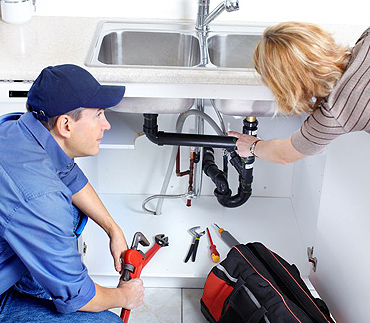

Plumbing System Basics To Keep In Mind
1763 South Red Rock St GILBERT, AZ 85295
