
Full Stack Web Development and Why Hire Full Stack DevelopersTechnology Research & DevelopmentUpdated on May 23, 2018 View more like this | Visit CALIFORNIA, PA | Contact Konstant Infosolutions |
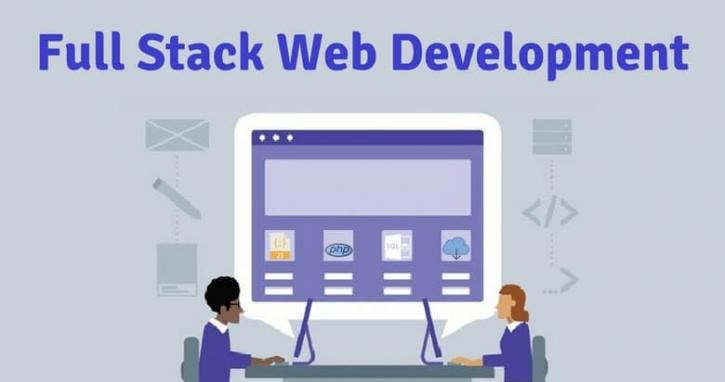
As the name suggests, Full stack development is inclusive of all components of web development. Keep reading to know what they are and benefits you can by hiring Full stack developers.
“Full stack development” is a relatively new term in the web development industry. Back in the days when applications used to be simple, they were neatly partitioned with each part developed by developers specialized in that particular aspect. There were front-end developers, back-end developers, database architects, and then those who managed other components of networking. But as applications started to get complex, each of those components started to intermingle to such an extent that at some point, they got inseparable. That is when the need of full-stack developers arose- the need for developers who were not specialists in any one domain, but handle everything.
Full Stack development, by definition, is an end-to-end development procedure where you, as a client, have to just express your idea and requirement while the developers take care of everything else. From market insight and business model to user experience and scalability, they are responsible for all.
Create dynamic and expressive user interface. Since user experience is the key factor upon which the success of any application relies, the developer must have a clear insight of user behavior and aspirations to help them craft the interface accordingly. They should also be adept in varying sets of front-end technologies including but not limited to HTML, CSS, JavaScript, Angular.js, Bootstrap, to exploit the unique benefits they all offer.
This includes designing and development of APIs, structuring their interaction and deciding how request handling will be processed. This is one aspect that largely decides the speed and performance of any application. The related technologies that they must have complete command over for this purpose include- .NET, PHP, Node.js, Python, Ruby, among others.
Database design & implementation
This part includes a comprehensive analysis of the application to precisely figure out the type and size of the database that will most appropriately suit the purpose. The earlier this task is carried out, the easier it will be to scale the application in the future. The database technologies deployed in this stage are SQL. Oracle, MongoDB, among others.
From configuring network sockets and load balancing to managing cloud services and platform-specific optimization, there are an array of tasks that go behind running an application smoothly, all of which must be swiftly handled by Full-Stack developers.
Besides, Full-Stack developers are also expected to have deep knowledge of business logic, market outlook, and be able to handle all different teams involved in the development cycle. This one-stop-solution property of Full Stack developers makes them one of the most sought-after professionals in the web development services.
Much better control over all different web development components
Cost-effectiveness; one generalist does the job of many specialists
This is actually a tricky part. How much you should pay to Full-Stack developers depend on the project at hand and the experience they bring. Project size, technologies to be deployed, among others are some additional factors that highly influence the overall cost.
So, now that you have a basic idea of what Full stack development is, the areas it covers, the benefits you can reap, and the cost you will have to pay, only one question remains- where to hire them? While there is no shortage of such services, going for offshore hiring proves to be the most feasible options. Web developers in India are known to deliver exceptional quality for the bucks they charge.
“Full stack development” is a relatively new term in the web development industry. Back in the days when applications used to be simple, they were neatly partitioned with each part developed by developers specialized in that particular aspect. There were front-end developers, back-end developers, database architects, and then those who managed other components of networking. But as applications started to get complex, each of those components started to intermingle to such an extent that at some point, they got inseparable. That is when the need of full-stack developers arose- the need for developers who were not specialists in any one domain, but handle everything.
Full Stack development, by definition, is an end-to-end development procedure where you, as a client, have to just express your idea and requirement while the developers take care of everything else. From market insight and business model to user experience and scalability, they are responsible for all.
Components of Full Stack Development
Front-end development
Create dynamic and expressive user interface. Since user experience is the key factor upon which the success of any application relies, the developer must have a clear insight of user behavior and aspirations to help them craft the interface accordingly. They should also be adept in varying sets of front-end technologies including but not limited to HTML, CSS, JavaScript, Angular.js, Bootstrap, to exploit the unique benefits they all offer.
Back-end development
This includes designing and development of APIs, structuring their interaction and deciding how request handling will be processed. This is one aspect that largely decides the speed and performance of any application. The related technologies that they must have complete command over for this purpose include- .NET, PHP, Node.js, Python, Ruby, among others.
Database design & implementation
This part includes a comprehensive analysis of the application to precisely figure out the type and size of the database that will most appropriately suit the purpose. The earlier this task is carried out, the easier it will be to scale the application in the future. The database technologies deployed in this stage are SQL. Oracle, MongoDB, among others.
System architecture configuration and testing
From configuring network sockets and load balancing to managing cloud services and platform-specific optimization, there are an array of tasks that go behind running an application smoothly, all of which must be swiftly handled by Full-Stack developers.
Besides, Full-Stack developers are also expected to have deep knowledge of business logic, market outlook, and be able to handle all different teams involved in the development cycle. This one-stop-solution property of Full Stack developers makes them one of the most sought-after professionals in the web development services.
Benefits of Hiring Full Stack Developers
Cost of Hiring Full Stack Development
This is actually a tricky part. How much you should pay to Full-Stack developers depend on the project at hand and the experience they bring. Project size, technologies to be deployed, among others are some additional factors that highly influence the overall cost.
So, now that you have a basic idea of what Full stack development is, the areas it covers, the benefits you can reap, and the cost you will have to pay, only one question remains- where to hire them? While there is no shortage of such services, going for offshore hiring proves to be the most feasible options. Web developers in India are known to deliver exceptional quality for the bucks they charge.
