
Industrial EHS Training: How to Build a Safety-First and Compliance-Ready WorkforceManufacturing EngineersUpdated on Sep 25, 2026 View more like this | Visit BROOKLYN, NY | Contact IMARC Group |
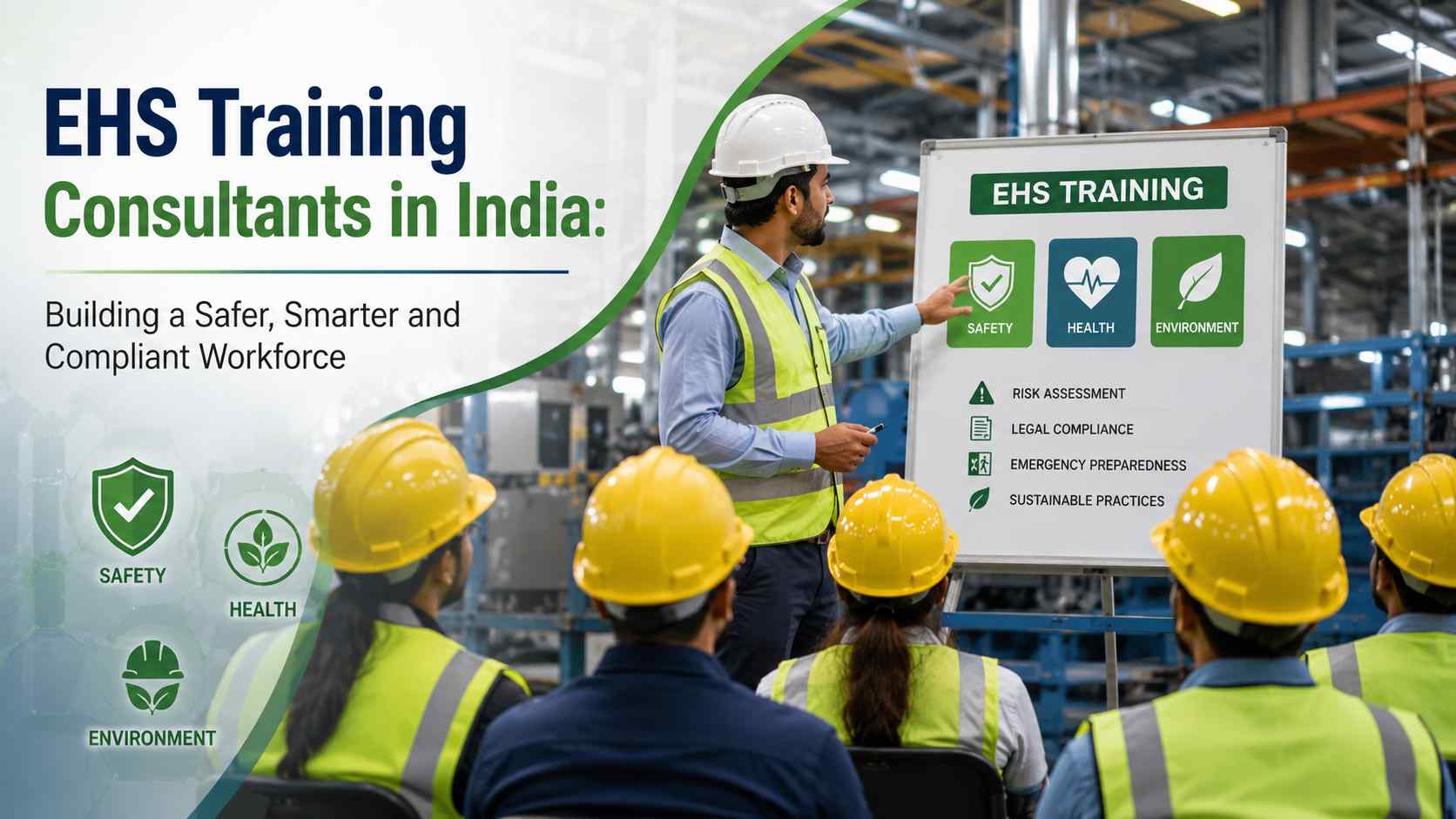
A safety program is only as strong as the training behind it, and most Indian manufacturers still treat EHS training as a once-a-year induction session rather than a continuous, tiered system tied to actual risk exposure. That gap is becoming far more consequential now that India's occupational safety compliance architecture has been rebuilt from the ground up.
The scale of what training needs to cover is significant. India has over 500 million workers, yet less than 10% are covered by formal occupational safety and health legislation, and close to 90% of the workforce remains in informal employment, much of it in microenterprises, contract labour, and settings that fall outside standard registration thresholds. A workforce this large and this fragmented cannot be made safety-ready through generic, one-size-fits-all training.
For manufacturers building a training program that is both genuinely safety-first and legally defensible, this is where structured EHS training consultants in India earn their place, not as a compliance checkbox, but as the mechanism that turns a fragmented workforce into a documented, competency-verified one.
Why Training Design Matters More Under the New OSH Framework
India's occupational safety regulation underwent its most significant restructuring in decades on 21 November 2025, and the implications for training are direct.
- The Occupational Safety, Health and Working Conditions (Central) Rules, 2026, notified vide G.S.R. 934(E), replaced eight separate sector-specific safety manuals with a single, consolidated compliance framework
- This sits under the OSH Code, 2020, which itself consolidated 13 earlier labour laws, covering factories, mines, plantations, docks, construction, and contract and migrant workers, into one unified mandate
- All four Labour Codes, including the OSH Code, came into effect together on 1 April 2026, meaning training obligations that were previously scattered across sector-specific rules now sit under one national framework
- Mandatory statutory registers under this framework explicitly include training records alongside attendance, wages, accident logs, safety committee minutes, and medical examination records, making training documentation a compliance artifact, not just an HR formality
A single national framework means a single national standard for what counts as adequate training documentation, and manufacturers still running fragmented, state-specific training records are now operating against a consolidated benchmark they may not be meeting.
What the Data Actually Shows About Training-Linked Safety Outcomes
The clearest evidence that structured training and safety programs work comes from a decade of DGFASLI factory data.
- Non-fatal injuries in registered factories fell from 26,852 in 2013 to 2,983 in 2022, an 85.7% reduction over the period
- The non-fatal injury rate fell even more sharply, from 191.18 to 16.79 per 100,000 employees, a 91.2% reduction
- The fatal injury rate declined more moderately over the same period, from 9.34 to 5.93 per 100,000 employees, showing that severe and fatal incidents respond more slowly to safety interventions than non-fatal injuries do
- Globally, inadequate occupational safety and health is estimated to cost close to 4% of GDP, underscoring that safety training is an economic issue for the business, not only a worker welfare issue
The gap between the 91.2% drop in non-fatal injury rates and the more modest decline in fatal injury rates is itself an important signal: general awareness training reduces everyday incidents effectively, but high-consequence hazards, confined spaces, hazardous processes, high-voltage work, need dedicated, competency-verified training rather than generic sessions.
Building a Training Program That Actually Meets OSH Code Requirements
A compliant training program under the consolidated OSH framework needs to produce specific, auditable documentation, not just attendance sheets.
- Training records must be maintained as a statutory register alongside accident and dangerous-occurrence reports, meaning training content, dates, and attendee competency outcomes need to be retrievable on demand during an inspection
- Annual health check-ups, mandated under the OSH Code's unified registration system, should be integrated with training records so that medical fitness and safety competency are tracked as a single worker profile, not two disconnected systems
- Safety committee minutes, another mandatory register, should reference training gaps identified during committee reviews, creating a documented feedback loop between incident review and training content updates
- Periodic safety audits, typically following IS 14489 methodology or an equivalent state-specified approach for hazardous-process facilities, should directly inform which roles need refresher or specialized training, rather than running on a fixed calendar disconnected from audit findings
Training Tiers: From Induction to Competency Verification
Not every worker needs the same training, and treating induction training as sufficient for every role is one of the most common gaps in Indian manufacturing safety programs.
- General induction training: covers site hazards, emergency response basics, and PPE requirements for every worker entering the site, including visitors and short-term contractors
- Role-specific competency training: tied to the specific hazards of a role, machine operation, confined space entry, working at height, and verified through practical assessment, not just classroom attendance
- Contractor and informal worker training: explicitly extended to cover the large share of the workforce that sits outside direct employment, since the OSH Code's consolidation of contract and migrant worker protections makes this a documented obligation, not a discretionary add-on
- Refresher and requalification training: scheduled against audit findings and incident trends rather than a blanket annual cycle, so that roles with rising near-miss reports get retrained sooner than roles with a clean record
- Specialized hazardous-process training: reserved for major-hazard sites and processes identified through independent process-safety audits, since these are the incidents where fatal injury rates have declined far more slowly than non-fatal rates
Where Most Training Programs Fall Short
- Excluding contract and informal workers from formal training records, despite this group making up the majority of India's actual workforce and now falling explicitly within OSH Code coverage
- Treating training as complete once delivered, without competency verification, which explains why fatal injury rates have not fallen as fast as non-fatal rates over the past decade
- Reporting on safety disclosures without the underlying assurance to back them: only around 30% of companies achieved "reasonable assurance" level reporting under the BRSR framework in FY23, a gap that traces directly back to weak underlying training and incident documentation
- Running training on a fixed annual calendar rather than in response to safety committee findings, audit results, or near-miss trends specific to each role
- Failing to integrate training records with the other statutory registers now consolidated under the 2026 Central Rules, creating duplicate or inconsistent documentation across departments
How IMARC Engineering's Expertise Can Help in Industrial EHS Training
- Structuring tiered training programs, from general induction through role-specific and hazardous-process competency verification, aligned with OSH Code and Central Rules 2026 requirements
- Building training documentation systems that integrate with statutory registers for accident reporting, safety committee minutes, and medical examination records
- Extending training coverage and record-keeping to contract and informal workers explicitly covered under the consolidated OSH Code
- Designing refresher and requalification schedules driven by audit findings and incident trends rather than fixed calendars
- Supporting BRSR-aligned safety disclosure readiness by strengthening the underlying training and incident data that assurance reviews rely on
Consult With Our Team: https://www.imarcengineering.com/contact?service=ehs-training
Conclusion
India's decade-long safety data makes the case plainly: structured training drives an 85.7% drop in non-fatal injuries, but fatal injury rates fall far more slowly without competency-verified, hazard-specific training layered on top of general awareness. With the OSH Code and its 2026 Central Rules now consolidating training documentation into a single national standard, manufacturers that build tiered, auditable training systems today will meet that standard; those still running generic annual sessions will find the gap between compliant and non-compliant much narrower than they expect.
Contact Us:
IMARC Engineering
Phone: +91-120-433-0800
Email: [email protected]
India: C-130, Sector 2, Noida, Uttar Pradesh 201301
LinkedIn: https://www.linkedin.com/showcase/imarc-engineering/
