
Global Luxury Fashion Market: $253.25B Now, $334.58B by 2033General BusinessUpdated on Jun 2, 2025 View more like this | Visit BROOKLYN, NY | Contact IMARC Group |
Market Overview:
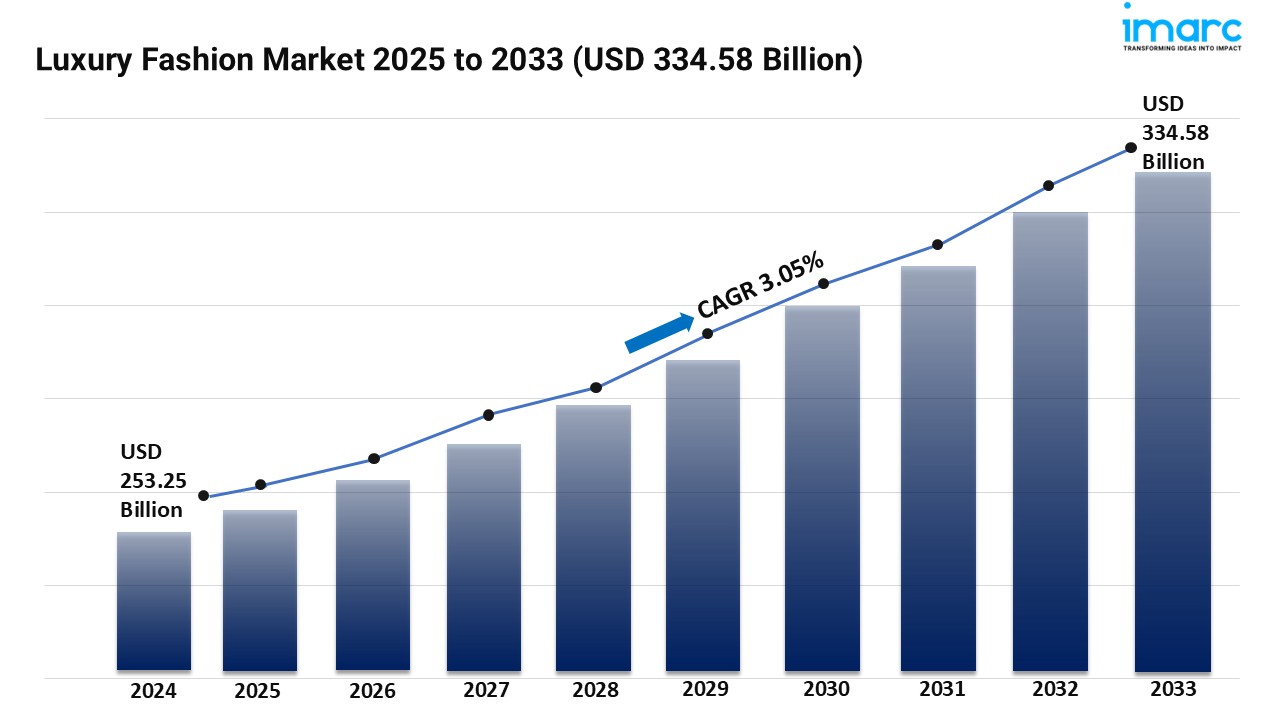
The luxury fashion market is experiencing rapid growth, driven by digital & experiential retail, sustainability & ethical values, and personalization & exclusivity. According to IMARC Group’s latest research publication, “Luxury Fashion Market Report by Product Type (Clothing & Apparel, Footwear, Accessories), Distribution Channel (Store-Based, Non-Store Based), End User (Men, Women, Unisex), and Region 2025-2033“, The global luxury fashion market size reached USD 253.3 Billion in 2024. Looking forward, IMARC Group expects the market to reach USD 334.6 Billion by 2033, exhibiting a growth rate (CAGR) of 3.05% during 2025-2033.
This detailed analysis primarily encompasses industry size, business trends, market share, key growth factors, and regional forecasts. The report offers a comprehensive overview and integrates research findings, market assessments, and data from different sources. It also includes pivotal market dynamics like drivers and challenges, while also highlighting growth opportunities, financial insights, technological improvements, emerging trends, and innovations. Besides this, the report provides regional market evaluation, along with a competitive landscape analysis.
Grab a sample PDF of this report: https://www.imarcgroup.com/luxury-fashion-market/requestsample
Our report includes:
- Market Dynamics
- Market Trends And Market Outlook
- Competitive Analysis
- Industry Segmentation
- Strategic Recommendations
Factors Affecting the Growth of the Luxury Fashion Industry:
- Digital & Experiential Retail:
The luxury fashion market is changing. Digital and physical retail are merging. Brands now use e-commerce, social media, and engaging methods to connect with shoppers. They aim to enhance the online shopping experience. Virtual try-ons, augmented reality (AR), and personalized styling are trending. These tools allow customers to interact with products in fun ways. Live streaming and influencers offer brands fresh marketing approaches. They showcase collections and reach larger audiences. Meanwhile, physical stores are transforming into experience hubs. These locations provide personal services, special events, and immersive brand activities. Flagship stores tell brand stories and feature artistic partnerships, blending retail with entertainment. Interactive screens and personal shopping assistants introduce technology into stores. This improves the customer experience. The combination of digital and experiential retail is reshaping luxury shopping. It boosts engagement and builds brand loyalty.
Sustainability & Ethical Values:
Stability and moral values are key in luxury fashion today. Younger consumers want brands to be honest about their social and environmental impact. This means using durable materials, fair labor, and responsible purchasing. In response, brands are investing in recycling and resale programs. They also adopt certifications for organic textiles and fair labor.
Craftsmanship and durability support sustainability. Consumers look for high-quality, long-lasting products. Brands share their sustainability efforts through storytelling and educational campaigns. This builds trust and connects with conscious consumers. A genuine commitment to sustainability and moral values is essential for staying relevant and attracting thoughtful customers.
Personalization & Exclusivity:
Luxury fashion markets focus on personalization. Consumers want unique and amazing experiences. Brands offer custom products, styling services, and limited cultural collections. New options like “with-to-maps” and “bishop’s services” cater to personal fashion needs. Data analysis and AI improve marketing and customer engagement. They suggest targeted campaigns and personalized product recommendations. Exclusive communities and membership programs enhance the feeling of uniqueness. Brands provide virtual styling sessions and tailored suggestions on digital platforms. Craftsmanship elevates luxury items by showcasing artistry. This leads to unique, limited-edition pieces created with artisans and designers. The demand for personalization drives the luxury fashion market. It aligns with the desires of consumers who seek distinctive experiences.
Leading Companies Operating in the Global Luxury Fashion Industry:

- Burberry Group Plc
- Capri Holdings Limited
- Chanel S.A.
- Diesel S.p.A. (OTB Group)
- Dolce & Gabbana S.r.l.
- Giorgio Armani S.p.A.
- Industria de Diseno Textil S.A.
- Kering SA
- LVMH Moet Hennessy Louis Vuitton
- Prada S.p.A.
- PVH Corp.
- Ralph Lauren Corporation
- Rolex SA.
Luxury Fashion Market Report Segmentation:
Breakup By Product Type:
- Clothing & Apparel
- Jackets & Coats
- Skirts
- Shirts & T-Shirts
- Dresses
- Trousers & Shorts
- Denim
- Underwear & Lingerie
- Others
- Footwear
- Accessories
- Gems & Jewellery
- Belts
- Bags
- Watches
Clothing & apparel (jackets & coats, skirts, shirts & T-shirts, dresses, trousers & shorts, denim, underwear & lingerie, and others) exhibit a clear dominance in the market owing to high demand for premium and designer wear in both casual and formal segments.
Breakup By Distribution Channel:
- Store-Based
- Non-Store Based
Store-based represents the largest segment due to the buyer preference for in-store experience for personalized service and exclusivity.
Breakup By End User:

- Men
- Women
- Unisex
Women account for the majority of the market share, as they are the primary user of luxury fashion products.
Breakup By Region:
- North America (United States, Canada)
- Asia Pacific (China, Japan, India, South Korea, Australia, Indonesia, Others)
- Europe (Germany, France, United Kingdom, Italy, Spain, Russia, Others)
- Latin America (Brazil, Mexico, Others)
- Middle East and Africa
Europe dominates the market, driven by its rich heritage of luxury fashion houses and affluent user base.
Research Methodology:
The report employs a comprehensive research methodology, combining primary and secondary data sources to validate findings. It includes market assessments, surveys, expert opinions, and data triangulation techniques to ensure accuracy and reliability.
Note: If you require specific details, data, or insights that are not currently included in the scope of this report, we are happy to accommodate your request. As part of our customization service, we will gather and provide the additional information you need, tailored to your specific requirements. Please let us know your exact needs, and we will ensure the report is updated accordingly to meet your expectations.
About Us:
IMARC Group is a global management consulting firm that helps the world’s most ambitious changemakers to create a lasting impact. The company provide a comprehensive suite of market entry and expansion services. IMARC offerings include thorough market assessment, feasibility studies, company incorporation assistance, factory setup support, regulatory approvals and licensing navigation, branding, marketing and sales strategies, competitive landscape and benchmarking analyses, pricing and cost research, and procurement research.
Contact Us:
IMARC Group
134 N 4th St. Brooklyn, NY 11249, USA
Email: [email protected]
Tel No:(D) +91 120 433 0800
United States: +1-631-791-1145
