
Understanding Thread Milling with Solid Carbide MillsPaper Cutting & Drilling MachinesUpdated on May 14, 2020 View more like this | Visit BATESBURG, SC | Contact Online Carbide |
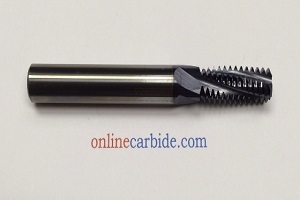
Producing threads in a material is a critical stage in production and machining, anywhere that threads are needed as a joint between materials. Whether or not two parts are intended to be joined via a threaded piece or held together with screws makes little difference. What does matter is achieving the highest possible degree of precision possible in order to create as perfect, as precise a fit between parts as possible. There are two prevalent methods for cutting threads in a material; using a tap and die or thread milling which often takes the form of thread milling with solid carbide mills.
Traditionally threads have been cut using a tap and die set. While practical, especially through smaller holes, there are several problems that can occur as a result of relying on a tap and die set to cut threads. The first is that the hole must be drilled slightly larger than the tap, which reduces the strength of the finished product.
In addition, if a tap breaks while cutting threads it will result in a time consuming and laborious process of extracting the broken tap from the piece. Oftentimes that results in the loss of the workpiece due to irrecoverable damage.
Tapping also presents a unique problem that does not occur when thread milling with solid carbide mills. As a tap works along a channel and removes swarf, the chips must be pushed through the channel being cut in order to be removed. That results in threading that is nowhere near as fine or smooth as threads producing by milling. Since the tap is the same size as the hole being threaded, oftentimes the chips will gouge or scratch the threads on the way out. Conversely, a thread mill is most frequently a smaller diameter than the hole being threaded, the chips have plenty of room to drop through the hole without being forced into rough contact with the threads being cut.
As we have mentioned a common popular alternative to cutting threads with a tap and die set is to use thread milling. Thread milling can produce much smoother threads than would be possible with a tap and die set for the reasons described in the last paragraph. In addition to providing smoother threads, one thread mill can create threads for multiple diameter holes as the mill can be much smaller than the hole being threaded, which is not the case with a tap and die. Something else to consider is the fact that thread milling with solid carbide mills requires less force than those that are required with tapping.
Convinced to make the switch from tapping to thread milling? If so, keep in mind you will need the proper CNC equipment and software robust enough to make the cuts. If that’s the case, or you were simply looking for some information on the differences between tapping and thread milling, we can help nonetheless.
Whatever the reason, visit OnlineCarbide.com. They’re not only your source for carbide thread mills, they’re also your source for spot drills, chamfer mills, and many other carbide end mills. Visit their site to find the carbide cutting tools you need and don’t hesitate to call them at 630-238-1424 for help or if you have any questions.
Keep in mind also that shopping at Online Carbide will save you some dough without the least compromise in quality whatsoever. Every one of their carbide mills is made in the United States to demanding quality controls and available at prices that are hard to believe. What’s more, most items are available to ship the same day. There’s no reason to wait - pick up the carbide thread mills for your thread milling projects today.
For more information about Variable End Mill and Variable Flute End Mills Please visit : Onlinecarbide.
